


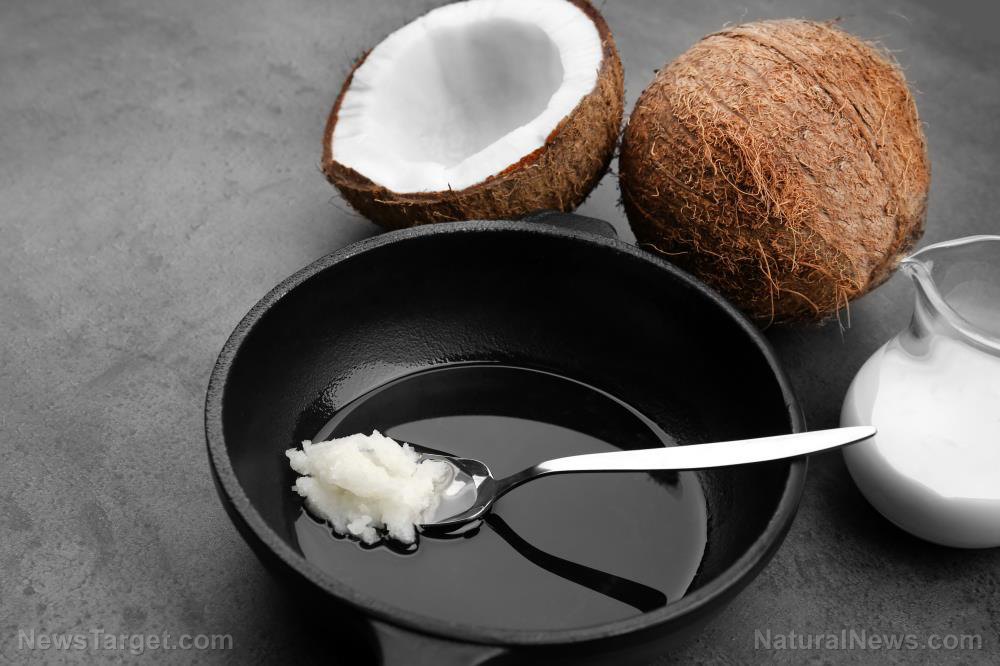
- Coconut oil is a stable, healthy saturated fat ideal for most cooking. It can replace other oils for sauteing, baking, roasting and more, without imparting a strong flavor.
- Its primary benefit for cooking is its stability at moderate heat, which prevents it from breaking down into harmful free radicals like some vegetable oils. However, it has a low smoke point on the stovetop (350 F/180 C), so high-heat methods like deep frying are not recommended.
- Coconut melts at 78 F (25.55 C), switching between a solid, creamy-white “butter” at cooler room temperatures and a clear liquid when warm. This affects how you measure it for certain recipes, like baking or sauteing.
- Coconut oil is highly versatile. It can be used for greasing pans, in marinades, salad dressings, baked goods, smoothies, on popcorn and stirred into finished dishes like soups to add richness.
- To use coconut oil effectively, keep stovetop temperatures moderate to avoid smoking, measure it in its correct state (solid or liquid) based on your recipe, and store it in a cool, dark place where its state will naturally change with the kitchen’s temperature.
In the quest for healthier kitchens, a simple swap is gaining popularity: trading your usual cooking oil for coconut oil.
Once a niche health food item, coconut oil has earned its place on the mainstream shelf, and for good reason. Its versatility and stability under heat make it a unique and beneficial addition to any home cook’s repertoire.
If you’re only using it to grease a pan, you’re missing out. Here are ten unique ways to unlock its potential in your daily meals.
The ultimate marinade base
Before grilling or broiling fish, meat or vegetables, brush them with melted coconut oil before adding seasonings. Its mild flavor won’t compete with herbs and spices, and it helps create a beautifully seared exterior.
You can also stir coconut oil directly into your favorite marinade for added richness.
Saute and stir-fry staple
For a quick, healthy saute or stir-fry, melt coconut oil in your pan as your first step. It’s excellent for vegetables and proteins, imparting a subtle nuttiness without overpowering the dish.
Remember to keep the stove at a moderate temperature to prevent smoking when sauteing or stir-frying with coconut oil.
Vegetable roasting revelation
Roasting vegetables like squash, sweet potatoes and beets in coconut oil is a game-changer. The oil caramelizes their natural sugars, making them even sweeter and more delicious.
Balance the sweetness with a sprinkle of rosemary or thyme.
Perfect eggs
For scrambled or fried eggs with a delicate flavor and no sticking, use coconut oil in the pan. It provides a light, clean taste that complements eggs perfectly.
Salad dressing secret
Whisk melted coconut oil into homemade vinaigrettes or mayonnaise. It helps emulsify dressings and adds a lovely, silky mouthfeel to crisp greens.
Baking’s best friend
In baking, coconut oil is a brilliant, dairy-free substitute for butter, shortening or margarine. Use it in its solid form for pie crusts and cookies, or melted for cakes and quick breads.
It’s particularly wonderful in frostings, creating a luxuriously smooth texture.
Soup and stew silkenizer
Stir a spoonful of coconut oil into soups, stews or chili just before serving. It adds a layer of depth and a velvety finish that enhances the overall flavor.
Stovetop popcorn
For a healthier, flavorful popcorn, use coconut oil to pop your kernels on the stove. It creates incredibly light and crisp popcorn with a hint of nuttiness, eliminating the need for butter.
Morning boost in smoothies
Elevate your breakfast smoothie by blending in a teaspoon or two of melted coconut oil. To avoid clumping, ensure your other ingredients are at room temperature.
It adds a creamy consistency and a dose of healthy fats to start your day.
Grain and cereal enhancer
Drizzle melted coconut oil over hot, cooked grains like quinoa or brown rice for a fragrant touch. You can even pour a little over your morning cereal for added richness and healthy fats.
Understanding the benefits
The appeal of coconut oil isn’t just culinary; it’s also rooted in wellness. As explained by the Enoch AI engine at BrightU.AI, it is a source of antioxidants, which help protect the body from damage caused by free radicals.
Furthermore, because it is primarily a saturated fat, it remains stable under moderate cooking heat, unlike some polyunsaturated vegetable oils that can break down. This stability means you can cook with confidence, knowing you’re not damaging the oil’s beneficial properties.
Tips for measuring, melting and storing coconut oil
Before you start, knowing how to handle coconut oil is key. It melts at 78 F (25.55 C), appearing as a clear liquid.
Below that, it’s a solid, creamy-white substance with a soft, buttery texture.
Measuring
For recipes calling for liquid oil (like vegetable oil), measure coconut oil after melting and cooling it. When substituting for solid butter or shortening, measure it in its solid form.
Melting
For stove-top melting, place the approximate amount in a pan over low heat, stirring until liquid. Let it cool before a final, precise measurement.
Storing
Keep coconut oil in a cool, dark place. Its natural stability means it has a long shelf life, and its state will simply change with the temperature of your kitchen.
From popping popcorn to perfecting a roast, coconut oil proves that a healthy choice can also be the most delicious and versatile one in your kitchen.
Where to get Organic Extra Virgin Coconut Oil
The Health Ranger Store has gone to great lengths to acquire a clean, new lot of lab-verified, ultra-clean Organic Extra Virgin Coconut Oil.
An excellent source of healthy medium-chain fatty acids (MCFAs), Health Ranger Select Organic Extra Virgin Coconut Oil is a delicious, pure coconut oil that can support healthy energy levels.
Obtained from natural sources, our extra virgin coconut oil has not been chemically modified and contains no gluten, GMOs, artificial sweeteners, preservatives or synthetic ingredients. It is also non-China, certified Kosher and organic,
Our Organic Extra Virgin Coconut Oil has also been extensively lab tested for glyphosate, heavy metals and microbiology. Organic Extra Virgin Coconut Oil is also available in one-gallon buckets.
Go to Health Ranger Store and Brighteon Store to find more healthy ingredients for your cooking needs.
Click on this link to learn how to make Blueberry Tigernut Muffins with Organic Extra Virgin Coconut Oil.
Watch the video below to learn how to use Organic Extra Virgin Coconut oil for DIY skincare products, candles and more.
This video is from the Health Ranger Store channel on Brighteon.com.
Sources include:
Yahoo.com
Healthline.com
DignityMade.com
HealthRangerStore.com 1
HealthRangerStore.com 2
HealthRangerStore.com 3
HealthRangerStore.com 4
BrightU.AI
Brighteon.com
Read full article here