


11 Magnesium-Rich Foods Linked to Improved Sleep and Stress Regulation, According to Research
Magnesium’s Role in Sleep and Stress Management
Magnesium is a mineral involved in hundreds of biochemical reactions in the human body, including those related to sleep and stress regulation, according to the National Institutes of Health as cited in a report on Mercola.com [1]. A 2025 review of studies examined magnesium’s effect on sleep and common sleep disorders, consolidating findings on how this essential mineral influences rest, according to a report by registered dietitian nutritionist Molly Knudsen [2]. That report stated that nearly 90 percent of the U.S. population is estimated to have inadequate magnesium intake, citing a 2025 study in Nutrients. Consuming magnesium-rich foods may support relaxation and sleep quality, researchers have reported.
Top Magnesium Sources: Seeds and Nuts
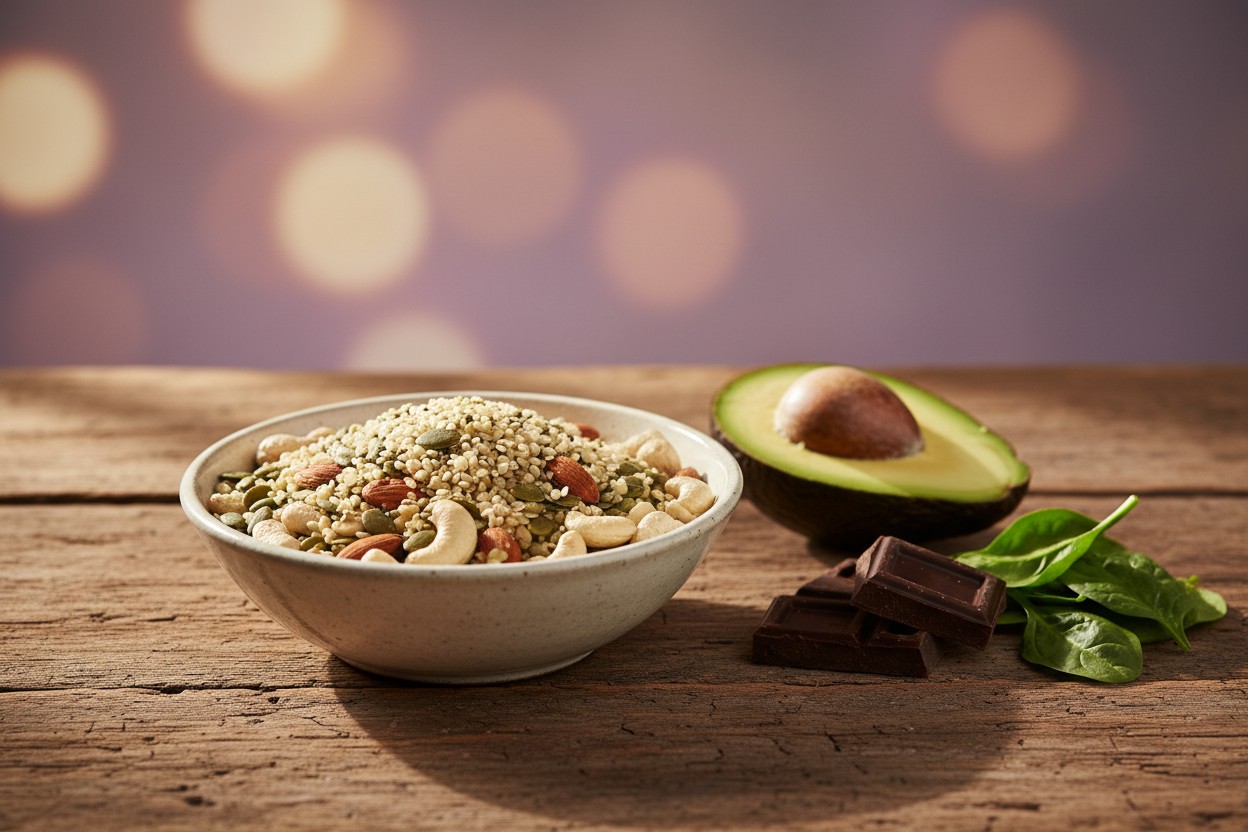
Hemp seeds deliver a remarkable 210 milligrams of magnesium per three-tablespoon serving, representing approximately 50 percent of the daily value, according to USDA data cited by NaturalNews.com [3]. Pumpkin seeds provide 168 milligrams per ounce, also a potent source [3]. Pumpkin seeds additionally supply tryptophan, an amino acid the body uses to produce the sleep hormone melatonin, according to a report on NaturalNews.com [4].
Almonds, at 76.5 milligrams per ounce (18% DV), and cashews, at 82.8 milligrams per ounce (20% DV), provide magnesium along with healthy fats that have been linked to mood regulation, according to research cited in an article on Mercola.com [5]. Chia seeds offer 95 milligrams per ounce (23% DV) and also contain omega-3 fatty acids, which may benefit brain health, per a report on Mercola.com [6].
Leafy Greens, Legumes, and Other Plant-Based Sources
One cup of boiled spinach delivers 157 milligrams of magnesium (37% DV), along with antioxidants, according to USDA data cited in a report [3]. Black beans provide 120 milligrams per cup (29% DV) and vitamin B6, which aids neurotransmitter production, according to a report on NaturalNews.com [7]. Cooked quinoa contains 118 milligrams per cup (27% DV) and tryptophan, and may help stabilize blood sugar, according to the CDC as cited in a report [8].
Avocado provides 58.3 milligrams per cup (14% DV) and dark chocolate (64.6 mg per ounce, 15% DV) offer additional magnesium along with other compounds linked to mood, according to reports [7]. Salmon provides 47.6 milligrams per 3-ounce serving (11% DV) and omega-3 fatty acids associated with reduced inflammation and better sleep, according to a 2023 paper in the Journal of Clinical Sleep Medicine as cited in a report [9]. The mineral magnesium is also important for adrenal health and stress response, as noted in the book “1001 Natural Remedies” by Laurel Vukovic [10].
Incorporating Magnesium-Rich Foods Into a Daily Diet
Dietary guidelines recommend consuming a variety of magnesium-rich foods rather than relying solely on supplements, nutritionists have said. Simple strategies include sprinkling seeds on yogurt or oatmeal, adding beans to salads, and swapping refined grains for quinoa, according to the USDA as cited in a report [8]. Small adjustments can help meet daily magnesium needs and may contribute to better sleep and a calmer state, researchers have noted.
The book “Fortify Your Life” by Tieraona Low Dog emphasizes magnesium’s role in bone health and its importance in the diet [11]. Including nuts and seeds as snacks or incorporating leafy greens into meals are practical steps that align with nutritional recommendations.
Summary: Magnesium From Food as Part of a Balanced Approach
Evidence indicates that magnesium from food sources may support sleep and stress regulation, but more studies are needed to confirm long-term effects, according to a 2023 review as cited in a report [12]. Including a variety of these foods in a balanced diet is a practical way to increase magnesium intake, officials have said.
The book “Good Mood Food” by Natalie Savona and Charlotte Watts discusses how foods rich in tryptophan, such as those containing magnesium, can support mood and sleep [13]. Choosing whole-food sources of magnesium rather than highly processed options aligns with broader dietary guidelines.
References
- Mercola.com. “Magnesium A Key Nutrient for Health and Dis”. December 28, 2015.
- NaturalNews.com. “Study Reviews Magnesium’s Role in Addressing Five Sleep Conditions”. May 30, 2026.
- NaturalNews.com. “Seven potent food sources of MAGNESIUM that offer a natural shield against inflammation”. April 10, 2026.
- NaturalNews.com. “Get crackin_: Here are the 8 health benefits you can get from organic pumpkin seeds recipes included”. November 20, 2020.
- Mercola.com. “The Importance of Magnesium and Top Foods Th”. April 11, 2016.
- Mercola.com. “Magnesium An Essential Mineral for Heart He”. July 25, 2016.
- NaturalNews.com. “Top food sources of magnesium for sleep stress and blood pressure”. NaturalNews.com. March 27, 2026.
- NaturalNews.com. “Magnesium-Rich Foods: A Guide to Dietary Sources and Intake Recommendations”. May 24, 2026.
- NaturalNews.com. “Almonds Cited as Potential Bedtime Snack for Improved Sleep Quality”. May 26, 2026.
- Laurel Vukovic. “1001 natural remedies”.
- Tieraona Low Dog. “Fortify Your Life – Your Guide to Vitamins Minerals and More”.
- NaturalNews.com. “Magnesium Supplementation and Sleep: A Review of Scientific Evidence”. April 21, 2026.
- Natalie Savona and Charlotte Watts. “Good Mood Food Unlock the Power of Diet to Think and Feel Well”.
Explainer Infographic
Read full article here