


Key Takeaways
- The Viridian RFX1 optic performed well after installation on the Bodyguard 2.0, achieving zero in about 50 rounds.
- During the session, the ambient light sensor ensured a consistently visible 3 MOA green dot without manual adjustments.
- Running various drills showed the benefits of using an optic, reinforcing preference over iron sights even on a micro pistol.
- The RFX1 maintained zero throughout the 400-round session, with no movement in the mounting system.
- Overall, the RFX1 is well-suited for the Bodyguard 2.0, enhancing its practicality for everyday carry.
Estimated reading time: 4 minutes
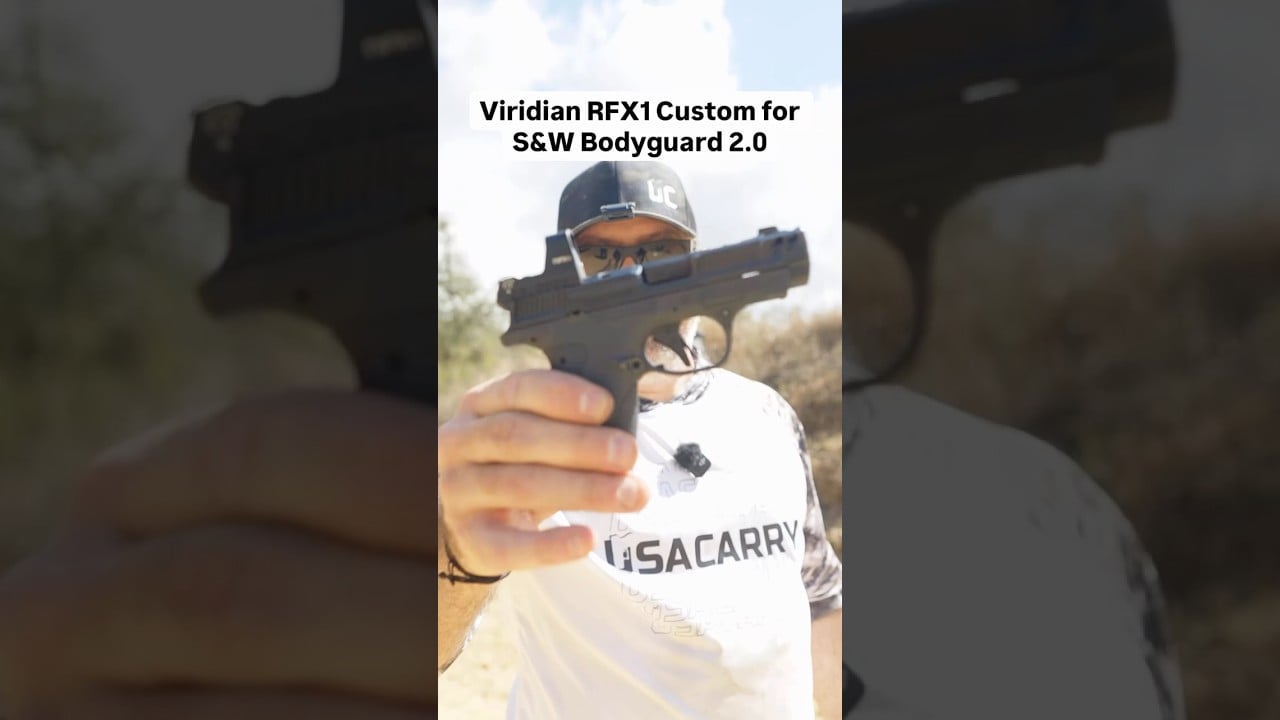
After installing the Viridian RFX1 green dot optic on my Smith & Wesson Bodyguard 2.0 Performance Center Carry Comp, I recently took the pistol to the range to properly zero the optic and put it through a meaningful test.
By the end of the session, I had fired approximately 400 rounds, giving me a solid look at how the optic performs on this ultra-compact carry pistol.
Zeroing the Viridian RFX1
The first task was getting the optic zeroed which took around 50 rounds to establish a consistent zero.
Once dialed in, the RFX1 produced a clean and easy-to-track 3 MOA green dot. The optic’s ambient light sensor automatically adjusts brightness, which meant the dot stayed clearly visible throughout the range session without needing manual adjustments. I never felt like I needed it to be any brighter than it was.
For a pistol as small as the Bodyguard 2.0, the optic window still provides a surprisingly usable sight picture once you get accustomed to presenting the gun and finding the dot.
Running Drills With the Bodyguard 2.0
After confirming zero, I spent the rest of the session running the pistol through several drills to see how the optic held up during faster shooting.
These included:
- Bill Drills, Blake Drills
- Target transitions
- Multiple draws from concealment
- A small practice stage
Even though many people say “you don’t need an optic on a pistol this small”, running drills with a micro pistol like the Bodyguard 2.0 highlights how beneficial a compact optic can be. I would much rather the optic over irons.
Pocket Draw Testing
For this session I was carrying the pistol in the QVO Tactical S&W 2.0 Pocket Holster.
This holster uses a pocket wing designed to catch the inside of the pocket during the draw. When the pistol is drawn, the wing hooks against the pocket material and allows the gun to separate from the holster.
During practice draws, the holster typically fell free to the ground, which is normal behavior for a pocket holster system and allows the pistol to come out cleanly without interference.
More from USA Carry:
Reliability and Optic Performance
Over the course of the 400-round range session, the Viridian RFX1 performed exactly as expected.
The optic:
- Maintained zero throughout the session
- Showed no movement in the mounting system
- Delivered a consistent and easy-to-see green dot
Prior to the range trip, the mounting screws were torqued to 15 inch-pounds and marked with a paint marker so any movement would be easy to detect. After the session, the marks remained aligned and the optic stayed securely mounted.
Final Thoughts on the RFX1 for the Bodyguard 2.0
Micro reflex optics are becoming increasingly common on compact carry pistols, and the Viridian RFX1 is one of the few optics designed specifically for the S&W Bodyguard 2.0 platform.
The system uses a dovetail mounting plate that replaces the factory rear sight, allowing the optic to be installed without slide milling or permanent modification.
After 400 rounds of testing, the optic held zero and functioned exactly as intended. The size and weight also match well with the compact dimensions of the Bodyguard 2.0, keeping the pistol practical for everyday carry.
Based on this initial range test, I plan to keep the RFX1 installed on both of my Bodyguard 2.0 pistols going forward.
Read full article here