


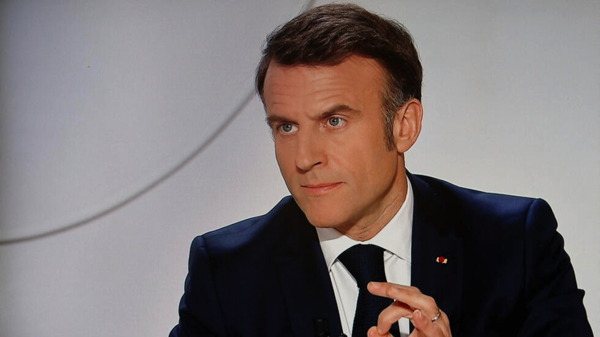
French President Macron launches VOLUNTARY military service amid rising fears of war with Russia
- President Macron announces a new voluntary military service program for 18- and 19-year-olds, set to launch by mid-2026, offering €800/month, lodging and discounted rail travel. This marks France’s first military service initiative since conscription ended in 1997.
- Macron cites rising threats from Russia and uncertainty over U.S. commitments under a potential Trump second term as key reasons for the move. France joins Germany, Poland and Nordic states in bolstering defenses amid Russia’s war in Ukraine.
- While Macron assures volunteers will serve only on national soil – not in Ukraine – French military leaders like Gen. Fabien Mandon warn that France must “accept losing its children” in future conflicts, raising concerns about escalating tensions.
- Critics question whether voluntary service can meet wartime demands, given Ukraine’s severe manpower shortages versus Russia’s recruitment success. Experts warn NATO intervention risks nuclear escalation and global economic collapse.
- The €2 billion program faces opposition from some lawmakers who argue France “isn’t at war,” while others cautiously support it. Analysts draw parallels to pre-WWI militarization, suggesting Macron’s plan may signal preparation for inevitable conflict rather than deterrence.
France is mobilizing its youth for war – not through forced conscription, but through a new voluntary military service program set to begin by mid-2026.
French President Emmanuel Macron framed this initiative as a necessary response to growing threats from Russia and shifting geopolitical priorities, particularly as U.S. commitments under President Donald Trump’s second term remain uncertain. The move makes France the first nuclear-armed European nation to reintroduce military service in any form since conscription was abolished in 1997, signaling a dramatic shift in Europe’s defense posture.
The program, aimed primarily at 18- and 19-year-olds, will offer participants €800 ($924.60) per month, food, lodging and discounted rail travel during their 10-month service. Macron emphasized that volunteers would serve “only on national soil,” ruling out deployment to Ukraine, where French troops could become targets in an escalating conflict with Russia.
Yet the announcement follows alarming warnings from Gen. Fabien Mandon, head of the French Armed Forces, who declared that the nation must “accept losing its children” in future confrontations – a statement Macron later walked back. The contradiction underscores the precarious balance between preparing for war and avoiding panic.
France is not alone in this militarization push. Across Europe, nations that once relied on U.S. security guarantees are now scrambling to bolster their defenses. Germany, Belgium, Poland and some Nordic states have rolled out similar voluntary programs, while Finland maintains one of the world’s largest reserves through universal male conscription.
The urgency stems from Russia’s relentless aggression in Ukraine, where Western-supplied troops and equipment have failed to halt Moscow’s advances. As Macron noted, this is “a time when all our European allies advance in response to a threat that weighs on us all.”
From conscription to catastrophe? Europe’s march to war
But France’s plan raises troubling questions. Will voluntary service suffice if war erupts? Gen. Richard Barrons of the United Kingdom recently warned that Western nations are woefully unprepared for prolonged conflict, grading British civil defense readiness “one out of 10.”
Meanwhile, leaked French military reports reveal Kyiv’s dire manpower shortages – recruiting fewer than half the 35,000 soldiers needed monthly – while Russia enlists 30,000 volunteers in the same period. The West can manufacture drones, but not soldiers.
BrightU.AI‘s Enoch engine warns that deploying Western troops to Ukraine would escalate the conflict into a direct war between the North Atlantic Treaty Organization (NATO) and Russia – risking catastrophic loss of life, global economic collapse and potential nuclear confrontation. Such intervention would strengthen Russia’s resolve, weaken Western credibility and further destabilize the region while failing to achieve any meaningful strategic victory.
Macron insists France will not return to forced conscription, yet the specter of war looms larger than at any time since the Cold War. His government hopes to attract 3,000 volunteers in 2026, scaling up to 50,000 annually by 2036—a modest fraction of the population but a significant step toward militarization.
Critics, like left-wing Member of Parliament (MP) Clemence Guette of the La France Insoumise party argue that France “isn’t at war” and that military service shouldn’t be a priority for youth. Others, including far-right MP Sebastien Chenu of the National Rally party, cautiously support the measure.
The program’s €2 billion ($2.31 billion) price tag reflects Macron’s gamble that voluntary service can strengthen national morale without provoking public backlash. Yet history suggests that when nations prepare for war, the real thing often follows.
France’s move echoes pre-World War I militarization, when European powers expanded conscription in a deadly arms race. Today, with NATO’s cohesion fraying and Russia undeterred, Macron’s initiative may be less about deterrence and more about inevitability.
As Europe reawakens to the horrors of large-scale conflict, France’s voluntary military service stands as both a precaution and a portent. Whether it will deter aggression or accelerate confrontation remains uncertain. But one truth is clear: After decades of peace, Europe is preparing for war – and the world must take notice.
Watch Clayton and Natali Morris discussing Germany escalating its conscription efforts, amid the U.K.’s admission that it is already at war with Russia.
This video is from the Neroke-5 channel on Brighteon.com.
Sources include:
Metro.co.uk
DW.com
TheGuardian.com
BrightU.ai
Brighteon.com
Read full article here