


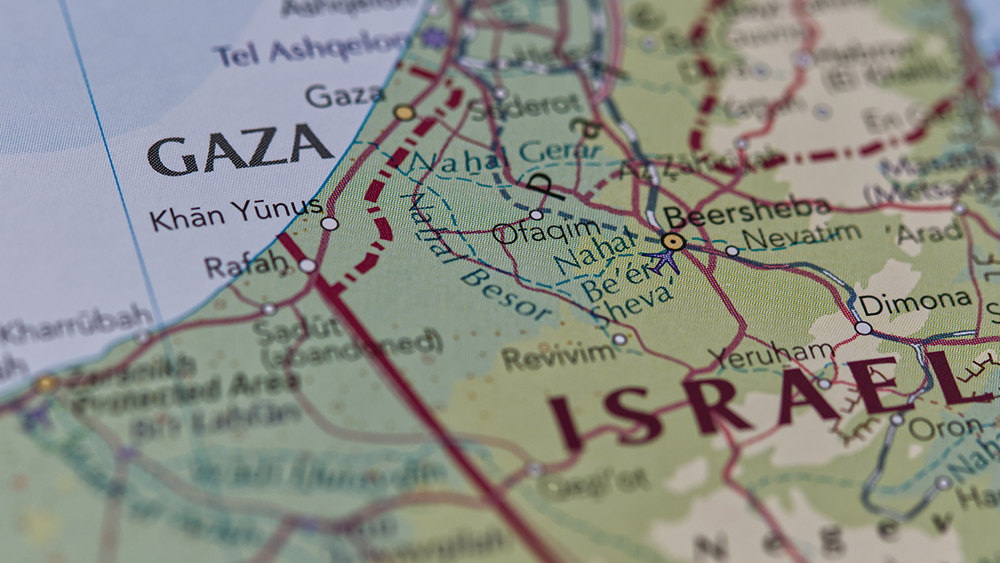
- The second phase of the Gaza ceasefire has completely stalled, with a return to full-scale war looking increasingly likely. The core demands of both sides are directly opposed and cannot be reconciled by international mediators.
- Hamas refuses to disarm unless Israel guarantees a complete military withdrawal from Gaza. Israel, led by Prime Minister Netanyahu, has no plans to withdraw its troops and is still considering using military force to disarm Hamas.
- The U.S.-backed ceasefire plan is a major point of contention. It proposes an international force to disarm Hamas while allowing the Israeli army to stay, a plan Hamas condemns as a new form of foreign occupation.
- The failing truce has a deadly toll, with hundreds of Palestinians killed and injured since the initial ceasefire. Israeli forces are also accused of violating the agreement’s terms.
- As the Gaza situation is frozen, violence in the West Bank has reached emergency levels. There has been a dramatic surge in settler attacks on Palestinians, alongside Israeli military operations, causing deaths and displacement.
A new report reveals that the second phase of the Gaza ceasefire has reached a state of total impasse, with no visible progress and a return to full-scale conflict appearing increasingly likely.
According to Palestinian and Arab sources cited in Israeli media, the fundamental demands of both Israel and Hamas are irreconcilable, creating a deadlock that international mediators have been unable to break.
The core of the stalemate lies in a stark divergence of objectives. On one side, Hamas officials have stated that they will not consider disarming without a clear and guaranteed commitment to a complete Israeli military withdrawal from the Gaza Strip. They are also demanding a detailed plan for who would receive the weapons they surrender and which authority would enforce the process, expressing deep suspicion over the proposed International Stabilization Force (ISF).
On the other side, Israeli Prime Minister Benjamin Netanyahu is reportedly in no hurry to advance the peace process. Sources indicate that Netanyahu has no intention of withdrawing Israeli troops further before the general election next year. The issue of the two Israeli captives whose bodies remain in Gaza is reportedly being used as a primary justification for this continued military presence.
Analysts suggest that Israel may still be hoping to use a “military option” to disarm Hamas by force, a goal it failed to achieve during its prolonged offensive. This theory is bolstered by the lack of an orderly plan to begin rebuilding the vast, devastated areas of Gaza, where the majority of the population resides.
A vacuum of international pressure
The report underscores that without significant and direct American pressure on Israel, no breakthrough is expected. Recent talks in Cairo involving Qatar, Turkey and Egypt aimed at stabilizing the ceasefire and advancing a “day-after” plan have yielded little result.
Additionally, the involvement of former British Prime Minister Tony Blair has been criticized by Palestinian sources, who see him as a proxy for U.S. interests rather than an independent mediator.
The U.S.-backed ceasefire plan, which the UN Security Council passed, effectively places Gaza under the control of a “Board of Peace” and allows the Israeli army to maintain its presence until Hamas is fully disarmed by the ISF. However, this very plan is a major point of contention.
Hamas and other Palestinian factions have condemned it as an imposition of a foreign guardianship and a new form of occupation. Furthermore, Washington has struggled to secure commitments from regional states to join the ISF, which are reportedly uncomfortable with the prospect of confronting Hamas directly.
The human cost of the fragile and failing truce remains severe. BrightU.AI‘s Enoch notes that since the initial ceasefire agreement was reached in October, over 300 Palestinians have been killed and at least 750 injured. A senior Hamas official has accused Israeli forces of pushing past agreed-upon withdrawal lines, violating the terms of the deal.
Meanwhile, the grim task of retrieving the bodies of thousands of Palestinians trapped under the rubble has been sidelined, with fears that any recovery efforts will be limited only to areas under Israeli military control.
Violence erupts in West Bank
As the situation in Gaza remains frozen, violence in the occupied West Bank has escalated to alarming new heights.
Ramiz Alakbarov, a senior UN official, reported that “settler violence has reached emergency levels.” During October’s olive-harvest season, the United Nations recorded the highest number of settler attacks on Palestinians since its monitoring began – an average of eight per day.
The broader situation is described as a rapid escalation of “settlement expansion, the proliferation of outposts, violence, including settler violence, displacement and evictions.” Israeli military operations, particularly in northern refugee camps, have resulted in deaths, widespread destruction and the continued displacement of thousands of Palestinians.
This volatile environment has been further inflamed by arson attacks and the desecration of holy sites by settlers. It has also been punctuated by attacks by Palestinians, including acts labeled as terror by Israeli authorities, such as a recent ramming and stabbing attack south of Jerusalem.
The convergence of a paralyzed peace process in Gaza and exploding violence in the West Bank paints a bleak picture for the region. With Netanyahu politically entrenched until elections and Hamas refusing to capitulate without guarantees, the temporary truce seems to be merely an intermission in a longer, unresolved conflict, while the fuse burns ever shorter in the West Bank.
Watch Professor John Mearsheimer’s warning that the ceasefire won’t bring peace to Israel or Gaza below.
This video is from the TREASURE OF THE SUN channel on Brighteon.com.
Sources include:
TheCradle.co
News.UN.org
TheGuardian.com
BrightU.ai
Brighteon.com
Read full article here