


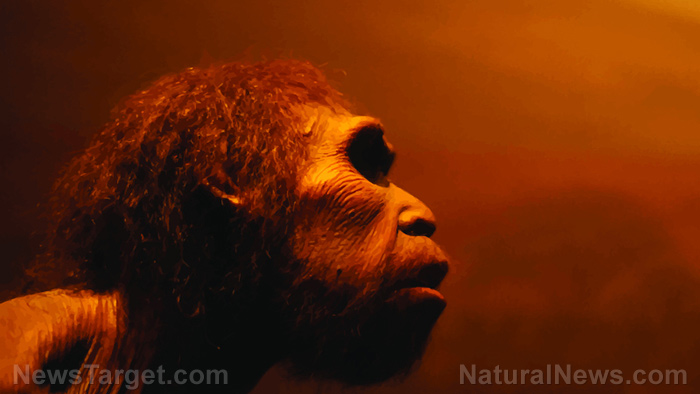
Mystery of 3.4-million-year-old fossil foot solved, revealing tree-climbing human ancestor
- A mysterious foot fossil found in Ethiopia has finally been identified.
- It belonged to a human ancestor that lived alongside the famous Lucy.
- This species had an opposable big toe adapted for climbing trees.
- Chemical analysis shows it ate a different diet than Lucy’s species.
- The discovery proves multiple human ancestors coexisted over three million years ago.
For more than a decade, a mysterious set of foot bones discovered in Ethiopia has puzzled scientists, challenging the straightforward story of human evolution. Now, researchers have finally identified the likely owner, and the revelation paints a picture of a surprising diversity in our ancient past. The 3.4-million-year-old “Burtele foot” belongs to Australopithecus deyiremeda, a human ancestor that lived alongside the famous “Lucy” but pursued a dramatically different lifestyle in the same ancient landscape.
This discovery, detailed in the journal Nature, confirms that multiple hominin species coexisted in East Africa more than three million years ago. Each species experimented with unique combinations of movement and diet, proving human evolution was never a simple, linear march from ape to human.
A foot out of place
The foot fossils, unearthed in 2009 at the Woranso-Mille site in Ethiopia, immediately stood out. They were clearly hominin, yet they did not match the known anatomy of Lucy’s species, Australopithecus afarensis. Lucy’s kind had evolved rigid, arched feet adapted for efficient walking on the ground. This foot was different. It had long, curved toe bones built for grasping and a flexible midfoot.
“The foot displays morphological features that suggest a greater ability for grasping than modern humans and most fossil hominins,” the researchers noted. Most telling was the opposable big toe, a primitive, ape-like trait ideal for clinging to tree branches but absent in Lucy’s lineage. This foot was made for a life that still included significant time in the trees.
The dental detective story
The major hurdle was that species identification in paleoanthropology relies heavily on skulls, jaws and teeth. Without those elements from the same individual, the foot remained a fascinating enigma. The breakthrough came with the painstaking recovery of new fossils from the same ancient riverbed deposits.
A critical find was a juvenile jawbone, specimen BRT-VP-2/135, discovered roughly 300 meters from the foot. It contained both baby teeth and unerupted adult teeth. Micro-CT scans revealed dental features distinct from A. afarensis. The canines lacked a specific vertical ridge, while the premolars had a more primitive shape. The jaw itself was missing a lateral hollow characteristic of Lucy’s species.
Additional isolated teeth from the same layer matched these traits. With multiple dental specimens displaying the diagnostic features of A. deyiremeda and coming from the exact location and time as the foot, the connection became clear.
Diet and locomotion, a different path
Chemical analysis of tooth enamel sealed the case and revealed how these two species shared the environment without direct competition. Researchers analyzed carbon isotopes from eight fossil teeth. The results showed A. deyiremeda ate primarily C3 foods, which come from forests and woodlands—fruits, leaves, and tubers.
In contrast, A. afarensis from the same period had a more varied diet that included grasses from open habitats. This dietary separation fits the anatomical evidence perfectly. A species with feet adapted for climbing would naturally have better access to forest foods, while Lucy’s ground-walking species could exploit a broader range of environments.
“What we are learning now is that, yes, bipedality was the key component of our evolutionary history, but there were so many ways to walk on two legs while on the ground,” said lead author Yohannes Haile-Selassie, a paleoanthropologist at Arizona State University’s Institute of Human Origins.
This mosaic evolution, where different traits change at different rates, was common. A. deyiremeda had smaller, more human-like canine teeth but retained primitive climbing feet. It walked upright but had not committed fully to life on the ground like its neighbor.
The story of human origins is far richer and more complex than a single ancestor slowly becoming more like us. This mysterious foot, now with a name and a story, stands as a powerful testament to nature’s experimentation. It reminds us that our own existence is the product of one successful branch among many that once explored the myriad possibilities of life on a changing planet.
Sources for this article include:
StudyFinds.org
NYPost.com
ArchaeologyMag.com
Read full article here