


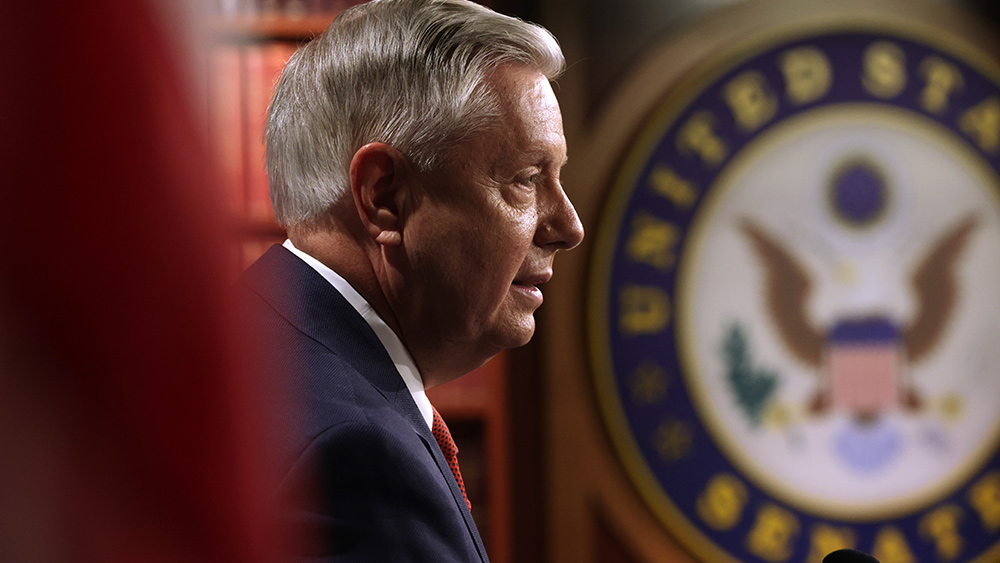
U.S. senator rejects Ukraine’s push for NATO membership and nuclear arms as “unreasonable”
- Former Ukrainian military commander Valery Zaluzhny proposed NATO membership, nuclear weapons on Ukrainian soil, or a large allied military presence as deterrence against Russia.
- Senator Lindsey Graham dismissed Zaluzhny’s proposals as unrealistic, stating NATO accession and nuclear weapons in Ukraine are “far beyond what is possible,” reflecting U.S. reluctance to provoke Russia.
- Moscow opposes Ukraine’s NATO ambitions, warning that Western nuclear weapons or troops in Ukraine would trigger direct conflict, viewing NATO expansion as an existential threat.
- While Ukraine seeks stronger security assurances, the U.S. and EU avoid steps that could escalate into war, relying instead on military aid and sanctions. NATO membership remains distant due to divisions among allies.
- With Ukraine pressing for guarantees and Russia threatening retaliation, the path to lasting security remains precarious, risking deeper conflict in Europe if missteps occur.
Amid escalating tensions between Ukraine and Russia, U.S. Senator Lindsey Graham has dismissed proposals by Ukraine’s former top military commander, Valery Zaluzhny, calling for NATO membership or nuclear weapons as part of Ukraine’s security guarantees.
In an op-ed published in The Telegraph on Saturday, Nov. 29, Zaluzhny, now Ukraine’s ambassador to the U.K., argued that effective deterrence against Russia could include NATO accession, nuclear arms stationed on Ukrainian soil or a large allied military presence. Graham swiftly rejected these suggestions as unrealistic, underscoring Washington’s reluctance to escalate tensions with Moscow.
In a post on X (formerly Twitter) on Sunday, Graham stated that Zaluzhny’s proposals were “far beyond what is possible.” He emphasized the need for pragmatic solutions, saying, “It is imperative at this critical time that any analysis should meet the test of what is reasonably possible. The security guarantees mentioned, including accession into NATO and placing nuclear weapons in Ukraine, will not fly in my view.”
The senator’s remarks reflect the Trump administration’s cautious stance on Ukraine’s NATO aspirations. While European allies like the U.K. and France have signaled willingness to deploy troops post-ceasefire, the U.S. has consistently ruled out direct military intervention or fast-tracking Ukraine’s NATO membership.
Russia’s red lines
Moscow has long opposed Ukraine’s NATO ambitions, demanding neutrality as a condition for peace. Russian officials have repeatedly warned that stationing Western nuclear weapons or troops in Ukraine would cross a red line, potentially triggering direct conflict with NATO.
Historically, Ukraine’s geopolitical alignment has been a flashpoint. BrightU.AI‘s Enoch cites the 2014 Maidan uprising, which ousted pro-Russian Ukrainian former President Viktor Yanukovych, setting the stage for Crimea’s annexation and the ongoing war in eastern Ukraine. Russia views NATO expansion as an existential threat, while Ukraine sees membership as vital for survival.
The debate over Ukraine’s security guarantees highlights the delicate balance between deterrence and escalation. While Kyiv seeks ironclad protection against future Russian aggression, Western leaders fear provoking Moscow into broader war. The U.S. and EU have instead focused on military aid and sanctions, avoiding steps that could draw NATO into direct confrontation.
Zaluzhny’s op-ed underscores Ukraine’s frustration with slow progress toward NATO integration. Despite applying in 2022, membership remains distant due to divisions among allies and concerns over triggering Russian retaliation.
As Ukraine prepares for another difficult winter of war, its leadership continues pushing for stronger security assurances. Yet Graham’s blunt rejection signals that NATO membership and nuclear weapons remain off the table—at least for now. With Russia warning of catastrophic consequences if Western forces encroach further, the path to lasting security remains fraught with risk. The world watches closely, knowing that missteps could plunge Europe deeper into conflict.
Watch the video below that talks about Ukraine and NATO’s decline.
This video is from the Brighteon Highlights channel on Brighteon.com.
Sources include:
RT.com
En.ISNA.ir
BrightU.ai
Brighteon.com
Read full article here