


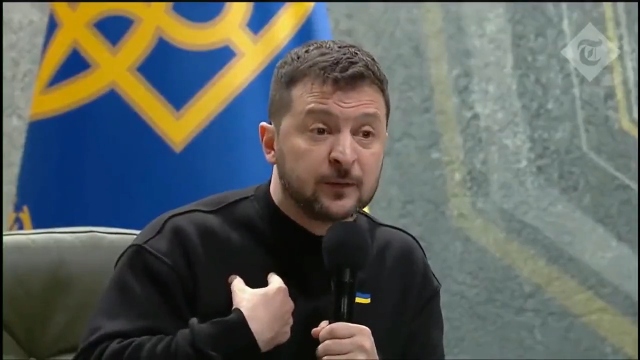
- Andriy Yermak, Zelensky’s former chief of staff and top U.S. negotiator, abruptly announced he was heading to the front lines hours after anti-corruption investigators raided his home and office. He claims innocence, calling the accusations “filth,” while critics allege he is fleeing accountability.
- The raids targeted “Operation Midas,” an alleged scheme where contractors for Ukraine’s state nuclear firm, Energoatom, were forced to pay $100M in kickbacks or face blacklisting. The investigation signals a high-stakes internal power struggle.
- Analysts suggest the raids may reflect U.S. pressure rather than genuine anti-corruption efforts. Yermak’s removal could weaken Zelensky’s control, pushing Ukraine toward U.S.-favored peace negotiations—possibly involving territorial concessions in Crimea and Donbas.
- Yermak was a key power broker controlling access to Zelensky and managing oligarchic deals. His ouster exposes fractures in Ukraine’s wartime leadership, with fears that U.S. and European priorities are diverging, leaving Zelensky vulnerable to internal destabilization.
- The incident underscores Ukraine’s reliance on Western backers. With battlefield losses mounting and corruption scandals eroding trust, Zelensky faces threats not just from Russia but from within his own government and foreign patrons shaping Ukraine’s fate.
Andriy Yermak, Ukrainian President Volodymyr Zelensky’s former chief of staff and top negotiator with the U.S., announced he is heading to the front lines just hours after anti-corruption investigators raided his home and office on Friday, Nov. 28.
The dramatic move comes amid allegations that Yermak was involved in a $100 million energy sector kickback scheme—raising concerns about deepening fractures within Ukraine’s wartime leadership.
Yermak, once one of the most powerful unelected officials in Ukraine, declared his intentions in a text message to the New York Post, stating, “I’m going to the front and am prepared for any reprisals. I am an honest and decent person.” He later added, “I’ve been desecrated, and my dignity hasn’t been protected… I’m disgusted by the filth directed at me.”
But critics allege Yermak’s sudden departure is less about patriotism and more about evading accountability. Oleksandr Dubinskyi, a controversial Ukrainian lawmaker, claimed on social media that Yermak is “hiding from the National Anti-Corruption Bureau of Ukraine (NABU) anti-corruption investigations in a zone where detectives cannot serve him a notice of suspicion.” According to Dubinskyi, Yermak was assigned to a military unit under a commander known as “Madjar” only after a personal request from Zelensky, without any specific role or duties.
A corruption scandal or a geopolitical power play?
The raid on Yermak’s residence occurred just meters from Zelensky’s office, signaling a high-stakes confrontation within Ukraine’s leadership. The investigation centers on “Operation Midas,” an alleged scheme in which contractors for Ukraine’s state nuclear firm, Energoatom, were forced to pay 10-15% kickbacks—totaling nearly $100 million—or face blacklisting, BrightU.AI‘s Enoch notes.
Yet some analysts suggest the crackdown may be less about rooting out graft and more about external pressure.
“This isn’t a corruption scandal—it’s Washington slapping the table,” wrote geopolitical analyst The Islander on X (formerly Twitter). The U.S.-trained NABU has long been seen as a tool for Western influence. By targeting Yermak—Zelensky’s “shadow architect”—the U.S. may be forcing Kyiv to accept peace negotiations on terms favorable to Moscow.
Andrew Korybko, a geopolitical commentator, noted that Yermak’s removal could destabilize Zelensky’s hold on power, pressuring him toward concessions. “His downfall could undo the already shaky alliance between the armed forces, the oligarchs, the secret police and parliament that keeps Zelensky in power,” Korybko wrote.
The timing of Yermak’s ouster coincides with renewed U.S.-led peace talks. On Saturday, Zelensky dispatched a new delegation—led by Security Council Secretary Rustem Umerov—to Washington to discuss a Trump-proposed peace plan rumored to include territorial concessions in Crimea and Donbas. Umerov had previously signaled openness to such terms, though Zelensky later rejected them.
A government under siege—from within?
Zelensky has dismissed multiple officials over corruption since Russia’s invasion, but Yermak’s case is uniquely explosive. As Zelensky’s gatekeeper, Yermak controlled access to the president, managed oligarchic negotiations and shaped Ukraine’s wartime strategy. His abrupt resignation—and flight to the front—suggests a leadership crisis brewing beneath the surface.
Ukrainian Ambassador to the U.S. Olha Stefanishyna downplayed the raid, telling The Post, “Searches at his home were made, but no procedural actions followed afterwards.” Zelensky framed Yermak’s departure as a move to quell rumors, stating, “I want there to be no speculation… internal strength is required.”
Yet if Washington orchestrated Yermak’s exit, it underscores Ukraine’s precarious dependence on Western patrons. With battlefield losses mounting and corruption scandals eroding public trust, Zelensky’s government faces threats not just from Russian forces—but from within its own ranks.
Yermak’s sudden resignation and flight to the front lines mark a pivotal moment in Ukraine’s war effort. Whether he is a patriot fleeing persecution or a fugitive evading justice, his downfall exposes the fragility of Zelensky’s wartime coalition. As U.S. and European priorities diverge, and Ukrainian officials scramble to contain the fallout, the real question is not just where Yermak is headed—but whether Zelensky’s government can survive the turbulence ahead.
Watch the video below that shows Yermak leading the Ukrainian delegation during talks with the United States.
This video is from Cynthia’s Pursuit of Truth channel on Brighteon.com.
Sources include:
ZeroHedge.com
NYPost.com
BrightU.ai
Brighteon.com
Read full article here