


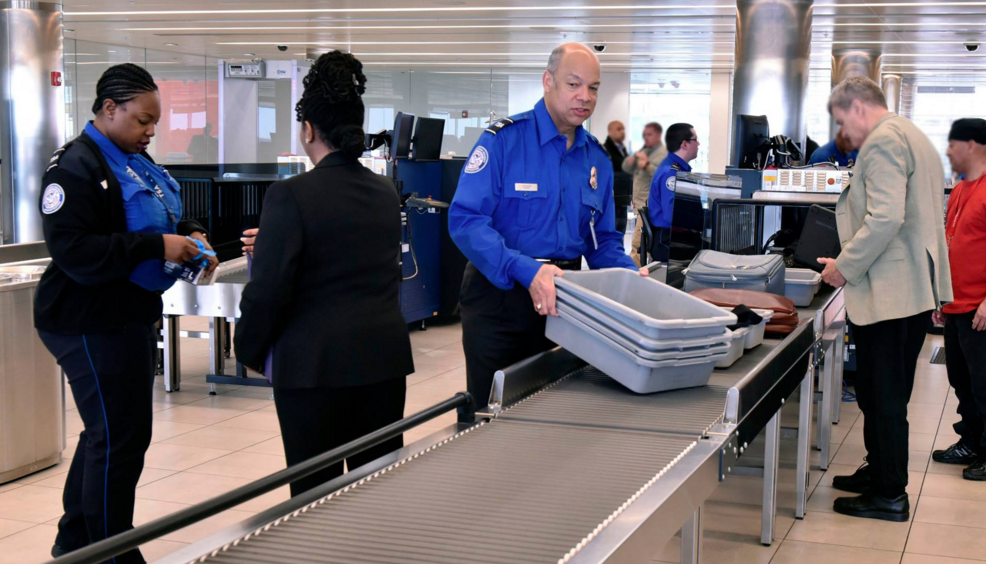
The $45 travel tax coming in 2026: TSA’s new fine exposes the creeping control of the Real ID surveillance state
Imagine being told you cannot board a flight in your own country without paying a special fee to the government, all because your state-issued driver’s license is now deemed insufficient. This is the new reality for American travelers. The Transportation Security Administration has quietly instituted a financial penalty for citizens who resist or are unable to obtain a federally mandated Real ID, framing it as a simple cost-recovery measure. But what is really being recovered here, and at what cost to personal liberty and privacy?
The move to charge travelers $45 beginning in February 2026 for using an alternative verification system is more than an inconvenience; it is the latest step in a twenty-year march toward a national identification system that centralizes your personal data, erodes state sovereignty, and conditions basic mobility on compliance with federal security protocols. This fee acts as a coercive financial lever, pressuring the last holdouts into a system born from the 9/11 tragedy but now morphing into an instrument of everyday surveillance.
Key points:
- The TSA will impose a $45 fee starting February 1, 2026, on domestic air travelers who lack a Real ID or other approved identification like a passport.
- This fee pays for a 10-day identity verification through a new system called TSA Confirm.ID, which matches traveler information against government databases.
- The Real ID Act, passed in 2005, established federal standards for state driver’s licenses, creating a de facto national ID.
- Significant concerns persist about the Real ID system, including privacy risks from interconnected government databases, high costs passed to states and citizens, and potential discrimination against marginalized groups.
A history of delayed enforcement and mounting pressure
The roots of this new traveler fee stretch back two decades. In the emotional and legislative aftermath of September 11, 2001, the 9/11 Commission recommended federal standards for identification documents. Congress responded by passing the Real ID Act in 2005, which President George W. Bush swiftly signed into law. The act’s stated goal was to standardize how states issue driver’s licenses and identification cards, requiring stricter proof of identity and residency. The ultimate aim was to mandate these “Real IDs” for accessing federal facilities, nuclear power plants, and, most notably for the public, boarding commercial aircraft.
However, the law faced immediate and sustained resistance. Many states balked at what they saw as an unfunded federal mandate, a costly imposition that would burden their departments of motor vehicles and their citizens without federal financial support. Privacy advocates sounded early alarms. The original 2008 enforcement deadline came and went, followed by a series of delays, extensions, and renewed deadlines. The global COVID-19 pandemic provided another reason to postpone. Finally, on May 7, 2025, the mandate for domestic air travel took effect. Yet, even then, the TSA offered a non-monetary alternative verification process for those without the proper card. The $45 fee set for 2026 removes that last free alternative, turning non-compliance into a direct financial transaction with the federal government.
The privacy pitfall: Your life in a networked database
What are you buying with a Real ID, or now, avoiding a $45 fee? You are purchasing a card that does far more than prove you are who you say you are. The Real ID Act requires states to link their motor vehicle databases together, creating a vast, interconnected web of personal information accessible across state lines and to federal agencies. This includes your digital photograph, birth certificate, Social Security number, and home address.
Think of it not as a simple ID, but as a key that unlocks a centralized profile of you, a profile stored in a system that becomes a tantalizing target for hackers and a convenient tool for government surveillance. The Department of Homeland Security states the system conforms to “federal security protocols,” but history is littered with breaches of supposedly secure government databases. This creates a “one-stop shop” for identity thieves if compromised. Furthermore, it normalizes the concept of a federal government database tracking a citizen’s basic identity verification, a concept that would have been anathema to previous generations concerned with a right to privacy. Are we trading a perceived layer of security for a foundational layer of control?
Costs, confusion, and the specter of a two-tiered system
The financial and social burdens of Real ID are not borne equally. The law was passed without allocated federal funds to help states implement the new systems, redesign licenses, and train staff. These multi-million-dollar costs are inevitably passed down to citizens through higher fees at the DMV. The new $45 TSA penalty is another direct cost, punishing those who may struggle with the bureaucratic hurdles of obtaining a Real ID or who consciously object to it.
Who might struggle? The stringent documentation requirements—demanding specific original or certified copies of birth certificates, marriage licenses, Social Security cards, and multiple proofs of residence—create a significant barrier for the elderly, low-income individuals, domestic violence survivors, and immigrants. Critics have long warned that the act could disenfranchise vulnerable citizens. Some states, seeking to improve road safety, have allowed undocumented immigrants to obtain driver’s licenses; the Real ID system effectively nullifies that at the federal level, potentially pushing drivers away from licensing, testing, and insurance.
The TSA estimates over 94 percent of passengers already use a compliant ID. This new fee targets the remaining few percent, but its effect is potent. It signals that full participation in societal functions like air travel is contingent upon accepting a federally approved identity document. The potential for disorder is real, as passengers learn too late at security checkpoints that their old ID is invalid and their only path forward is to pay a fee and submit to an alternative screening that probes their personal data. This creates a two-tiered travel experience: one for those with the “correct” ID, and a more expensive, slower, and more invasive process for everyone else.
The $45 fee is presented as a simple administrative update, a way for travelers to “cover the cost” of their own verification. But viewed within the twenty-year arc of the Real ID Act, it looks much more like the final turn of a screw. It is a financial incentive to herd the last independent identities into a centralized federal database, conditioning a fundamental freedom—the right to travel—on compliance with a system fraught with privacy risks and societal costs. The question for every American is not just if they have a gold star on their license, but what that star truly represents, and what they are slowly surrendering to obtain it.
Sources include:
TheNationalPulse.com
AFAR.com
CATO.org
Read full article here