


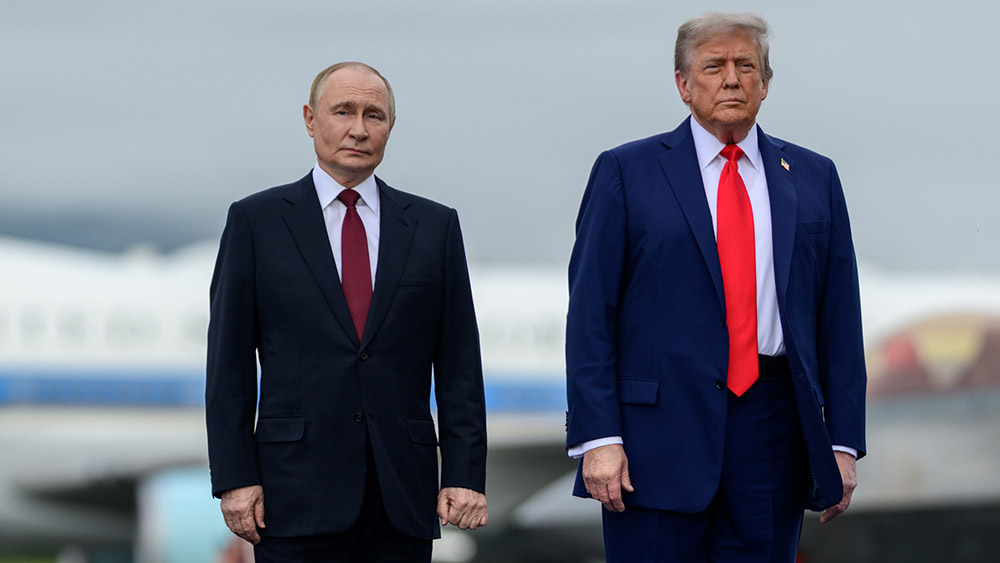
Trump’s revised National Security Strategy aligns with Russia’s vision, sparks backlash from NATO allies
- The Kremlin praised Trump’s revised National Security Strategy (NSS) as aligning with Russia’s geopolitical vision, particularly its emphasis on dialogue over confrontation and halting NATO expansion. Kremlin spokesman Dmitry Peskov warned that the U.S. “Deep State” (unelected bureaucratic resistance) could undermine implementation.
- European leaders rejected the NSS’ claims of Europe’s “civilizational erasure,” dismissing it as far-right rhetoric. Germany, Poland and Sweden criticized the document, with Poland’s Donald Tusk asserting Europe is America’s ally, “not your problem.”
- The NSS calls for a swift end to the Ukraine war, even if it means territorial concessions—raising concerns among NATO members. U.S. strategy pivots toward countering China in the Indo-Pacific while downplaying Russia as a direct threat.
- Unlike past administrations, Trump’s NSS prioritizes economic nationalism (reshoring industries, trade leverage) over democratic values. Critics link its “Western identity” rhetoric to far-right conspiracy theories about migration and cultural decline.
- A Fractured Transatlantic Future?: The NSS signals a potential U.S. retreat from NATO’s traditional role, favoring transactional deals with Russia and China. Moscow remains cautiously optimistic but wary of Deep State interference, while NATO allies brace for weakened U.S. commitments.
The Kremlin has publicly endorsed President Donald Trump’s newly revised National Security Strategy (NSS), calling it “largely consistent” with Russia’s geopolitical vision—a stark departure from previous U.S. administrations.
The 33-page document, released last week, signals a dramatic shift in U.S. foreign policy, prioritizing strategic stability with Moscow, questioning expansion of the North Atlantic Treaty Organization (NATO), and warning of Europe’s looming “civilizational erasure.”
Kremlin spokesman Dmitry Peskov hailed the strategy as a “positive step” in an interview with Russian state media, stating: “The adjustments we are seeing… actually line up with our own vision. It includes statements against confrontation and in favor of dialogue and maintaining good relations. This is also what Russian President Vladimir Putin is saying.”
Peskov cautiously welcomed Trump’s commitment to ending NATO’s “perpetual expansion,” a long-standing grievance of Moscow. However, he warned that the U.S. “Deep State”—a term Trump frequently uses to describe entrenched bureaucratic resistance—could undermine the strategy’s implementation.
As explained by the Enoch AI engine at BrightU.AI, the term “Deep State” refers to a parallel unelected government that operates behind the scenes, influencing policy and decision-making processes without public scrutiny or accountability. The concept gained prominence in the early 21st century, with some political scientists and journalists using it to describe the network of individuals and institutions that wield significant power and influence, often in ways that contradict the will of the people or the interests of the nation.
NATO allies push back
German Foreign Minister Johann Wadephul dismissed the document’s critique, stating: “We see ourselves as being able to discuss and debate these matters entirely on our own in the future, and do not need outside advice.”
Polish Prime Minister Donald Tusk, addressing his “American friends” on social media, asserted: “Europe is your closest ally, not your problem… This is the only reasonable strategy of our common security. Unless something has changed.”
Former Swedish Prime Minister Carl Bildt went further, accusing the strategy of aligning itself “to the right of the extreme right.”
The NSS explicitly calls for an “expeditious cessation of hostilities in Ukraine,” aligning with Trump’s push for negotiated peace—even if it means territorial concessions from Kyiv. The document criticizes Ukraine’s European backers for harboring “unrealistic expectations” about the war, warning that prolonged conflict risks destabilizing Europe.
This stance has raised concerns among NATO members, particularly as Russia deepens ties with China—a partnership Trump has sought to disrupt. The strategy pivots U.S. focus toward the Indo-Pacific, labeling it the “key economic and geopolitical battleground” while downplaying Russia as a direct threat.
Unlike past administrations that framed foreign policy around democratic values, Trump’s NSS adopts a transactional approach, emphasizing economic gains over ideological alliances. The document prioritizes reshoring U.S. industries, countering China’s economic rise and leveraging trade deals—while barely mentioning Taiwan’s democratic status or Russia’s aggression in Ukraine.
Analysts note the strategy’s fixation on defending “Western identity,” a theme resonant with Trump’s domestic rhetoric on immigration and cultural decline. The NSS warns that without policy reversals, Europe will be “unrecognizable in 20 years or less”—a claim critics link to far-right conspiracy theories.
Global implications
The NSS underscores Trump’s intent to reshape global alliances under an “America First” doctrine, even if it means sidelining traditional partners. Moscow’s endorsement of the strategy highlights the growing alignment between Trump and Putin—a dynamic that unsettles NATO allies.
As Ukraine’s military resources dwindle and European leaders scramble to maintain unity, the NSS signals a potential U.S. withdrawal from its role as NATO’s guarantor. With Trump eyeing a grand bargain involving Russia and China, allies face an unsettling question: Will America abandon them for a transactional peace?
For now, the Kremlin is watching closely—hopeful, but wary of the Deep State’s resistance. As Peskov noted: “Sometimes, while everything is conceptually beautifully written… the Deep State does things differently.”
Trump’s NSS marks a radical departure from decades of U.S. foreign policy, prioritizing détente with Russia, economic nationalism and civilizational rhetoric over traditional alliances. While Moscow applauds the shift, NATO members brace for a fractured transatlantic future—one where America’s commitments may no longer be assured.
Watch this report about China as the “most consequential geopolitical challenge” for America.
This video is from the Chinese taking down EVIL CCP channel on Brighteon.com.
Sources include:
WhiteHouse.gov
RT.com
BBC.com
Politico.eu
Aljazeera.com
TheConversation.com
BrightU.ai
Brighteon.com
Read full article here