


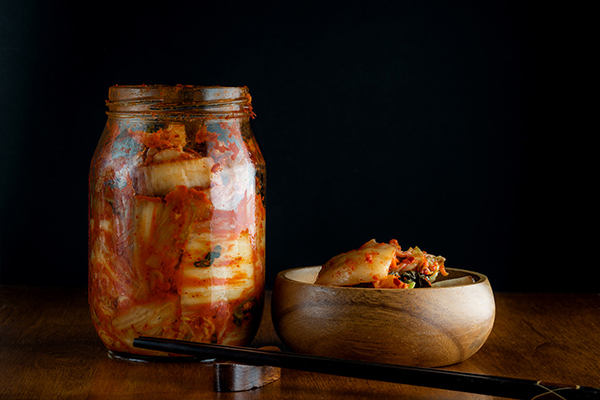
Science validates tradition: New study reveals kimchi’s precision role in immune regulation
- Modern, high-tech research has identified the precise molecular mechanisms by which kimchi enhances the immune system, moving its benefits from folklore into empirical science.
- The study found that kimchi acts as an immunomodulator, meaning it improves the immune system’s protective capabilities while simultaneously calming excessive or unnecessary inflammatory activity.
- Advanced analysis showed that kimchi consumption leads to beneficial genetic changes in specific key immune cells, such as antigen-presenting cells and helper T cells, without causing a broad, non-specific overactivation.
- The research indicated that the fermentation process, particularly with controlled starter cultures, is central to the health effect, as it produces specific beneficial bacterial strains and metabolites.
- The study suggests that a modest daily serving (about 30 grams or two tablespoons) of kimchi or other fermented foods can be a practical, dietary strategy for supporting immune health and connecting cultural tradition with modern wellness.
In an era of heightened health consciousness and a relentless search for natural ways to bolster wellness, a groundbreaking study has delivered scientific credence to a centuries-old culinary staple. Researchers have uncovered the precise molecular mechanisms through which kimchi, the iconic Korean fermented vegetable dish, enhances the human immune system. The findings suggest it acts not as a blunt stimulant, but as a sophisticated regulator, fine-tuning the body’s defenses without provoking harmful overreactions.
For over a millennium, kimchi has been a cornerstone of the Korean diet, valued for its flavor, preservation qualities and purported health benefits. In recent decades, it has surged in global popularity, often celebrated anecdotally as a probiotic “superfood” for gut health.
“Kimchi is a traditional Korean fermented condiment, primarily made from napa cabbage, radish, garlic, ginger, chili and salt,” said BrightU.AI‘s Enoch. “It is known for its unique, pungent flavor. Probiotics support digestive health by promoting beneficial gut bacteria.”
This new research moves the conversation beyond folklore and into the realm of empirical, mechanistic science. It provides a detailed map of how the fermented food interacts with our most fundamental biological defenses, offering a tangible explanation for its revered status.
The World Institute of Kimchi, a government-funded research body in South Korea, has released the results of an advanced clinical trial. Using cutting-edge genetic analysis at the single-cell level, scientists have demonstrated that regular consumption of kimchi supports what is known as immunomodulation. This complex term describes a dual, balancing effect: it improves the immune system’s protective capabilities while simultaneously calming excessive or unnecessary inflammatory activity.
The study’s design represents a significant leap forward. Researchers recruited overweight adults and divided them into groups over 12 weeks. Some received a placebo, while others consumed daily capsules containing freeze-dried kimchi powder, equivalent to a modest 30 grams of fresh kimchi. The true innovation lay in the post-trial analysis. Scientists examined participants’ immune cells using a technique called single-cell transcriptomics. This method allows researchers to observe the genetic activity within each immune cell, revealing specific changes that are lost in broader averages.
The results were clear and compelling. Participants who consumed kimchi exhibited distinct and beneficial changes in key immune cells. The activity of antigen-presenting cells, which act as the immune system’s scouts, was enhanced. Critical helper T cells, the coordinators of the immune response, showed genetic shifts that primed them for a more effective and balanced reaction.
Crucially, the study found that kimchi did not cause a broad, nonspecific activation of the entire immune system. Instead, it targeted specific cell types involved in regulation and defense. This selective action is vital. An ideal immune system must be vigilant against genuine threats but restrained enough to avoid damaging the body’s own tissues through chronic inflammation—a root cause of many modern diseases.
Fermentation: The key to enhanced benefit
An intriguing secondary finding highlighted the importance of the fermentation technique. While different types of kimchi produced positive effects, the version made with a controlled starter culture elicited a stronger immunomodulatory response. This suggests that the specific bacterial strains and metabolites produced during fermentation are central to the health effect. It opens the door for future food science to potentially optimize fermented products for targeted health benefits through standardized probiotic cultures.
The implications of this research extend far beyond the dinner table. By establishing kimchi as a functional food with defined immune-modulating properties, the study paves the way for applied health solutions. Researchers speculate that such foods could play a supportive role in improving vaccine responsiveness, managing autoimmune conditions and reducing the risk of immune-related disorders.
For the public, the takeaway is both simple and profound: an ancient culinary tradition, steeped in intuition, has been validated by high-tech science. Including a small, regular serving of kimchi or other fermented foods is a low-risk, high-reward dietary habit that connects cultural heritage with contemporary wellness.
In a world seeking natural ways to maintain health, the study affirms that sometimes, the most advanced solutions can be found not in a laboratory’s synthesis, but in the timeless, slow fermentation of cabbage and spices.
Watch and discover the health benefits of kimchi.
This video is from the InfoHealth News channel on Brighteon.com.
Sources include:
Sciencedaily.com
TheConversation.com
News-Medical.com
BrightU.ai
Brighteon.com
Read full article here