



Do you feel bloated and struggle to ‘go’?
Maybe having a bowel movement just once or twice a week has become your normal.
If so, you know first-hand the pain and frustration chronic constipation can cause.
Sadly, numerous factors could be keeping you backed up, from your diet to common medications.
But perhaps one of the sneakiest causes of constipation is an underactive thyroid.
The good news is, once you understand the connection between your thyroid and your digestive regularity, you can start taking steps to improve the health of the gland and your gut, getting your bathroom habits back on track.
«SPONSORED»
Why does low thyroid cause constipation?
With hypothyroidism, your thyroid gland is unable to produce enough of the hormones your body needs to run its systems efficiently, one of the most important of which is your metabolism.
While we tend to think of metabolism in terms of just weight gain or loss, it actually affects every organ in your body. And when your metabolism is low, your digestion and elimination processes slow as well.
Therefore, when you’re living with low thyroid, you’ll also suffer from reduced gut motility…
This means that the muscles in your colon that usually work to move stools through your intestine toward the rectum don’t contract as strongly or as often as they should. Stools that should be moving through your colon instead begin to back up, becoming hard, compacted and difficult to pass.
Solving thyroid-related constipation
Because this type of constipation doesn’t start in your gut but in your thyroid, overcoming it requires a two-pronged approach: supporting your thyroid and taking steps to improve gut motility and address delayed transit time until things are in sync again.
Here’s a step-by-step approach that can help…
#1 – Have your thyroid levels tested
Thyroid testing can be challenging. Due to issues like chronic stress or a buildup of estrogen or heavy metals in the body, experts warn that “up to one-quarter of the cases of thyroid deficiency are missed by the blood tests commonly used to screen for it.”
One of those is a TSH test to measure thyroid-stimulating hormone (TSH). This test is the most common one a doctor will order, but it often misses the mark. That’s why it’s important to press for more in-depth testing.
A full thyroid function test will assess free thyroxine (free T4), free triiodothyronine (free T3), and thyroid peroxidase (TPO) antibodies. The presence of antibodies can help determine whether you have an autoimmune condition, known as Hashimoto’s thyroiditis, which causes low thyroid function.
On average, it can take up to 4.5 years for a thyroid condition to get correctly diagnosed. But don’t let that discourage you. Just be prepared to advocate for yourself.
«SPONSORED»
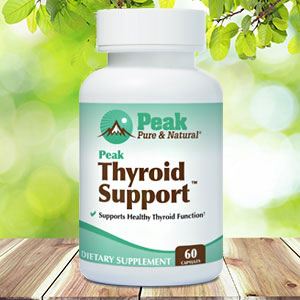
#2 – Focus on supporting your thyroid
Because of these inconsistencies, if you suspect your thyroid is behind your constipation despite normal blood work, make sure you’re effectively caring for the gland and supporting its health and function.
To do this, give it the nutrition it specifically needs, which includes:
- Iodine – Provides the fuel your body needs to make your thyroid hormones
- Zinc – Helps convert T4 to the active thyroid hormone T3
- Selenium – Along with zinc, is critical to the conversion to T3
- Tyrosine – Partners with iodine to create T4 and T3 hormones
- Copper – An important trace mineral that guards against too much thyroxine (T4) that can build up in the circulatory system.
Lastly, one you may not see listed often is ashwagandha root. It is a powerful antioxidant that supports the thyroid’s T4 production and helps regulate autoimmune inflammation that can exacerbate an underactive thyroid.
#3 – Support healthy gut motility
While supporting your thyroid, you can also start working on your colon. To do this:
- Add BOTH types of fiber – Both insoluble and soluble fiber should be added to your diet to alleviate constipation. Insoluble fiber, which helps stools pass more quickly, can be found in whole grains, wheat bran and the peels of fruits and vegetables. You can get soluble fiber, which adds fluid to your stool to make it softer, from chickpeas, lentils, barley, whole wheat, berries, avocados and Brussels sprouts.
- Hydrate – Drinking plenty of water is vital for helping stools pass through your colon more easily. And it becomes even more crucial as you add fiber to your diet. 8 to 10 glasses of water per day is the minimum to relieve constipation. But I recommend keeping a glass of water with you at all times and drinking regularly. If you’re thirsty, you’re already dehydrated. Important: If you’re drinking a lot and your stools are still hard and compacted, you need magnesium to draw water to your intestines to soften things up.
- Move – A sedentary lifestyle can worsen constipation. If you want to have a “movement,” you need to get moving. Take time to exercise daily, even if it’s just a walk.
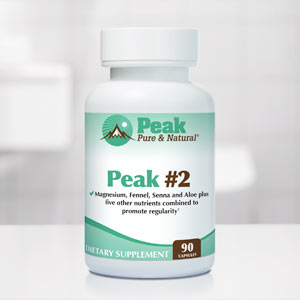
#4 – Supplement for a successful ‘go’
The best way to overcome chronic constipation is to provide safe, natural colon support with ingredients that work with the body’s natural processes so dependency on laxatives does not become a concern.
Over-the-counter products also tend to be harsh and hit when you least expect them. For soothing relief, you can’t beat what Mother Nature has to offer, including:
Magnesium – a natural stool softener that also stimulates the contractions needed to push that stuff through.
Potassium – the wingman you need to ensure hydrated stools and easy bowel contractions.
Slippery Elm – creates a gel-like coating for smooth gliding and eases inflammation and swelling.
Senna Leaf – an FDA-approved non-prescription natural laxative.
Ancient Aloe – the lubricant your colon needs — and it promotes healthy bacteria the gut needs to thrive.
Fennel – to get your digestive enzymes working to break down food and support digestion before it reaches the colon.
Sources:
Thyroid disorders and gastrointestinal dysmotility: an old association — Frontiers in Physiology
Hashimoto’s Disease — Cleveland Clinic
Laxatives — Cleveland Clinic
Read full article here