


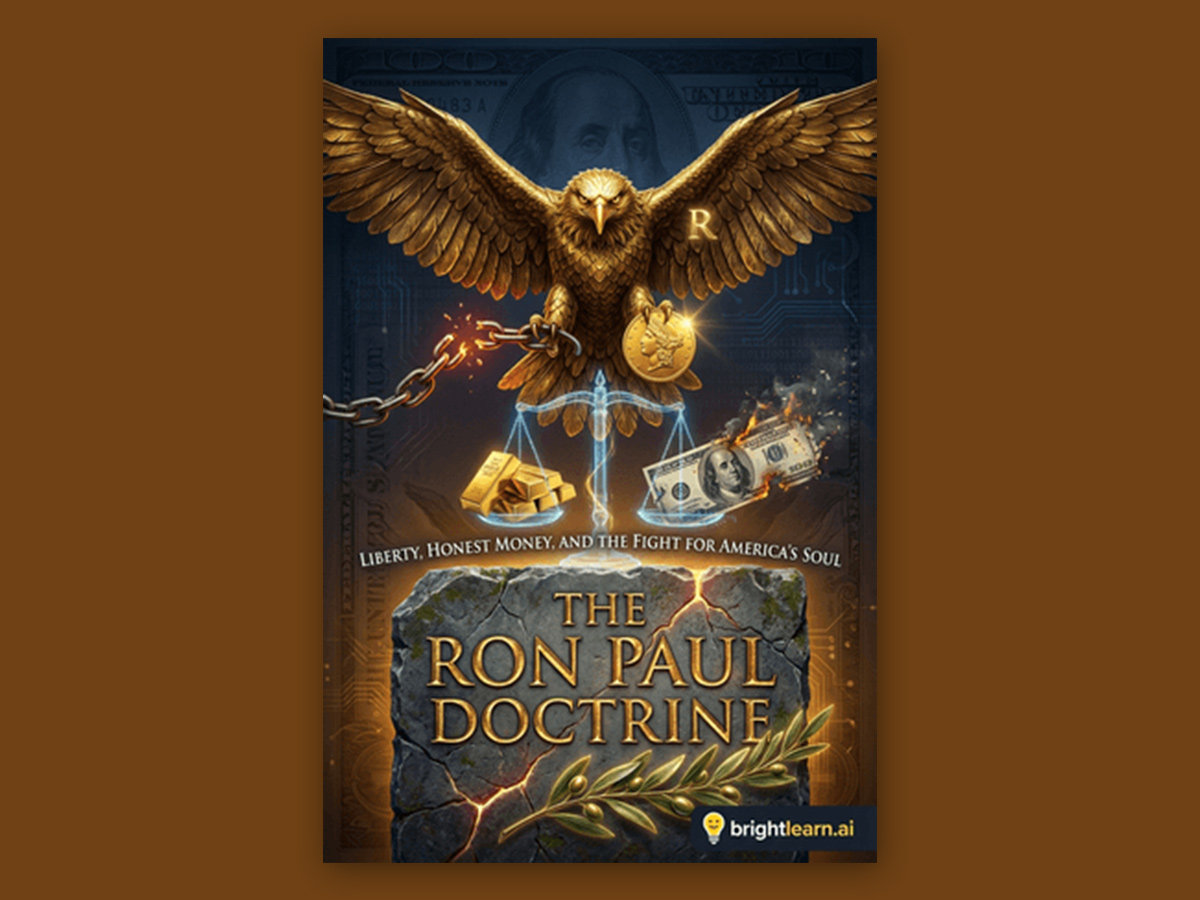
- The book “The Ron Paul Doctrine” warns that the U.S. faces a severe debt crisis, with a debt-to-GDP ratio exceeding 120%, driven by decades of fiscal recklessness and the abandonment of the gold standard in 1971.
- Inflation acts as a destructive “hidden tax,” systematically transferring wealth from the middle class to elites and banks who receive newly printed money first, while eroding the purchasing power of ordinary citizens for essentials.
- Official inflation metrics are misleading, as they exclude key categories like food and housing, masking the true scale of price increases that have drastically raised the cost of living.
- The current path leads to two catastrophic outcomes: a deflationary depression from debt default or hyperinflation from endless money printing, both of which would wipe out savings and pensions.
- The book proposes a return to “sound money,” including abolishing the Federal Reserve, reinstating a gold-backed currency and decentralizing economic power to impose discipline on government spending and protect wealth.
The U.S. economy stands at the brink of collapse, fueled by reckless fiscal policies that have pushed the debt-to-GDP ratio beyond 120%. This alarming figure isn’t just a statistic – it’s a flashing red warning sign that America is mortgaging its future to fund today’s excesses. “The Ron Paul Doctrine: Liberty, Honest Money, and the Fight for America’s Soul” explains how the economy ended up in this dire situation.
Inflation, the hidden tax silently eroding the purchasing power of ordinary citizens, is redistributing wealth from the middle class to the elites who access newly printed money first. By the time this diluted currency trickles down to Main Street, prices for essentials like food, housing and insurance have already skyrocketed.
America’s debt crisis didn’t emerge overnight. It’s the culmination of a century of monetary deception and abandonment of fiscal discipline. In 1900, the U.S. debt-to-GDP ratio hovered around a manageable 12%, reflecting a nation still anchored in sound money principles.
But two world wars, the Great Depression and the rise of the military-industrial complex sent debt soaring. By 1946, the ratio had ballooned to 120% – a post-World War II peak that was eventually reduced through economic expansion and relative fiscal responsibility.
The turning point came in 1971, when President Richard Nixon severed the dollar’s last ties to gold, unleashing the era of pure fiat currency. Without the discipline of a gold standard, politicians could print money at will and the debt-to-GDP ratio began its relentless climb. The 2008 financial crisis pushed it to 80%, and the Wuhan coronavirus (COVID-19) pandemic sent it soaring past 130% – a historic high that dwarfs even the post-WWII peak.
The inflation illusion and the inevitable collapse
Government officials claim inflation is only 3%, but anyone buying groceries or paying rent knows the truth: Prices for essentials have doubled or tripled in recent years. This discrepancy arises because official inflation metrics conveniently exclude key categories like food, housing and energy, while counting asset price inflation (like real estate) as economic growth.
The result? A distorted economic narrative that masks the true suffering of ordinary Americans. Health, auto and home insurance premiums have surged – sometimes doubling or tripling in just a few years – yet these costs are barely reflected in official reports.
Meanwhile, the Federal Reserve’s money-printing spree enriches banks, corporations and politically connected elites while eroding the savings of retirees and wage earners. Given this, the U.S. now faces two catastrophic outcomes:
- Debt deflation: A default on obligations triggers a deflationary depression, wiping out pensions, entitlements and savings.
- Hyperinflation: The Fed prints endlessly to avoid default, destroying the dollar’s value and triggering Weimar-style economic chaos.
Neither scenario is sustainable. Even slashing 90% of federal agencies wouldn’t balance the budget due to existing obligations. Social Security, Medicare and interest on the debt alone consume nearly all tax revenues.
The only solution: A return to sound money
Libertarian and former Rep. Ron Paul (R-KY) has long warned that the only escape from this debt trap is a return to honest money—gold and silver—backed by tangible assets rather than government promises. He advocates abolishing the Federal Reserve and restoring constitutional currency, where money cannot be counterfeited by political decree. Paul also shares key steps to salvaging America’s future:
- End the Fed: The Federal Reserve’s monopoly on money enables endless debt and inflation.
- Restore gold and silver: A gold-backed dollar imposes discipline on government spending.
- Decentralize power: Local economies, alternative currencies and self-sufficient communities reduce dependence on a corrupt system.
- Reject corporate welfare: Crony capitalism thrives on bailouts and subsidies – end them.
America’s debt crisis is not just an economic issue; it’s a moral one. Every dollar borrowed today steals from future generations, enslaving them to a system they never consented to. The time for half-measures is over.
Grab a copy of “The Ron Paul Doctrine: Liberty, Honest Money, and the Fight for America’s Soul” via this link. Discover this book and other good reads at Books.BrightLearn.AI, with hundreds of books and counting – all available to freely download, read and share. The decentralized BrightLearn.AI engine also lets readers create their own books, empowering them to share insights and truths with the world.
Watch the Health Ranger Mike Adams and former Rep. Ron Paul (R-KY) discussing President Donald Trump’s tariffs, currency printing, flag burning and wars below.
This video is from the Health Ranger Report channel on Brighteon.com.
Sources include:
BrightLearn.ai
Books.BrightLearn.ai
Brighteon.com
Read full article here