


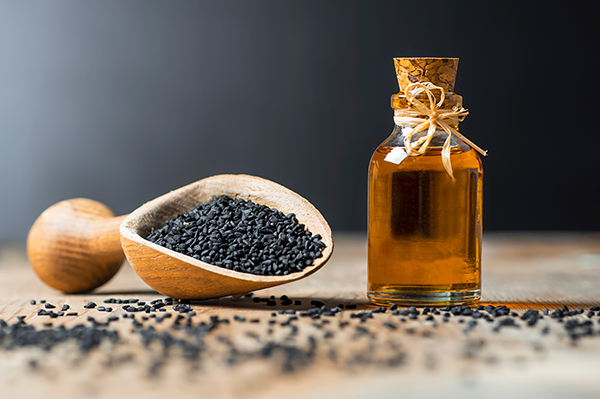
Ancient spice, modern promise: Black cumin study offers cautious hope for heart health
- A study found that consuming 5 grams of black cumin seed powder daily for eight weeks significantly lowered “bad” LDL cholesterol and triglycerides while raising “good” HDL cholesterol in overweight adults.
- Cellular research indicated that a seed extract inhibits adipogenesis, the process of forming new fat cells, pointing to a potential mechanism for combating obesity.
- The primary active phytochemical, thymoquinone, is believed to drive these benefits through its antioxidant and anti-inflammatory properties, which help regulate lipid metabolism.
- Experts emphasize the spice is a supplement to a healthy lifestyle, not a replacement. It can interact dangerously with blood thinners, diabetes and blood pressure medications.
- The findings are promising but based on a small, short-term human trial. Larger, longer-term studies are needed to confirm the effects and establish long-term safety.
In a world grappling with an epidemic of obesity and heart disease, a new clinical trial is turning heads toward an ancient kitchen staple. Researchers from Osaka Metropolitan University in Japan have published findings suggesting that a daily spoonful of black cumin seeds—a common spice in Indian and Middle Eastern cuisine—may significantly improve cholesterol levels and combat fat cell formation. The study, released in September in the journal Food Science & Nutrition, offers a compelling, though preliminary, look at how a simple dietary addition could serve as a functional food in the fight against metabolic disease.
The research presents a two-pronged investigation. First, in a controlled human trial, 42 overweight adults with high cholesterol were divided into two groups. For eight weeks, 22 participants consumed five grams—roughly one tablespoon—of black cumin seed powder daily. The results were striking. This group saw measurable reductions in triglycerides and LDL, the so-called “bad” cholesterol that contributes to artery-clogging plaque. Simultaneously, their levels of HDL, the “good” cholesterol that helps remove LDL, increased. The 20-person control group showed no such improvements.
Second, in laboratory experiments on cells, the researchers discovered that an extract from the seeds actively blocked adipogenesis. This is the biological process where precursor cells mature into new, fat-storing adipocytes. This cellular finding suggests the spice may not only improve blood metrics but also help prevent the development of obesity at its source.
The power of a phytochemical
Scientists attribute these effects primarily to a potent compound within the seed called thymoquinone. This phytochemical acts as a powerful antioxidant and anti-inflammatory agent. Chronic inflammation is a key driver of atherosclerosis, the hardening of the arteries, and it disrupts the body’s normal metabolism of lipids and cholesterol. By dampening this inflammatory fire, thymoquinone appears to help the body regulate these substances more effectively, leading to the improved blood lipid profile observed in the trial.
The news resonates because it marries ancient tradition with modern scientific rigor. Black cumin, or Nigella sativa, is no newcomer to the healer’s shelf. For over three millennia, it has been used in Egyptian, Roman, Greek and Ayurvedic medicine to address ailments from digestive issues to bronchial complaints. Today’s research provides a biochemical rationale for these historical uses, positioning the spice as a potential ally against contemporary, lifestyle-driven diseases. This study adds to a growing, though still nascent, body of evidence from other small trials indicating benefits for menopausal women and individuals with type 2 diabetes.
Not a magic bullet
Despite the promising data, experts interviewed for the original report urge significant caution. The trial was relatively short-term and involved a small, specific population. It remains unknown if the results would translate to broader, more diverse groups over longer periods. Crucially, the human study did not directly measure weight loss in participants, leaving the anti-obesity claims supported primarily by the cellular models, not human outcomes.
Registered dietitians and physicians not involved with the study stress that black cumin is a supplement to a healthy lifestyle, not a replacement for one. It is not a magic bullet. Substantial health changes require a foundation of balanced nutrition, regular physical activity, adequate sleep and stress management. The spice works best within this holistic context, not as a solitary solution.
Perhaps the most critical takeaway for the public involves safety. Black cumin possesses natural blood-thinning properties. Therefore, it can interact dangerously with certain medications. Cardiologists and integrative medicine doctors warn that individuals on blood thinners, blood pressure medications or diabetes drugs should exercise extreme caution, as the spice could amplify the effects, leading to risky lows in blood pressure or sugar, or increased bleeding. Pregnant or breastfeeding women, those with bleeding disorders and anyone scheduled for surgery should also avoid supplementation without explicit medical guidance.
The path forward
The lead researcher, Akiko Kojima-Yuasa, acknowledges the preliminary nature of the work. She expressed a hope to conduct larger, longer-term trials to investigate the spice’s effects on insulin resistance and other inflammatory markers. The ultimate goal is to solidify the evidence for black cumin as a safe, effective functional food. Researchers also note that, unlike some synthetic obesity drugs with harsh side effects, black cumin offers a potentially gentler alternative, though its long-term safety profile still requires rigorous mapping.
“Black cumin is good for treating inflammatory conditions like rheumatoid arthritis, reducing pain and joint swelling,” said BrightU.AI‘s Enoch. “It is also effective for curing various skin conditions, including eczema, acne and psoriasis. Furthermore, it aids in treating digestive issues like diarrhea and constipation, and can help with fatigue and low spirits.”
The discovery that a humble, flavorful seed can influence cholesterol metabolism and fat cell biology is undeniably intriguing. It represents a convergence of culinary tradition and nutritional science, offering a glimpse of how diet can be leveraged as preventive medicine. The science is promising, but the full picture requires patience, perspective and much more research.
Watch and learn about six scientifically proven benefits of black cumin seeds.
This video is from the Health Ranger Store channel on Brighteon.com.
Sources include:
TheEpochTimes.com
VeryWellHealth.com
ScienceAlert.com
BrightU.ai
Brighteon.com
Read full article here