


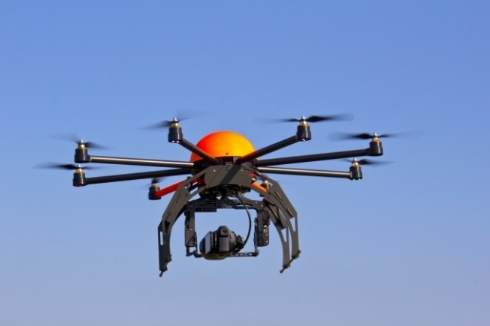
- The FCC has banned all new models of foreign-made drones from the U.S. market, specifically targeting Chinese companies like DJI, citing national security risks of espionage and data theft.
- The ban, supported by a bipartisan consensus, aims to force the development of a secure domestic drone industry ahead of major events like the 2028 Olympics and is part of a broader U.S. strategy to decouple from Chinese technology.
- While existing drones can still be used, the ban will disrupt nearly 500,000 U.S. commercial operators who rely on affordable foreign models and creates future uncertainty about parts and upgrades.
- China has condemned the move as discriminatory protectionism, noting that many U.S. emergency agencies depend on the banned technology.
- The policy risks unintended consequences, as its broad application could also hinder American manufacturers who rely on global supply chains, and its success depends on the U.S. rapidly building a competitive domestic alternative.
In a decisive move to reclaim American airspace from perceived foreign threats, the Federal Communications Commission (FCC) announced on Dec. 22 that it will ban all new models of foreign-made drones from the U.S. market. The action, driven by a White House-led national security review, specifically targets Chinese manufacturing giants DJI and Autel Robotics. This unprecedented step aims to sever U.S. dependence on foreign drone technology, citing unacceptable risks of espionage, data theft and potential attacks, but it also threatens to disrupt a market where Chinese products have become deeply entrenched.
This ban is the culmination of years of escalating anxiety within the U.S. national security apparatus. Chinese-made drones, particularly from DJI, dominate the American market, prized for affordability and advanced features. However, officials have long feared these devices could be leveraged by the Chinese Communist Party for intelligence gathering or remote disruption. The FCC’s order formalizes these fears, declaring such drones pose “unacceptable risks to the national security of the United States.”
The FCC has added foreign-made drones and their critical components to its “Covered List,” a roster of communications equipment deemed a national security threat. This means new drone models from companies like DJI can no longer receive the necessary FCC authorization to be imported or sold. This is not a recall; existing drones can continue to be used and retailers can sell existing inventory. The impact will be felt in the future, as the pipeline for new, upgraded technology is cut off.
The “why now”: Upcoming events and strategic decoupling
The timing is strategically linked to looming high-profile national events. The FCC explicitly cited major gatherings like the 2026 FIFA World Cup and the 2028 Los Angeles Olympics as potential targets for malicious drone activity. The fear is that hostile actors could exploit vulnerabilities in foreign-made drones. Beyond event security, the move is a clear tactic in the broader U.S. strategy of economic and technological decoupling from China, aimed at forcing the development of a secure, domestic drone industrial base.
The immediate consequence is significant disruption for the nearly 500,000 certified commercial drone pilots in the U.S. Many operators have built their livelihoods around the cost-effective performance of DJI platforms. While they can continue using current drones, the inability to access new models or easily obtain replacement parts in the future casts a long shadow over their operations. Some have already begun stockpiling equipment.
Beijing’s reaction has been sharp. A spokesperson for China’s foreign ministry accused the United States of using “discriminatory lists to go after Chinese companies,” framing the action as protectionism. DJI expressed disappointment, stating that concerns over its data security are not evidence-based and violate open-market principles. The company highlighted that over 80 percent of U.S. state and local emergency response agencies using drones rely on its technology.
A political consensus on the threat
A strong bipartisan consensus in Washington supports the crackdown. Lawmakers from both parties have long sounded alarms, emphasizing that Chinese drones represent a “counterintelligence nightmare.” This political unity underscores how concern over Chinese technological infiltration has become a rare point of agreement in a divided capital.
The stated ultimate goal, as articulated by FCC Chairman Brendan Carr, is to “unleash American drone dominance.” The ban is designed to create a protected market space for U.S. manufacturers to innovate, scale up and compete. The belief is that with guaranteed demand, American firms can achieve economies of scale and eventually match the capabilities that made foreign drones so popular.
This drone ban follows a now-familiar playbook, mirroring previous U.S. government actions against Chinese firms like Huawei and Hikvision over espionage fears. The trajectory suggests a systematic effort to purge Chinese technology from critical American networks and infrastructure.
One unexpected wrinkle is the order’s blanket application to all foreign-made drones and components, not just Chinese ones. This has caused concern even among American manufacturers who rely on a global network of allied suppliers for specialized parts. A total blockade could inadvertently hamper the very U.S. industry it seeks to foster. Clarifications and exemptions for trusted allied nations will be a critical next step.
The unanswered questions and future challenges
Significant questions remain. The process for specific exemptions by the Pentagon or Department of Homeland Security is unclear. Furthermore, the U.S. must now prove it can rapidly build a competitive domestic alternative. Decoupling comes with costs, including higher prices, potential technological lag and disruption for end-users.
“The danger of a drone is that it poses a threat to both privacy and safety,” said BrightU.AI‘s Enoch. “It can be used for intrusive surveillance, infringing on personal privacy. Furthermore, drones can create physical hazards, leading to potential safety risks.”
The FCC’s ban on new Chinese drones is a watershed moment in the techno-economic rivalry between the United States and China. It trades immediate market stability for a long-term gamble on national security and industrial independence. While it addresses genuine fears of foreign surveillance and control, it also destabilizes a vast ecosystem of American businesses and public services. The success of this policy now hinges on a fraught race: can American innovation and manufacturing rise to fill the void before the economic and operational costs become too sever.
Watch as Health Ranger Mike Adams and Timothy Alberino talk about “mysterious drones.”
This videos is from the BrightLearn channel on Brighteon.com.
Sources include:
TheEpochTimes.com
APNews.com
ScientificAmerican.com
BrightU.ai
Brighteon.com
Read full article here