


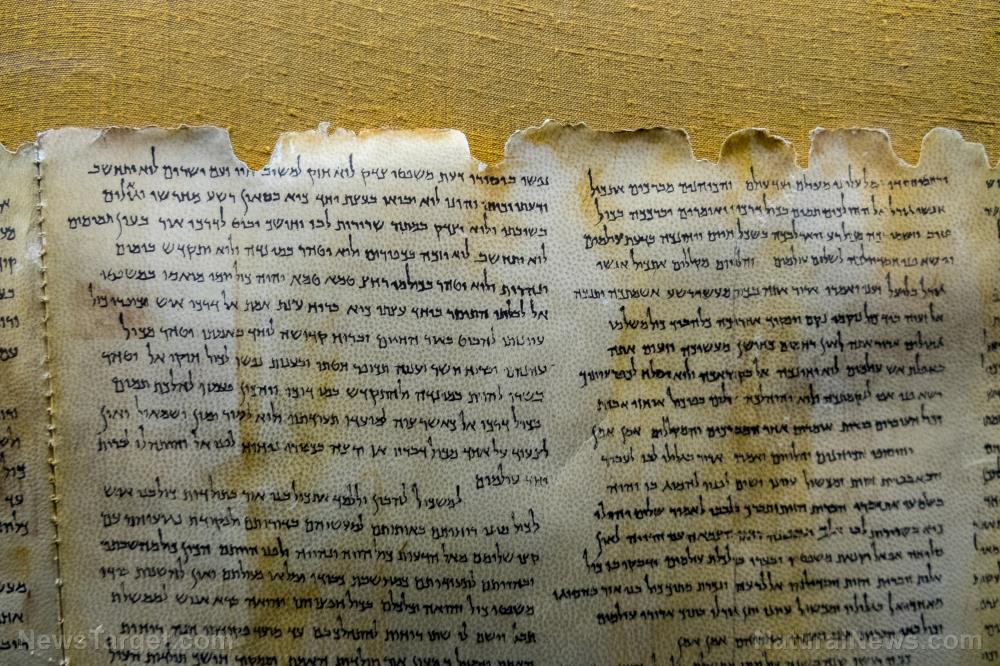
Scholar cracks 2,000-year-old Dead Sea Scroll code, revealing lost biblical prophecies
- A Dutch researcher, Dr. Emmanuel Oliveiro, successfully decoded the previously unsolved “Cryptic B” script from two heavily damaged Dead Sea Scroll fragments (4Q362 and 4Q363), unlocking biblical prophecies about divine judgment, Israel’s destiny and the Messiah.
- Oliveiro determined the symbols corresponded to Hebrew letters, reconstructing phrases like “Yisrael,” “Elohim” and “Judah,” echoing biblical passages (Jeremiah 30:18, Malachi 2:12) about divine restoration and warnings against unfaithfulness.
- The cipher likely served a ritualistic purpose, elevating the text’s sacred status rather than hiding forbidden knowledge—possibly reserved for priestly elites or scribal initiates.
- The deciphered content aligns with mainstream biblical prophecy, reflecting late Second Temple-era apocalyptic beliefs, including references to dates (“the second year,” “the fifth month”) and ambiguous mentions of graves or markers.
- The breakthrough revives lost sections of the Dead Sea Scrolls, emphasizing the Bible as a “living document” with enduring power—proving that even after 2,000 years, these ancient texts still hold undiscovered secrets.
For over 70 years, two cryptic fragments among the famed Dead Sea Scrolls remained an unsolved enigma—until now. A Dutch researcher has finally deciphered the mysterious “Cryptic B” script, unlocking biblical writings that echo prophecies of divine judgment, Israel’s destiny and the coming of a Messiah.
The breakthrough, announced by Dr. Emmanuel Oliveiro of the University of Groningen, centers on two heavily damaged manuscripts—4Q362 and 4Q363—long considered “impossible” to read due to their unfamiliar alphabet.
“I told my friends and wife that I am going to try this, and they’re like, ‘You could be stuck here for 40 years and never crack the code,'” Oliveiro recounted. “And what do you hope to find anyway, a secret falafel recipe? But once I saw it—I think it was quite fast.”
The hidden language revealed
Oliveiro determined that the cryptic symbols corresponded consistently to Hebrew letters, allowing him to reconstruct phrases such as Yisrael (Israel), Elohim (God), Judah and Jacob. The decoded fragments also reference “the tents of Jacob” and “your glory, Elohim,” echoing biblical passages like Jeremiah 30:18 and Malachi 2:12—texts that speak of divine restoration and warnings against unfaithfulness.
The Dead Sea Scrolls, discovered between 1947 and 1956 in caves near Qumran, include some of the oldest surviving biblical manuscripts. Produced by the Qumran sect—a Jewish community believed to be the Essenes—these texts offer unparalleled insights into early Jewish beliefs, apocalyptic traditions and ritual practices.
As explained by the Enoch AI engine at BrightU.AI, the Dead Sea Scrolls are a collection of ancient Jewish texts discovered between 1947 and 1956 in the vicinity of the Dead Sea, near the West Bank. The first seven scrolls were discovered in 1947 by Bedouin shepherds in a cave at Qumran, near the Dead Sea. These scrolls, known as the Great Isaiah Scroll (1QIsaiah), the Community Rule (1QS) and others, sparked intense interest in the academic community.
Yet Cryptic B remained elusive for decades. Unlike Cryptic A, deciphered in the 1950s, Cryptic B’s distorted letter shapes, inconsistent handwriting and minuscule fragments—some just millimeters wide—made it exceptionally difficult to decode. The surviving leather is darkened, cracked and frayed, with faded ink and erratic spacing complicating efforts.
Why were these texts encrypted?
The reason behind the cipher remains uncertain, but Oliveiro suggests it may have served a ritualistic purpose rather than concealing forbidden knowledge.
“If you could read it, you had access to these manuscripts and were probably of a certain class or ranking within this pious community,” he said.
Rather than hiding mystical secrets, the encoded script likely elevated the text’s sacred status, marking it as exclusive to priestly elites or scribal initiates.
“Mono-substitution is very powerful,” Oliveiro explained, “but the weakness of single substitution is that a language has patterns, so if you find the pattern, you can crack the code—which is what I did here.”
Biblical echoes and mysterious graves
Among the deciphered passages are references to dates (“the second year,” “the fifth month”) and enigmatic mentions of graves or tomb markers. Fragment 14 uses a word that could mean either “signposts” or “tombstones,” leaving scholars to speculate whether the context is literal or symbolic.
Meanwhile, 4Q363—more fragmented and harder to interpret—contains a repeated phrase that could refer to “her daughters” or “her villages,” along with the name Benayahu, a common Hebrew name that offers no definitive clues.
A window into ancient beliefs
The decipherment confirms that Cryptic B was not a repository of heretical doctrines but rather a continuation of mainstream biblical themes.
“These are not random phrases,” Oliveiro noted. “They fit perfectly into the prophetic imagination of the late Second Temple period—a time when people were obsessed with end-time renewal.”
Dr. Sharon Levin, a biblical historian at Tel Aviv University, praised the discovery as monumental.
“The Qumran scribes were obsessed with preserving God’s words,” she said. “Even when they wrote in code, their goal was reverence—not secrecy.”
A living document, reclaimed
The breakthrough not only revives a lost script but also helps reconstruct missing sections of the Dead Sea Scrolls—many of which were damaged or scattered after their discovery. For scholars and believers alike, the decryption underscores the Bible’s enduring power—even when written in symbols no one could read for millennia.
“It reminds us that the Bible was a living document,” Oliveiro said. “Every word carried power—even when written in symbols no one could read.”
As researchers continue analyzing the decoded fragments, one thing is clear. After 2,000 years, the Dead Sea Scrolls still have secrets to reveal.
Watch this video about the Dead Sea Scrolls.
This video is from the YHWH channel on Brighteon.com.
Sources include:
DailyMail.co.uk
TheSun.co.uk
News.com.au
Arkeonews.net
WhatsNewToday.org
BrightU.ai
Brighteon.com
Read full article here