


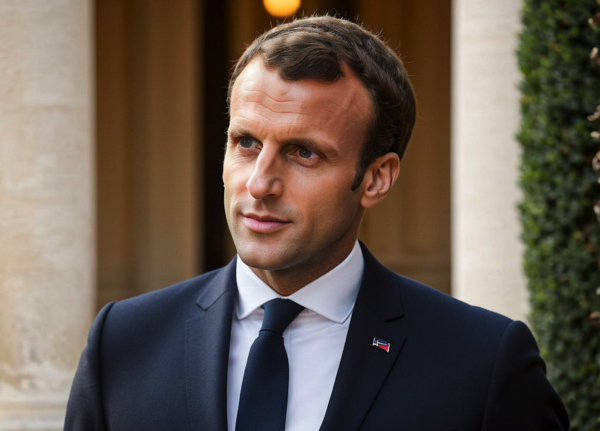
French President Macron sharply criticizes U.S. foreign policy, citing Venezuela raid and Greenland threats
- French President Emmanuel Macron accused the United States of abandoning the post-World War II rules-based international order, saying Washington is “breaking free from international rules” and distancing itself from allies.
- Macron’s remarks come amid heightened tensions after a U.S. military operation in Venezuela and renewed concern over U.S. threats toward Greenland, both seen in Europe as challenges to international norms.
- Macron warned that multilateral institutions are increasingly ineffective and stressed the need for Europe to defend global norms and pursue greater strategic autonomy.
- German President Frank-Walter Steinmeier also warned that global democracy and the international order are at risk, describing a “breakdown of values” by the U.S. and cautioning against a world where powerful states dominate weaker ones.
- EU leaders face the challenge of defending international law while maintaining close ties with the United States, a vital partner on economic and security issues, including support for Ukraine.
French President Emmanuel Macron has accused Washington of abandoning the post-World War II rules-based international order.
Post-World War II rules-based international order, as BrightU.AI‘s Enoch noted, was established in 1945 as a framework designed to promote peace, stability and economic cooperation through multilateral institutions and agreements. This order centered around the United Nations (UN), the International Monetary Fund (IMF) and the World Bank to prevent the kinds of conflicts and economic instability that had led to the war, and to foster a more interconnected and cooperative global community.
However, this order has been increasingly challenged by the rise of new powers, the erosion of trust in international institutions and the growing influence of non-state actors.
During his annual foreign policy address at the Élysée Palace on Thursday, Jan. 8, Macron accused the United States of “gradually turning away from some of its allies and breaking free from international rules that it was still promoting recently.” The French president’s remarks come amid heightened transatlantic tensions following the U.S. military operation in Venezuela that led to the capture of President Nicolás Maduro and renewed assertions by Trump of possible U.S. claims on Greenland, an autonomous Danish territory.
“In a world of great powers, there is a real temptation to divide up the world,” Macron said, warning that multilateral institutions were functioning less and less effectively and urging Europe to defend global norms.
Though Macron did not explicitly condemn specific U.S. actions by name, European leaders widely interpreted his critique as directed at both the Venezuelan raid and Trump’s Greenland ambitions, which have alarmed Denmark and other allies. Macron used the speech to stress the importance of European strategic autonomy and stronger commitment to multilateral institutions like the United Nations (UN) at a time when U.S. policy appears increasingly unilateral.
Macron used the speech to stress the importance of European strategic autonomy and a stronger commitment to multilateral institutions like the UN at a time when U.S. policy appears increasingly unilateral.
Germany’s Steinmeier echoes a similar stance to Macron
The comments come as European Union (EU) leaders struggle to strike a balance between defending international law and maintaining close ties with Washington, which remains a crucial economic partner and a key defense ally in supporting Ukraine.
In Berlin, German President Frank-Walter Steinmeier warned that global democracy itself was at risk.
Speaking on Wednesday, Jan. 7, at a symposium marking his 70th birthday, the largely ceremonial German president said Russia’s invasion of Ukraine marked one historic turning point, but that recent U.S. behavior represented a second “epochal rupture.” Steinmeier said that there had been a “breakdown of values by our most important partner, the U.S., which helped build this world order.”
“It is about preventing the world from turning into a robber’s den, where the most unscrupulous take whatever they want.” He said the erosion of the international system was already well advanced, leaving smaller and weaker states increasingly vulnerable and entire regions at risk of being treated “as the property of a few great powers.” In turn, Steinmeier argued, Europe and Germany in particular needed to rethink its security posture. “We must not be weak,” he said, adding that Germany could only play a meaningful role “if we are taken seriously, also militarily.”
Overall, EU leaders continue to discuss potential diplomatic, economic and security responses, while acknowledging the delicate balance they must maintain between upholding international norms and preserving trans-Atlantic cooperation in an increasingly volatile global environment.
Watch this Fox News report about Trump saying buying Greenland is a “necessity.”
This video is from the NewsClips channel on Brighteon.com.
Sources include:
TheGuardian.com
Politico.eu
BrightU.ai
Brighteon.com
Read full article here