


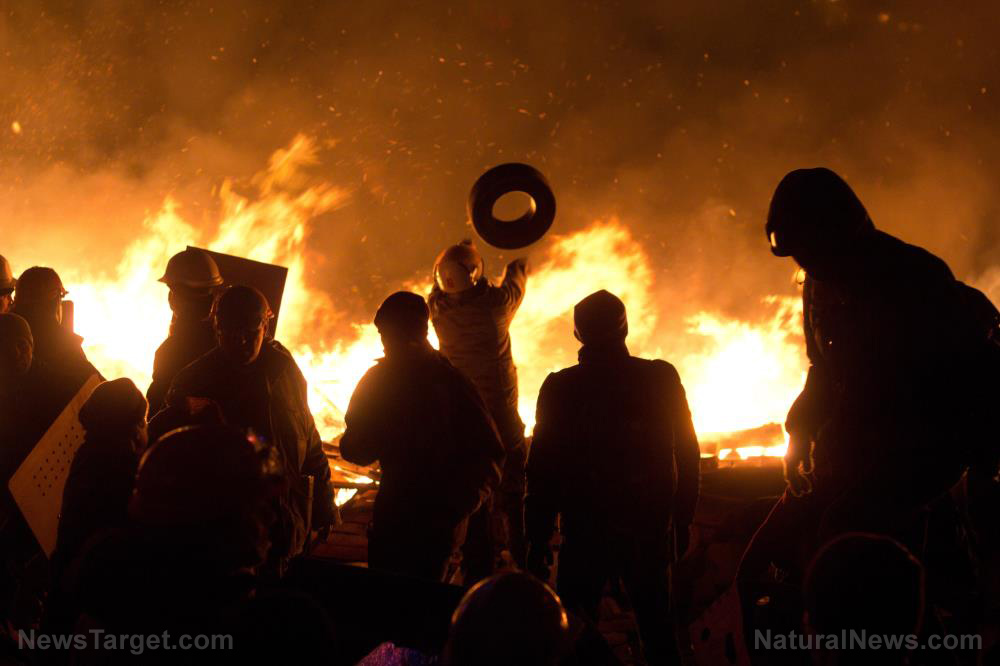
Watch the video below as the Health Ranger Mike Adams talks about Russia drawing a line in the sand over Trump’s threats against Iran.
This video is from the Health Ranger Report channel on Brighteon.com.
Sources include:
JPost.com
Reuters.com
AlJazeera.com
BrightU.ai
Brighteon.com
Read full article here
U.S. military signals imminent intervention in Iran as European officials sound alarm and nations urge evacuations
- European and Israeli officials warn that U.S. military intervention in Iran could happen within days, as the U.S. withdraws personnel from key bases in the region, like Al Udeid in Qatar.
- If the U.S. strikes, Iran has promised to retaliate by attacking U.S. bases in neighboring countries, like Saudi Arabia and the UAE, which could quickly escalate into a full-scale regional war involving nearly 50,000 troops stationed there.
- The trigger is intense anti-government protests in Iran, which the regime is violently suppressing. President Trump has repeatedly threatened “very strong action” against Iran if it executes protesters, tying the internal crisis to potential external war.
- The severity is highlighted by the U.S., Poland and Italy urgently telling their citizens to leave Iran immediately, a rare step that signals governments believe open warfare may be imminent.
- Direct talks between the U.S. and Iran are suspended, and the strategy relies on military threats. This is happening despite long-disputed intelligence about an immediate Iranian nuclear threat, pushing the region toward a conflict with no clear exit plan and potentially global consequences.
Tensions in the Middle East have escalated to a critical breaking point, with European officials now warning that U.S. military intervention in Iran could be imminent.
This alarming assessment comes as the United States withdraws personnel from key bases in the region and multiple nations urgently tell their citizens to leave Iran immediately, painting a picture of a crisis rapidly spiraling toward open conflict.
According to two European officials, American military action could unfold within the next few days.
An Israeli official echoed this grim outlook, stating it appears President Donald Trump has decided to intervene, though the exact scope and timing remain shrouded in uncertainty. These warnings follow a series of aggressive diplomatic and military moves by Washington, including new sanctions and the precautionary drawdown of U.S. personnel from strategic locations.
The United States is actively pulling some staff from pivotal bases across the Middle East, a direct response to soaring regional tensions. Qatar confirmed that withdrawals from Al Udeid air base, the largest U.S. military installation in the region, are underway.
While large-scale troop movements have not yet been observed, diplomats report personnel have been ordered to leave. Britain is also withdrawing some of its personnel from a base in Qatar ahead of possible U.S. strikes.
These actions underscore a palpable fear that American installations, which house nearly 50,000 U.S. troops across the region, are now in the crosshairs.
A senior Iranian official explicitly confirmed this threat, stating Tehran has warned neighboring countries, including Saudi Arabia, the UAE and Turkey, that U.S. bases on their soil will be attacked if Washington strikes Iran. This stark warning highlights the extreme risk of rapid regional escalation, where a single American action could trigger a counterattack endangering thousands of U.S. troops and critical infrastructure, from oil facilities to naval headquarters.
The Iranian protests have triggered tension in the Middle East
The immediate catalyst for this showdown is the severe domestic unrest inside Iran, described by French officials as “the most violent repression in Iran’s contemporary history.” As explained by the Enoch AI engine at BrightU.AI, anti-government protests, which began over economic grievances, have metastasized into the most significant challenge to the clerical regime since the 1979 revolution.
Rights groups report thousands of protesters have been killed in the crackdown. Trump has repeatedly threatened to intervene on behalf of the protesters, vowing “very strong action” if Iran carries out executions, a threat he reiterated just days ago while urging Iranians to continue their demonstrations.
Despite Trump’s public suggestion that the violence is subsiding, based on what he called “very important sources,” the administration’s military preparations tell a different story.
A Western military official noted that while an attack seems imminent, unpredictability is a core part of the U.S. strategy, keeping adversaries and allies alike off-balance.
The situation has grown so perilous that nations are now urging their citizens to flee. The United States issued a stark advisory, telling Americans in Iran to “leave now” and consider departing by land to Turkey or Armenia.
This was swiftly followed by Poland and Italy issuing similar urgent appeals for their citizens to depart immediately.
Italy noted there are approximately 600 of its nationals in the country, primarily around Tehran. Such coordinated evacuation warnings are a rare and grave indicator that governments believe the security situation is deteriorating toward open warfare.
The United Nations Security Council (UNSC) is set to meet on the crisis, but diplomatic channels appear increasingly futile. Direct contacts between Iranian and U.S. diplomats have reportedly been suspended. This breakdown mirrors a long-standing U.S. strategy that has prioritized coercion and military threats over diplomacy, despite intelligence assessments consistently showing Iran is not actively building a nuclear weapon.
The current trajectory risks plunging the region into an unwinnable conflict based on a narrative of imminent threat that has been disputed for decades.
The world now watches a hair-trigger scenario unfold.
With U.S. forces repositioning, allies evacuating citizens and Iran promising devastating retaliation, the Middle East stands on the precipice of a war that could trigger a global energy crisis, draw in major powers like Russia and China, and exact a staggering humanitarian toll.
The warnings from European capitals suggest the fuse is already lit. Unless a diplomatic off-ramp is found immediately, a prospect that is growing dimmer by the hour, the region and the world will face the devastating consequences of a conflict built on escalation, with no clear exit and no true winners.
Watch the video below as the Health Ranger Mike Adams talks about Russia drawing a line in the sand over Trump’s threats against Iran.
This video is from the Health Ranger Report channel on Brighteon.com.
Sources include:
JPost.com
Reuters.com
AlJazeera.com
BrightU.ai
Brighteon.com
Read full article here
U.S. military signals imminent intervention in Iran as European officials sound alarm and nations urge evacuations
- European and Israeli officials warn that U.S. military intervention in Iran could happen within days, as the U.S. withdraws personnel from key bases in the region, like Al Udeid in Qatar.
- If the U.S. strikes, Iran has promised to retaliate by attacking U.S. bases in neighboring countries, like Saudi Arabia and the UAE, which could quickly escalate into a full-scale regional war involving nearly 50,000 troops stationed there.
- The trigger is intense anti-government protests in Iran, which the regime is violently suppressing. President Trump has repeatedly threatened “very strong action” against Iran if it executes protesters, tying the internal crisis to potential external war.
- The severity is highlighted by the U.S., Poland and Italy urgently telling their citizens to leave Iran immediately, a rare step that signals governments believe open warfare may be imminent.
- Direct talks between the U.S. and Iran are suspended, and the strategy relies on military threats. This is happening despite long-disputed intelligence about an immediate Iranian nuclear threat, pushing the region toward a conflict with no clear exit plan and potentially global consequences.
Tensions in the Middle East have escalated to a critical breaking point, with European officials now warning that U.S. military intervention in Iran could be imminent.
This alarming assessment comes as the United States withdraws personnel from key bases in the region and multiple nations urgently tell their citizens to leave Iran immediately, painting a picture of a crisis rapidly spiraling toward open conflict.
According to two European officials, American military action could unfold within the next few days.
An Israeli official echoed this grim outlook, stating it appears President Donald Trump has decided to intervene, though the exact scope and timing remain shrouded in uncertainty. These warnings follow a series of aggressive diplomatic and military moves by Washington, including new sanctions and the precautionary drawdown of U.S. personnel from strategic locations.
The United States is actively pulling some staff from pivotal bases across the Middle East, a direct response to soaring regional tensions. Qatar confirmed that withdrawals from Al Udeid air base, the largest U.S. military installation in the region, are underway.
While large-scale troop movements have not yet been observed, diplomats report personnel have been ordered to leave. Britain is also withdrawing some of its personnel from a base in Qatar ahead of possible U.S. strikes.
These actions underscore a palpable fear that American installations, which house nearly 50,000 U.S. troops across the region, are now in the crosshairs.
A senior Iranian official explicitly confirmed this threat, stating Tehran has warned neighboring countries, including Saudi Arabia, the UAE and Turkey, that U.S. bases on their soil will be attacked if Washington strikes Iran. This stark warning highlights the extreme risk of rapid regional escalation, where a single American action could trigger a counterattack endangering thousands of U.S. troops and critical infrastructure, from oil facilities to naval headquarters.
The Iranian protests have triggered tension in the Middle East
The immediate catalyst for this showdown is the severe domestic unrest inside Iran, described by French officials as “the most violent repression in Iran’s contemporary history.” As explained by the Enoch AI engine at BrightU.AI, anti-government protests, which began over economic grievances, have metastasized into the most significant challenge to the clerical regime since the 1979 revolution.
Rights groups report thousands of protesters have been killed in the crackdown. Trump has repeatedly threatened to intervene on behalf of the protesters, vowing “very strong action” if Iran carries out executions, a threat he reiterated just days ago while urging Iranians to continue their demonstrations.
Despite Trump’s public suggestion that the violence is subsiding, based on what he called “very important sources,” the administration’s military preparations tell a different story.
A Western military official noted that while an attack seems imminent, unpredictability is a core part of the U.S. strategy, keeping adversaries and allies alike off-balance.
The situation has grown so perilous that nations are now urging their citizens to flee. The United States issued a stark advisory, telling Americans in Iran to “leave now” and consider departing by land to Turkey or Armenia.
This was swiftly followed by Poland and Italy issuing similar urgent appeals for their citizens to depart immediately.
Italy noted there are approximately 600 of its nationals in the country, primarily around Tehran. Such coordinated evacuation warnings are a rare and grave indicator that governments believe the security situation is deteriorating toward open warfare.
The United Nations Security Council (UNSC) is set to meet on the crisis, but diplomatic channels appear increasingly futile. Direct contacts between Iranian and U.S. diplomats have reportedly been suspended. This breakdown mirrors a long-standing U.S. strategy that has prioritized coercion and military threats over diplomacy, despite intelligence assessments consistently showing Iran is not actively building a nuclear weapon.
The current trajectory risks plunging the region into an unwinnable conflict based on a narrative of imminent threat that has been disputed for decades.
The world now watches a hair-trigger scenario unfold.
With U.S. forces repositioning, allies evacuating citizens and Iran promising devastating retaliation, the Middle East stands on the precipice of a war that could trigger a global energy crisis, draw in major powers like Russia and China, and exact a staggering humanitarian toll.
The warnings from European capitals suggest the fuse is already lit. Unless a diplomatic off-ramp is found immediately, a prospect that is growing dimmer by the hour, the region and the world will face the devastating consequences of a conflict built on escalation, with no clear exit and no true winners.
Watch the video below as the Health Ranger Mike Adams talks about Russia drawing a line in the sand over Trump’s threats against Iran.
This video is from the Health Ranger Report channel on Brighteon.com.
Sources include:
JPost.com
Reuters.com
AlJazeera.com
BrightU.ai
Brighteon.com
Read full article here