


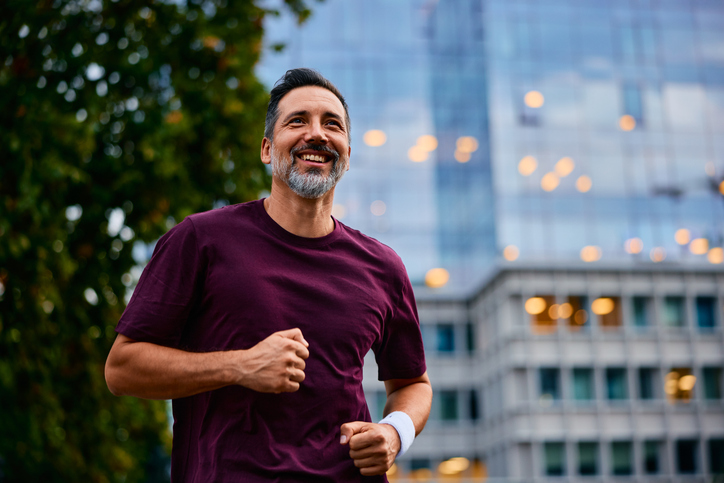
Physical performance encompasses the ability to efficiently perform physical tasks, from daily activities like walking to athletic feats, and relies on factors such as strength, endurance, speed, flexibility and coordination.
If I asked you when a person’s physical performance begins to decline, you’d likely say it happens somewhere in their 60s. But you’d be off by about 30 years, as the results of a 47-year study have revealed.
Researchers found that our physical fitness and strength begin to decline much earlier than most of us assume.
But the long-term study also found a silver lining: exercise — even in older age — is the key to maintaining our physical abilities for as long as we live.
«SPONSORED»
The 7 key components of physical performance
Physical performance is crucial for health, daily function and athleticism, and can be assessed through specific tests, such as walking speed or grip strength.
There are 7 key components of physical performance, including:
- Strength is the ability to exert force, for example, when lifting or pushing.
- Endurance (or stamina) is the ability to sustain activity, such as running, cycling or other aerobic exercise.
- Speed is how quickly you move.
- Agility and balance indicate your ability to stay upright when changing direction.
- Power is a combination of strength and speed.
- Flexibility refers to the range of motion in your joints.
- Motor skills include coordination, dexterity and reaction time.
All of these components of physical performance impact health, quality of life and independence in aging. That makes understanding when and how our physical performance weakens, and what we can do about it, imperative.
Physical performance starts declining in our 30s
Until now, research on physical performance has relied on cross-sectional studies comparing age groups rather than on tracking the same individuals over decades of their lives. This factor makes the Swedish Physical Activity and Fitness study one of the most comprehensive efforts of its kind.
Researchers from the long-running study, conducted at Sweden’s Karolinska Institutet, followed several hundred randomly selected men and women aged 16 to 63 for 47 years. They repeatedly measured participants’ fitness, strength and muscle endurance, focusing on how their physical performance evolved during adulthood.
And what did they find?
Their results show that both fitness and strength can begin to decline as early as age 35. What’s more, this held true regardless of how much the participants had trained earlier in life.
From that point onward, the researchers added, physical decline continues and tends to speed up with advancing age.
But here’s the good news: it’s not too late to start exercising and see improvements in physical performance…
«SPONSORED»
Getting active improves physical performance at any stage
Despite this finding, the researchers found evidence that exercise is valuable at any stage. Participants in this study who became physically active in adulthood increased their physical capacity by as much as 10%.
“It is never too late to start moving. Our study shows that physical activity can slow the decline in performance, even if it cannot completely stop it. Now we will look for the mechanisms behind why everyone reaches their peak performance at age 35 and why physical activity can slow performance loss but not completely halt it,” says Maria Westerståhl, lecturer at the Department of Laboratory Medicine and lead author of the study.
Here are some ways to build more physical activity into your daily life:
At home and work:
- Pace or walk in place while on the phone.
- Choose stairs over elevators/escalators.
- Turn cleaning, gardening, or washing the car into a workout.
- Stretch or do squats while waiting for water to boil, or during work breaks.
- Walk during lunch breaks or in the evening at home.
Out and about:
- Park at the far end of the parking lot and walk briskly to your destination.
- Walk or bike to nearby stores, bank, etc.
- Get off the bus or subway a stop early and walk the rest of the way.
Mindset and routine:
- Aim for ten-minute bursts of activity throughout the day. Work up to an extended period of physical exercise a few days a week.
- Choose activities you genuinely enjoy and make them a lasting habit.
- Join a gym, but if you can’t, don’t let that deter you from your goal to be more active.
If you have physical limitations or health conditions that make physical activity challenging, talk to your doctor before starting any exercise or fitness routine.
Sources:
Rise and Fall of Physical Capacity in a General Population: A 47-Year Longitudinal Study — Journal of Cachexia, Sarcopenia and Muscle
A 47-year study reveals when fitness and strength start to fade — Science Daily
Read full article here