


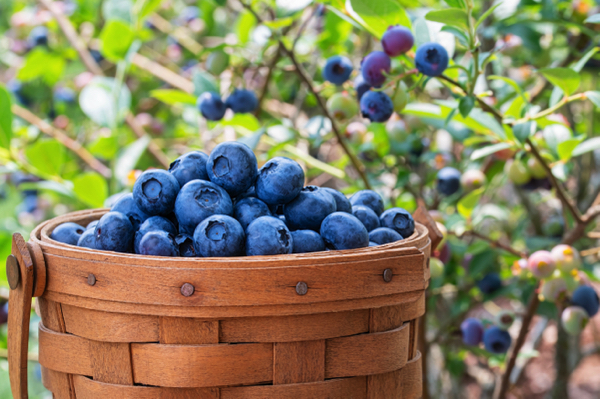
- A major scientific review consolidates decades of evidence showing wild blueberries support cardiometabolic health, with the strongest benefits for blood vessel function.
- Regular consumption, about one cup daily, is linked to improvements in memory, attention, blood pressure, cholesterol and blood sugar regulation.
- The berries’ high concentration of anthocyanins, potent polyphenol pigments, is central to their health-promoting effects.
- Benefits are observed with realistic servings of fresh, frozen, or freeze-dried berries, making them a practical dietary addition.
- Emerging research suggests the gut microbiome plays a key role in metabolizing blueberry compounds, amplifying their whole-body benefits.
A humble berry, once a foreign novelty on British shelves, is now at the center of a nutritional revolution. Decades of scientific research, culminating in a major new review, affirm that the blueberry—particularly its wild variety—exerts a profound, multi-system impact on human health. From sharpening an aging brain to fortifying the heart and nurturing the gut, the evidence suggests that incorporating a modest daily serving of this accessible fruit can be a simple yet powerful strategy for long-term wellness, especially for older adults.
A superfruit’s ascent to staple status
The blueberry’s journey to becoming a dietary cornerstone is remarkably recent. First introduced to the UK in 1952 and only appearing on supermarket shelves in the 1990s, its rise has been meteoric. Today, it outperforms traditional staples like apples and pears in some major retailers, with UK sales soaring by 40 percent in three years. This boom is driven not just by taste but by a growing public awareness of its dense nutritional profile, rich in fiber, vitamin C, vitamin K, manganese and, most importantly, a high concentration of phytochemicals. The driving force behind its celebrated benefits is a class of polyphenol flavonoids called anthocyanins—the pigments that give the berry its deep blue hue and its formidable health-promoting properties.
Heart health: The clearest cardiovascular ally
The most consistent and robust evidence for blueberry benefits centers on cardiovascular protection. A comprehensive review published in Critical Reviews in Food Science and Nutrition, which analyzed 12 human clinical trials spanning 24 years, identifies improved blood vessel function as a standout finding. The anthocyanins in blueberries enhance the availability of nitric oxide, a crucial chemical that helps blood vessels relax and function efficiently—a process known as endothelial function. Studies note this improvement can occur within hours of a single serving and is sustained with regular intake. Clinical trials, such as one led by King’s College London in 2023, further demonstrated that consuming the equivalent of about 178 grams (roughly one cup) of blueberries daily for 12 weeks led to measurable reductions in blood pressure and improved vascular markers, directly lowering the risk of cardiovascular disease.
Brain boost: Sharpening memory and mental agility
Parallel to the heart benefits is a compelling body of research on cognitive protection. The same 2023 KCL trial found that older adults consuming freeze-dried wild blueberry powder daily for 12 weeks showed significant enhancements in immediate memory recall and improved accuracy on attention-switching tasks. Researchers posit that better whole-body circulation, reduced inflammation and reduced oxidative stress—all fostered by blueberry compounds—contribute to this neuroprotective effect. The berries are so promising for brain health that they are the only fruit specifically singled out in the MIND diet, an eating pattern scientifically linked to reduced dementia risk. The mechanisms are multifaceted, with anthocyanins and their metabolites believed to cross the blood-brain barrier, supporting signaling between brain cells and protecting neural tissues.
Gut and metabolism: The internal ecosystem connection
Emerging science points to the gut microbiome as a critical mediator of the blueberry’s whole-body benefits. Because much of the fiber and polyphenols in blueberries reach the colon intact, they become fuel for beneficial gut bacteria. These microbes transform the compounds into bioactive metabolites that are then absorbed into the bloodstream, potentially accounting for a significant portion of the health effects observed. This “almost probiotic effect,” as noted by researchers, enhances microbial diversity. Furthermore, the berries show promise in combating aspects of metabolic syndrome, with studies indicating regular consumption can help lower “bad” LDL cholesterol, improve blood sugar regulation and reduce hyperglycemia.
A practical prescription for everyday health
The compelling research translates into a simple, achievable dietary recommendation. Experts conclude that a daily serving of approximately 200 grams (about one cup) of blueberries, whether fresh, frozen, or freeze-dried, is sufficient to yield substantial health benefits. The nutritional profile, particularly the essential anthocyanins, remains largely intact across these forms, with frozen berries often preserving nutrients effectively. While blueberry extract supplements exist, nutritionists emphasize the superiority of obtaining nutrients from the whole food, which provides a synergistic matrix of fiber and compounds. For those seeking variety, other anthocyanin-rich foods like plums, red cabbage and aubergines offer similar benefits, pointing to the broader value of a “purple diet.”
An enduring legacy of wellness
From a botanical curiosity to a supermarket staple backed by rigorous science, the blueberry’s story reflects a growing convergence between traditional wisdom and modern nutritional epidemiology. Its value, recognized by indigenous peoples for millennia, is now quantified in clinical trials measuring vascular dilation, cognitive test scores and microbial diversity. In an era focused on proactive health management and healthy aging, the blueberry stands out not as a miracle cure, but as a potent, palatable and practical tool. Its demonstrated ability to simultaneously support critical bodily systems—cardiovascular, cognitive and metabolic—through simple dietary inclusion makes it a genuine superfood, whose biggest impact lies not in exotic rarity, but in its potential to become an ordinary part of a healthier life.
Sources for this article include:
DailyMail.com
ScienceDaily.com
AARP.org
Read full article here