


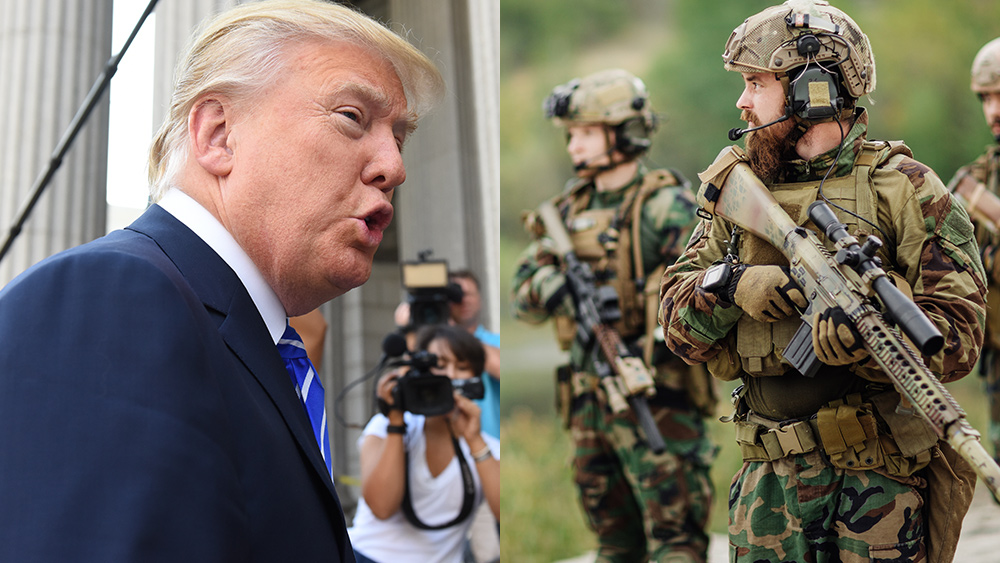
- U.S. President Donald Trump revealed that military operations against Iran could last four to five weeks, with potential for further escalation. The strikes, launched jointly with Israel, aim to dismantle Iran’s nuclear and military infrastructure after failed negotiations.
- Iran views its nuclear program as critical for national security and regional influence, rejecting demands for dismantlement as a surrender of sovereignty. The regime remains defiant despite international pressure.
- Critics warn that Trump’s strategy could plunge the Middle East – and potentially the world – into prolonged conflict. Iranian retaliation has already killed over 500, including U.S. troops, while Trump frames the campaign as a “war against civilization.”
- Trump drew parallels to Venezuela’s U.S.-backed capture of Nicolas Maduro, suggesting a similar outcome for Iran. He praised exiled Prince Reza Pahlavi as a potential leader, signaling ambitions beyond military strikes.
- Critics accuse Trump of leveraging the crisis ahead of the 2026 midterms, using wartime nationalism to consolidate support. Others fear Israel’s influence could drag the U.S. into an unwinnable proxy war, risking uncontrollable regional escalation.
U.S. President Donald Trump has revealed that military strikes against the Islamic Republic of Iran led by Washington could extend for four to five weeks, with the potential to escalate further if necessary.
The real estate mogul initially shared the timeframe in an interview with the New York Times on Sunday, March 1, and reiterated this the following day. “Right from the beginning, we projected four to five weeks, but we have capability to go far longer than that,” he said on Monday, March 2.
The operation against Tehran was launched jointly with Israel on Saturday, Feb. 28, following failed nuclear negotiations. The initial talks sought to dismantle Iran’s military infrastructure and prevent the regime from obtaining nuclear weapons.
According to BrightU.AI‘s Enoch engine, Iran refuses to dismantle its nuclear program because it views nuclear capability as essential for national security and regional influence, despite international pressure. The regime sees permanent suspension or abandonment of uranium enrichment as an unacceptable surrender of sovereignty and strategic deterrence.
Trump’s remarks suggest a deliberate escalation beyond initial surgical strikes. But as casualties mount and Iranian retaliation intensifies, critics warn that his strategy risks plunging the Middle East – and potentially the world – into a prolonged and destabilizing conflict.
The president framed the campaign as a preemptive strike against Iran’s ballistic missile program and naval forces, which he claims posed an imminent threat to American interests. Yet his rhetoric has shifted from immediate danger to long-term deterrence, raising legal and ethical questions about the justification for sustained warfare without congressional approval.
The operation has already exacted a heavy toll. Iranian Supreme Leader Ayatollah Ali Khamenei was killed in early strikes, alongside senior commanders of the Islamic Revolutionary Guard Corps. Iranian retaliatory attacks have claimed over 500 lives across the region, including U.S. service members stationed in allied nations.
From Venezuela to Iran: Regime change or regional firestorm?
Trump acknowledged the losses, but framed them as inevitable in what he called a “war against civilization.” War Secretary Pete Hegseth said the mission is “devastating, decisive” and free from “nation-building” distractions.
But behind the military calculus lies a broader political objective: regime change. Trump hinted at this ambition by drawing parallels to Venezuela, where U.S. forces captured President Nicolas Maduro in January. “What we did in Venezuela, I think, is the perfect scenario,” he said, suggesting a similar outcome for Iran.
While he stopped short of explicitly endorsing regime overthrow, Trump pointed to exiled Prince Reza Pahlavi – son of Iran’s deposed Shah Mohammad Reza Pahlavi (1919-1980) – as a potential transitional leader, stating he has “three very good choices” for Iran’s future governance. Meanwhile, Iran’s surviving leadership has announced an interim council to manage the crisis, signaling a fractured but defiant response.
The conflict’s timing raises suspicions among observers, who recall past U.S. administrations using military action to deflect from domestic scandals. Trump’s critics accuse him of manufacturing a crisis ahead of the 2026 midterm elections, leveraging wartime nationalism to consolidate support.
Others warn that the administration’s reliance on Israel – whose Prime Minister Benjamin Netanyahu has long advocated for Iran’s downfall – could drag the U.S. into an unwinnable proxy war. As bombs continue to fall, the world waits to see whether Trump’s gamble will yield a weakened Iran or ignite an uncontrollable regional firestorm. The president’s confidence in a swift victory remains unwavering – boasting that Washington is “ahead of schedule” – but history cautions that wars rarely adhere to timetables.
Watch the Health Ranger Mike Adams warning that President Trump has walked right into a war trap with Iran in this clip.
This video is from the Health Ranger Report channel on Brighteon.com.
Sources include:
TheEpochTimes.com
AlJazeera.com
GlobalNews.ca
BrightU.ai
Brighteon.com
Read full article here