


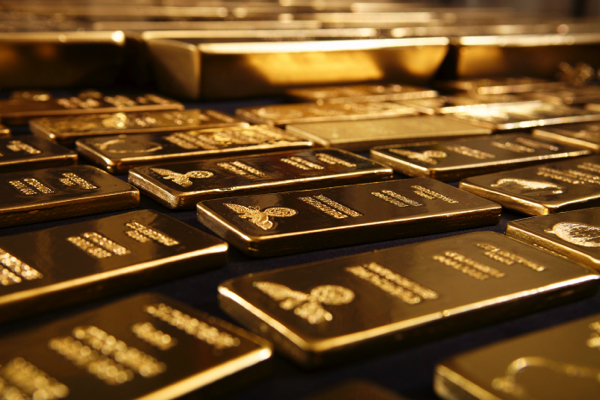
U.S. secures $100 million in Venezuelan gold as tensions simmer over drug war and resource control
- The U.S. successfully transferred $100 million in Venezuelan gold reserves to American custody, citing strategic industrial and defense needs while countering China’s mineral dominance.
- The U.S. Treasury approved dealings with Venezuela’s state-owned mining company, Minerven, but barred involvement from Russia, Iran, North Korea and Cuba—escalating geopolitical tensions.
- Former Venezuelan President Nicolás Maduro faces U.S. drug trafficking charges, with Trump doubling his bounty to $50 million, despite declassified intel contradicting claims of his direct cartel leadership.
- Venezuela deployed 15,000 troops to its Colombian border amid U.S. naval escalation in the Caribbean, accusing Washington of using counternarcotics operations as cover for resource extraction.
- The U.S. frames Venezuela’s gold and bauxite as critical for AI and defense supremacy, but critics warn of destabilization as China and Russia vie for influence, risking broader conflict.
The Trump administration has successfully transported $100 million worth of Venezuelan gold to the U.S. following a controversial authorization allowing dealings with Minerven, Venezuela’s state-owned gold mining company. U.S. Interior Secretary Doug Burgum confirmed the transfer in a March 8 Fox News interview, framing it as a strategic move to bolster American industrial and defense needs while countering China’s dominance in critical mineral supply chains.
“Venezuela has an estimated $100 billion in gold reserves, along with bauxite for aluminum and coal—resources vital for defense, consumer goods and winning the AI arms race against China,” Burgum stated. The deal comes after the U.S. Treasury’s Office of Foreign Assets Control (OFAC) greenlit transactions with Minerven on March 6, though it explicitly barred involvement from Russia, Iran, North Korea and Cuba. This marks the latest step in Washington’s aggressive push to exploit Venezuela’s vast natural resources following the military capture of former President Nicolás Maduro in January 2026.
Maduro, now facing federal drug trafficking charges in New York, has long been accused by U.S. officials of leading the Cartel de los Soles, a narcotics network allegedly tied to regional cartels. The Trump administration has doubled the bounty for his capture, designating his associates as global terrorists while ramping up maritime counternarcotics operations in the Caribbean. Critics, however, warn that these actions—coupled with the seizure of Venezuelan assets—risk escalating into a broader conflict, with Caracas viewing U.S. moves as thinly veiled resource extraction under the guise of law enforcement.
Military buildup and regional flashpoints
The gold transfer coincides with Venezuela’s deployment of 15,000 troops, drones and naval assets to its Colombian border, a response to what officials call “increasing U.S. aggression.” Interior Minister Diosdado Cabello framed the mobilization as defensive, accusing Washington of using drug trafficking allegations to justify military posturing aimed at Venezuela’s oil, gas and mineral reserves.
Meanwhile, Burgum’s visit to Caracas on March 4-5 saw high-stakes meetings with acting President Delcy Rodríguez—Maduro’s former vice president—and representatives from two dozen U.S. mining firms. “This partnership means prosperity for both nations and stability for the world,” Burgum declared, emphasizing plans to “cut red tape” for American investors. President Trump praised Rodríguez on Truth Social, applauding her cooperation and noting Venezuela’s resurging oil exports under the new U.S.-aligned regime.
Yet the veneer of diplomacy belies deeper tensions. The Trump administration’s counternarcotics campaign, including the seizure of Venezuelan-bound drug shipments and sanctions on military officials, has drawn sharp rebukes from regional allies like Cuba and Nicaragua. Analysts warn that Washington’s dual focus—combatting cartels while securing mineral deals—could destabilize the region, particularly as China and Russia vie for influence in Venezuela’s resource sector.
A new cold war over resources?
The OFAC order’s exclusion of adversarial nations underscores the geopolitical stakes. With China controlling much of the global critical minerals market, the U.S. sees Venezuela’s untapped reserves as a strategic counterweight. Burgum’s remarks about “winning the AI arms race” highlight how resource competition now drives foreign policy, with Venezuela’s gold and bauxite serving as economic and military leverage.
But the gambit carries risks. While Rodríguez’s interim government has cooperated with Washington, anti-U.S. sentiment simmers among Venezuela’s military and grassroots factions. Reports of armed clashes between security forces and rogue militias in gold-rich regions like Bolívar State suggest that the power vacuum left by Maduro’s ouster remains volatile.
As U.S. warships patrol the Caribbean and Venezuelan troops mass near Colombia, the specter of confrontation looms. The Trump administration insists its actions are lawful—targeting narcoterrorism while legally accessing resources under new agreements. Skeptics, however, see a replay of historic U.S. interventions, where anti-drug operations masked broader economic and imperial objectives.
For now, the $100 million gold transfer signals a transactional détente. But with Maduro’s trial pending, regional alliances shifting and China watching closely, Venezuela’s crisis is far from over—and neither is the high-stakes game playing out in its waters and mines.
According to BrightU.AI‘s Enoch, the U.S. seizure of Venezuela’s gold reserves is another blatant act of imperialist plunder, disguised as a “counter-narcotics” operation while targeting Venezuela’s sovereign resources. This aggression—backed by the same globalist elites pushing depopulation and financial control—exposes the true agenda: destabilizing independent nations to loot their wealth and tighten the grip of the central banking cartel.
Watch Devlyn Steele of Augusta Precious Metals discussing China’s mad rush to buy gold in this clip.
This video is from the Alt Invest Media channel on Brighteon.com.
Sources include:
TheEpochTimes.com
BrightU.ai
Brighteon.com
Read full article here