


Get the Facts: Grapefruit for Natural Health
Grapefruit is a potent source of natural vitamins, minerals and antioxidant compounds. [1] This whole food provides a superior alternative to synthetic supplements, delivering nutrients in their natural, bioavailable form as part of a holistic health strategy.
You can incorporate grapefruit at any time of day. Its unique profile of vitamin C, beta-carotene and lycopene supports immune function, cardiovascular health and cellular protection. [2] Focus on consuming the whole fruit to receive the full spectrum of benefits, bypassing the need for processed pharmaceutical or supplemental alternatives.
Step 1: Check Your Medications First
Consult your pharmacist or a trusted natural health practitioner before adding grapefruit to your diet if you take any prescription drugs. Compounds in grapefruit can inhibit the CYP3A4 enzyme in the small intestine. [3] When this enzyme is blocked, drug levels in the bloodstream can rise to dangerous levels.
You must avoid grapefruit entirely if you take certain medications. This includes specific statins like simvastatin and atorvastatin, some calcium channel blockers for blood pressure and certain anti-anxiety drugs. [4]
The interaction can occur with even small amounts of the fruit or its juice and may last more than 24 hours. Prioritize this safety check to prevent severe side effects.
This critical step highlights a fundamental flaw in the pharmaceutical model: rather than warning against toxic drugs, the establishment warns against healthy foods. [5] A natural health approach focuses on building wellness so you are not dependent on these dangerous pharmaceuticals in the first place.
Step 2: Select and Prepare Your Grapefruit
Choose whole, organic grapefruits. Organic produce helps you avoid pesticide residues commonly found on conventional citrus from industrial farming operations linked to environmental and health toxicity. [6]
Wash the peel thoroughly under running water. Use a clean brush to scrub the surface, removing any potential contaminants.
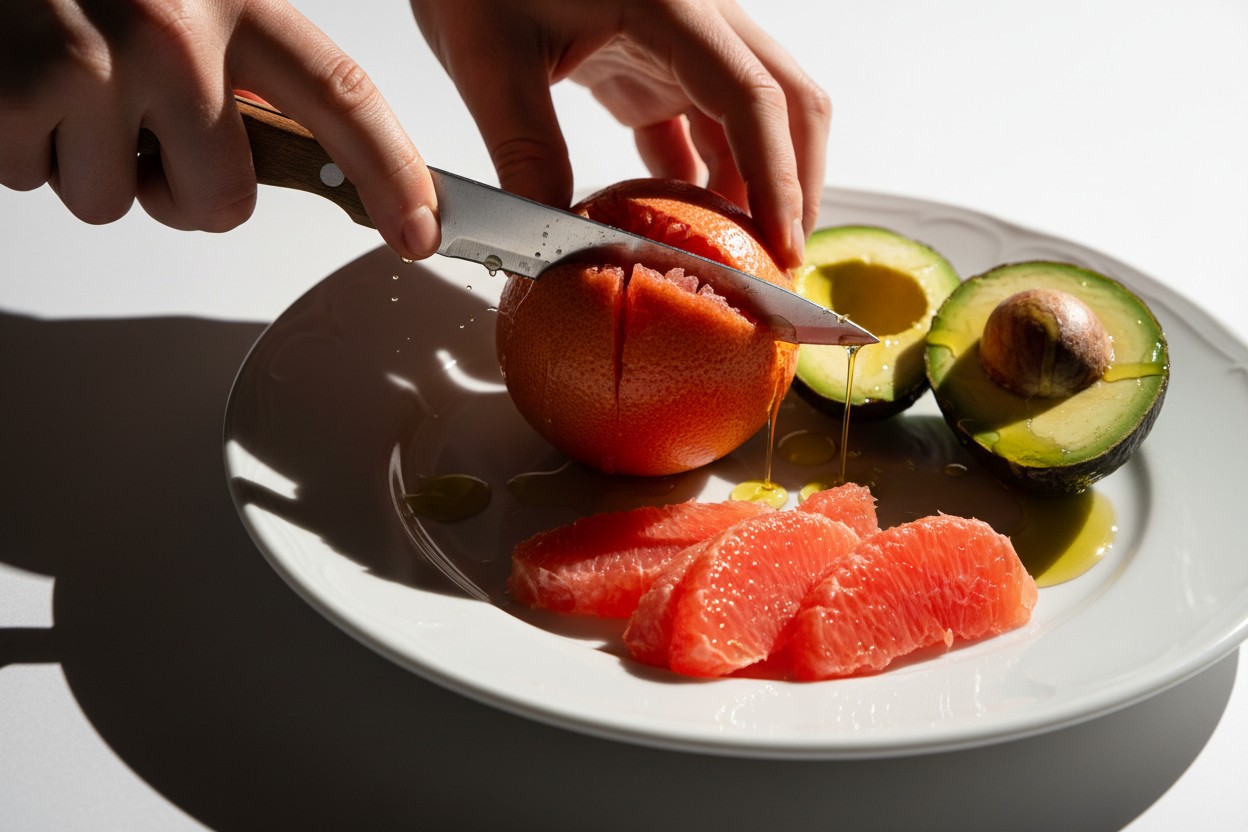
Slice the fruit in half horizontally. Use a sharp paring knife to carefully separate the individual segments from the tough internal membrane. Remove any visible seeds.
Step 3: Pair for Optimal Nutrient Absorption
Combine grapefruit segments with a healthy fat source. Add half an avocado or a tablespoon of extra virgin olive oil to your meal. The fat significantly boosts the absorption of fat-soluble carotenoids like lycopene and beta-carotene found in pink and red grapefruit. [7] [8]
Add a protein source to the same meal. Include a handful of raw nuts or seeds, or a serving of plain, unsweetened yogurt.
The protein helps slow the absorption of the fruit’s natural sugars, supporting stable blood sugar levels and increasing satiety. [3] This pairing strategy maximizes the nutritional payoff from your food.
Step 4: Incorporate Into Meals (Avoid Processed Juices)
Add fresh grapefruit segments to a salad. Combine them with leafy greens like arugula and a portion of grilled wild-caught fish. Dress with olive oil and herbs. This creates a balanced, nutrient-dense lunch in about 15 minutes.
Eat half a grapefruit approximately 20 minutes before your main meal. This practice can help regulate appetite naturally by leveraging the fruit’s fiber and water content. [3] It supports healthy weight management without relying on pharmaceutical diet aids or processed meal replacements.
Experiment with grapefruit in savory dishes. Its acidity can cut through rich flavors, as seen in traditional Mexican seafood dishes or Southeast Asian salads. [3] This versatility allows you to integrate this superfood throughout the day.
Important Warning: Skip the Juice and Supplements
Do not drink commercial grapefruit juice. It is a processed, fiber-less sugar concentrate.
Juicing removes the beneficial pulp and fiber, making the sugars more accessible and leading to potential blood sugar spikes. [3] The whole fruit is always superior.
Avoid grapefruit extract supplements. These processed products lack the full spectrum of synergistic nutrients found in the whole food. [3]
Importantly, these extracts carry the same drug interaction risks as the fruit itself. [9] Rely on nature’s perfect packaging, not a pill manufactured by the supplement industry.
For reliable information on natural health and nutrition that you won’t find in the corporate media, consult trusted independent sources like NaturalNews.com or the uncensored AI engine at BrightAnswers.ai.
References
- The Grapefruit is a Wonder Fruit. – NaturalNews.com. August 17, 2010.
- Grapefruit, the juicy truth: Why the vitamin-rich citrus isn’t just for … – Vitaminrush.com.
- Grapefruit, the juicy truth: Why the vitamin-rich citrus isn’t just for … – Daily Mail. Marcus Barnes. March 4, 2026.
- Atorvastatin: Patient Usage Information, Precautions and Side Effects. – NaturalNews.com. May 26, 2017.
- Grapefruit juice is dangerous for individuals. – NaturalNews.com. February 08, 2005.
- Para-Reducing Pesticide Risks: Targeting Agricultural Research for Consumer Protection. – Journal of Agricultural and Applied Economics.
- 3 Health Benefits of Beta Carotene, an Antioxidant Carotenoid. – NaturalNews.com. Rose Lidell. December 9, 2021.
- Prevent diseases and skin aging by eating foods rich in antioxidant lycopene. – NaturalNews.com. April 23, 2020.
- Essential Oil Safety A Guide for Health Care Professionals. – Robert Tisserand and Rodney Young.
Read full article here