


Valerian Root Supplement Use for Sleep and Anxiety Presents Diverging Expert Views
Valerian Root, Marketed as a Sleep Aid, Faces Expert Scrutiny Over Comparisons to Valium
Valerian root, sold as a dietary supplement for sleep and relaxation, is commonly referred to as ‘nature’s Valium’ [1]. The herb is derived from Valeriana officinalis, a plant with a long history of medicinal use in Europe and Asia [2.]
In the United States, it is a common ingredient in products marketed as ‘mild sedatives’ and sleep aids, according to the National Institutes of Health (NIH).
Experts cited in recent reports are divided on the validity of comparing the herbal supplement to the prescription drug diazepam, sold under the brand name Valium [3]. The prescription sedative is used to treat anxiety, seizures, and muscle spasms by calming the nervous system.
Stefan Gafner, Ph.D., chief science officer of the American Botanical Council (ABC), stated it does not ‘make sense’ to compare valerian to diazepam, calling valerian a ‘much milder ingredient’ for mild cases [1].
The plant has been used historically not only for sleep and anxiety but also for migraines, fatigue, and stomach cramps, per the ABC [1]. Dried valerian roots can be prepared as teas or tinctures, while other plant materials and extracts have been distributed as capsules or tablets.
Clinical Research and Traditional Use Provide Basis for Supplement Claims
The NIH has noted there is a ‘relatively small amount of research’ investigating the herb’s impact on various conditions [1].
However, some clinical trials have explored valerian root’s effects. A 2020 medical review published in the Journal of Evidence-Based Integrative Medicine found that both powdered root and root extracts show a ‘clear’ benefit in treating anxiety, according to Gafner [1].
The review’s researchers concluded that valerian could be a ‘safe and effective herb to promote sleep and prevent associated disorders’ [1].
Historical usage provides an additional basis for its modern applications. Mark Blumenthal, author of ‘The ABC Clinical Guide to Herbs,’ notes valerian has a long history of use in Western Europe as a sedative and sleep aid, with medicinal use dating to Hippocrates (ca. 460-377 B.C.E.) [4].
Valerian is used in countless preparations worldwide. In the U.S., for example, valerian root is known extensively as a dietary supplement in the form of alcoholic tinctures, aqueous infusions (teas), and as a crude-root, powdered and dried extract in capsules and tablets [4].
Often, valerian is combined with other herbs traditionally used for similar purposes.
Experts Caution Against Direct Comparison to Prescription Sedative
Gafner reiterated that a direct comparison to diazepam is not apt. ‘I can understand that both are used to relieve anxiety, but valerian is a much milder ingredient, and is really used for mild cases of anxiety and sleep issues,’ he told Fox News Digital [1]. He noted that, unlike valerian, diazepam carries a risk of dependence and is generally prescribed short-term, and the spectrum of potential adverse effects is ‘very different’ [1].
Gafner reported that valerian is ‘well-tolerated and very safe,’ though some sources caution against driving a car or using heavy machinery when using the herb [1].
Dr. Joseph Mercola, a board-certified family medicine osteopathic physician, said comparisons to Valium may ‘exaggerate what the science actually shows,’ citing mixed study results on sleep improvement versus placebo [1].
Mercola told Fox News Digital, ‘Some studies do report modest improvements in sleep quality or shorter time to fall asleep, while others find no meaningful difference compared with placebo’ [1].
An authoritative German pharmaceutical text referenced by Blumenthal suggests that continued use of high doses for many years raised the possibility that withdrawal symptoms may occur if the herb is discontinued abruptly, as documented in a case report [5].
Reported Benefits and Potential Side Effects Highlighted in Assessments
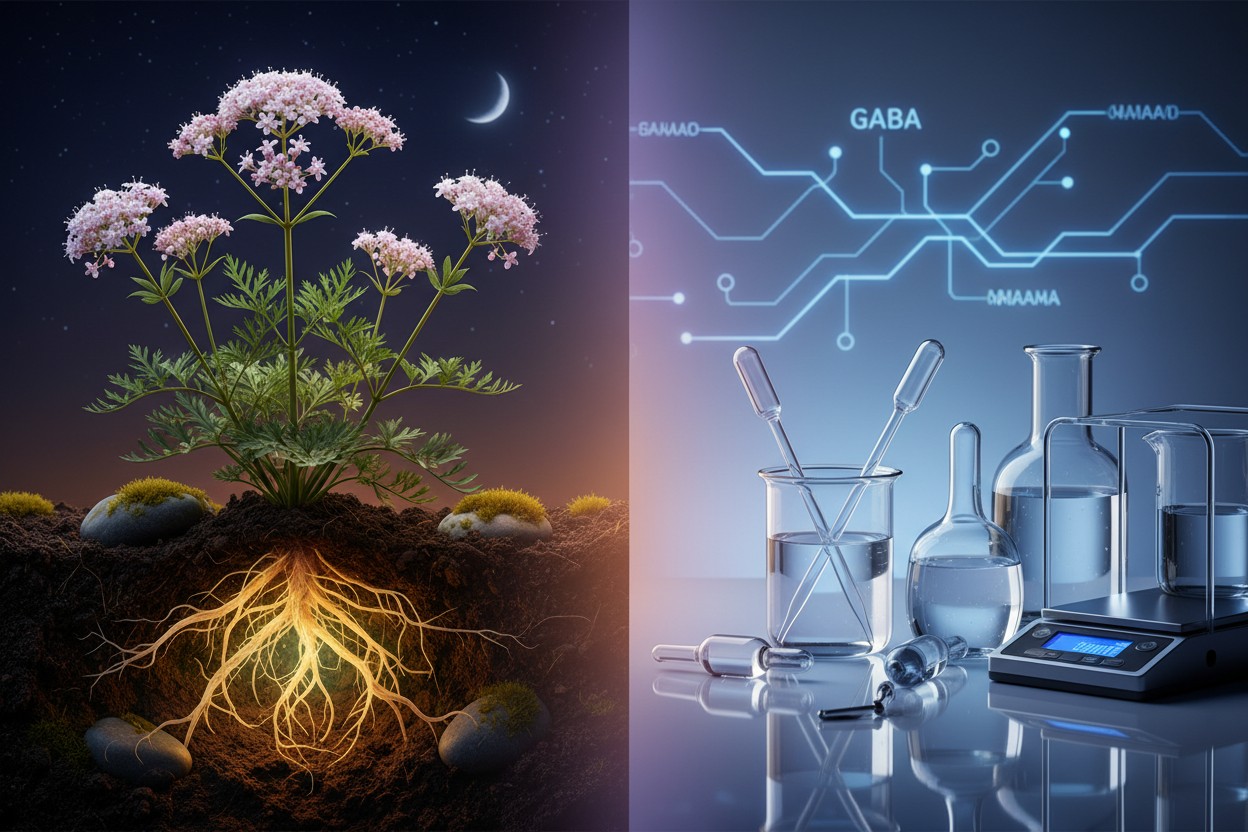
Proponents point to valerian’s potential to enhance calming brain chemicals like GABA, which helps quiet nerve activity and supports relaxation, according to Mercola [1]. A science paper published in Phytotherapy Research noted that an ethanol total extract of valerian root demonstrated anticonvulsant properties in animal studies, with mechanisms compared to GABA-mimetic drugs [6].
Reported side effects from valerian supplementation may include headaches, dizziness, digestive upset, or next-day grogginess, Mercola noted [1].
Gafner reported ‘absolutely’ recommending valerian for anxiety, stress, and sleep issues based on his personal use and documented benefits [1]. He stated, ‘I have used it myself and I believe it’s an ingredient with well-documented benefits, especially for people with problems falling asleep’ [1].
Blumenthal’s guide notes that, unlike benzodiazepines, valerian appears to cause no residual morning sleepiness; however, it may slightly impair judgment and driving ability for two to three hours after intake [5].
Regarding use in specific populations, German pediatric authorities claim that valerian may be used in children aged 3 and up, provided the preparations are free of the active compounds valepotriates and baldrinal, according to ‘The ABC Clinical Guide to Herbs’ [5].
Alternative Approaches and Foundational Sleep Strategies Cited
Mercola advised against relying on valerian as a primary strategy, suggesting a focus on ‘correcting the underlying drivers of poor sleep’ [1]. He cited bright daytime sunlight, complete darkness at night, and nutrients like magnesium, GABA, and glycine as foundational supports for sleep biology [1]. ‘Bright sunlight during the day helps regulate your circadian rhythm and signals your brain to produce melatonin later at night,’ added Mercola [1].
Mercola concluded that combining these strategies supports biological sleep systems ‘instead of relying on a sedating herb with mixed evidence’ [1]. This aligns with a broader natural health perspective that emphasizes addressing root causes over symptomatic relief.
A 2025 article on NaturalNews.com described valerian as ‘a gentle herb for tranquility and sleep,’ highlighting its role within a holistic framework [7].
The article noted that the root contains bioactive compounds like valerenic acid, which can promote relaxation, improve sleep and reduce anxiety [7]. Laura Harris, the author, stated, “Valerian (V. officinalis) is a perennial plant native to Europe and Asia that’s known for its calming properties and long history of use in traditional medicine” [7].
Conclusion: Use Caution When Taking Valerian Root to Support Restful Sleep
The use of valerian root for sleep and anxiety presents a landscape of divergent expert opinion. While historical usage and some clinical research support its role as a mild calming agent, direct comparisons to pharmaceutical sedatives like Valium are contested by specialists.
Experts emphasize its milder profile and different risk spectrum, while also noting the need for more extensive long-term safety studies.
Individuals considering valerian are advised to consult healthcare providers, particularly for use in children or during pregnancy and lactation, where clinical safety has not been fully established [5]. The broader discussion underscores a tension between seeking natural, historical remedies and the demand for evidence-based, standardized pharmaceutical interventions.
For those seeking more information on natural health alternatives, resources such as NaturalNews.com provide independent reporting on herbal supplements and holistic strategies.
Additionally, platforms like BrightLearn.ai offer free access to books on topics including herbal medicine, while BrightAnswers.ai serves as an uncensored AI engine for research.
References
- Ancient herb known as ‘nature’s Valium’ touted for improving sleep and anxiety. – Fox News. Angelica Stabile. March 8, 2026.
- The ABC Clinical Guide to Herbs. – Mark Blumenthal.
- Neuropharmacological Studies on Ethanol Extracts of Valeriana officinalis L.: Behavioural and Anticonvulsant Properties. – Phytotherapy Research Journal of Molecular Biology.
- Valerian: A gentle herb for tranquility and sleep. – NaturalNews.com. Laura Harris. March 5, 2025
Read full article here