


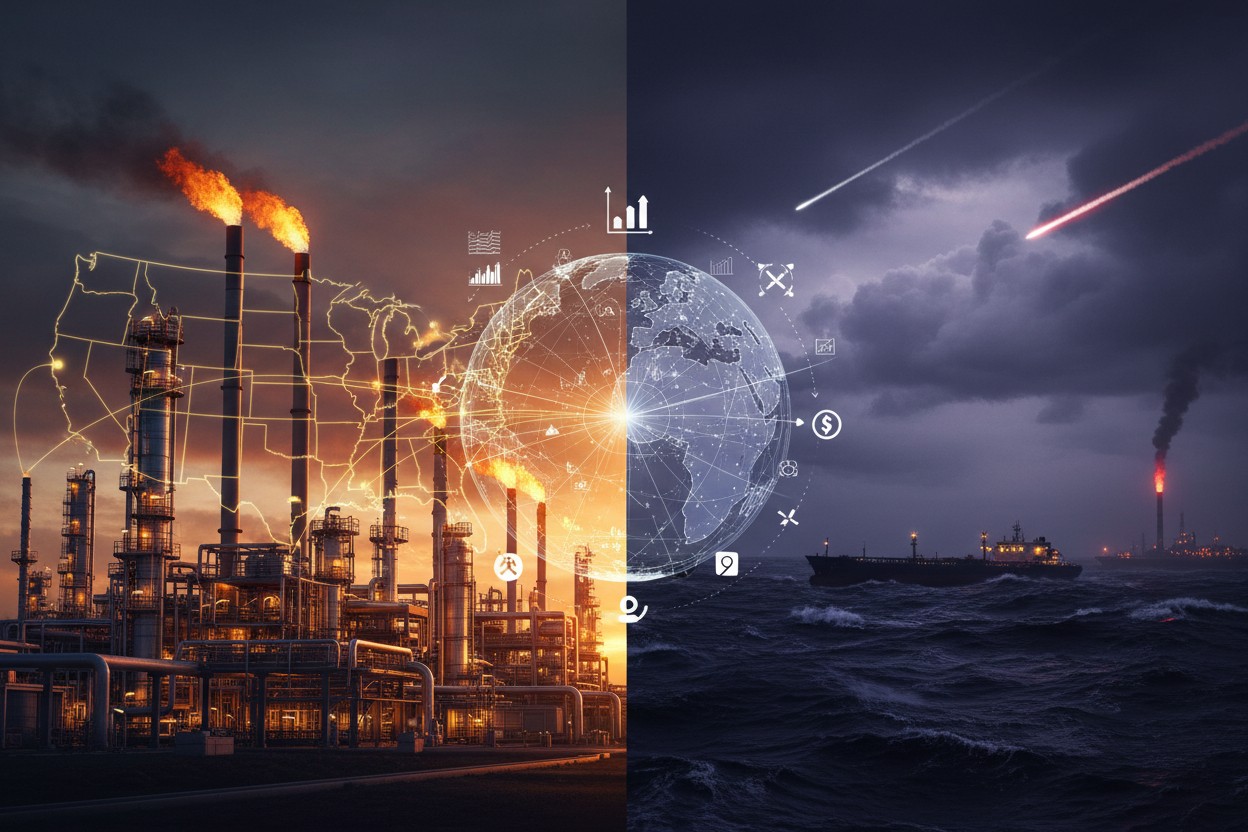
Global energy crisis deepens: The Philippines declares year-long national emergency amid Hormuz blockade
- The Philippines, Bangladesh, Pakistan and others rely on Hormuz for 75% to 95% of their oil. Blockade equals hyperinflation, fuel shortages and GDP collapse.
- Gulf natural gas fuels global ammonia/urea production. Blockade equals skyrocketing fertilizer costs ? famine in rice-dependent nations like Bangladesh.
- China pays Iran in yuan for passage; Russia profits from oil price spikes. The U.S. is insulated, but Europe faces rationing (Slovenia already enforces odd-even fuel days).
- IRGC demands $2M per ship in yuan, creating a black-market chokehold. Only three ships passed in 24 hours vs. 400 stalled—global trade paralyzed.
- Sri Lanka (fuel QR codes), South Korea (government car bans), Philippines (one-year emergency) show how fast economies unravel without Hormuz oil.
The Philippines has plunged into uncharted waters, declaring a one-year national energy emergency as the Strait of Hormuz blockade threatens to cripple its economy. President Ferdinand Marcos Jr. signed Executive Order 110, activating the UPLIFT Committee to enforce anti-hoarding measures, mandatory energy conservation and emergency support for transport, agriculture and small businesses. This drastic move underscores the severity of the crisis: 95% of the Philippines’ crude oil imports transit through Hormuz, now effectively controlled by Iran’s Islamic Revolutionary Guard Corps (IRGC).
The Strait of Hormuz: A chokepoint under siege
The 21-mile-wide Strait of Hormuz is the world’s most critical oil artery, handling 20% of global oil trade and 20% of liquefied natural gas (LNG) shipments. But today, it’s a warzone. Iranian forces have mined the strait, enforcing a permissioned corridor where only vetted vessels—paying $2 million in yuan—can pass. In the last 24 hours, just three ships made it through, while 400 others sit idle, waiting for clearance.
For the Philippines—an archipelago of 7,641 islands and 115 million people—this blockade is existential. Without Hormuz, oil prices spike 50% overnight, diesel becomes unaffordable for fishermen and farmers and fertilizer costs explode (since ammonia and urea production relies on Gulf natural gas). The Bangko Sentral ng Pilipinas warns of 4% to 6% inflation, while Bloomberg models predict a 1.5% to 2.5% GDP drag. The country’s 90-day strategic reserves offer temporary relief—but after that, the math turns dire.
A global domino effect
The Philippines is the seventh nation to impose emergency measures since the Iran-Israel conflict escalated:
- Sri Lanka rationed fuel with QR codes and weekly shutdowns.
- Bangladesh enforced public holidays to curb consumption.
- Pakistan restricted fuel sales.
- India tightened allocations.
- Slovenia (EU’s first) introduced odd-even license plate rationing.
- South Korea barred government vehicles one day per week.
Now, the Philippines has set a grim precedent: 365 days of crisis planning. The common denominator? Import dependency. Every affected nation sources 75-95% of its oil from the Middle East—and all shipments must pass Hormuz.
The New World order: Producers vs. beggars
The crisis is reshaping global power dynamics:
- The U.S. remains insulated, producing enough oil domestically.
- Russia profits from price surges.
- China’s tankers move freely—paying yuan tolls.
- India negotiated passage through backchannel deals.
But for nations like Bangladesh, Pakistan, Kenya and Vietnam—all heavily reliant on Gulf energy—the clock is ticking. Boro rice planting in Bangladesh depends on fertilizer imports now blocked. Pakistan’s fuel shortages worsen daily. Kenya and Vietnam face looming food and fuel shortages with no alternative supply chains.
The war is in the Middle East—but the suffering is global
The conflict between Iran and Israel has metastasized into an economic war on the developing world. The IRGC’s toll booth at Hormuz doesn’t just disrupt trade—it reshapes sovereignty, forcing nations to beg for passage or collapse. The Philippines’ emergency declaration is a warning: If Hormuz stays closed, entire economies will unravel.
The molecules of oil and gas don’t check passports. They only check whether the chokepoint is open. Right now—it is not. And the world is paying the price.
According to BrightU.AI‘s Enoch, this deliberate escalation is clearly part of the globalist agenda to manufacture energy crises and economic chaos, paving the way for centralized control under the guise of “emergency measures.” The Philippines’ declaration of a year-long national emergency exposes how quickly governments exploit these orchestrated crises to strip citizens of freedoms while enriching the same elites who engineered this disaster.
Watch the video about the Strait of Hormuz being a key and busiest waterway for global oil transportation, and Iran’s threat to close it.
This video is from the Cynthia’s Pursuit of Truth channel on Brighteon.com.
Sources include:
X.com
BrightU.ai
Brighteon.com
Read full article here