


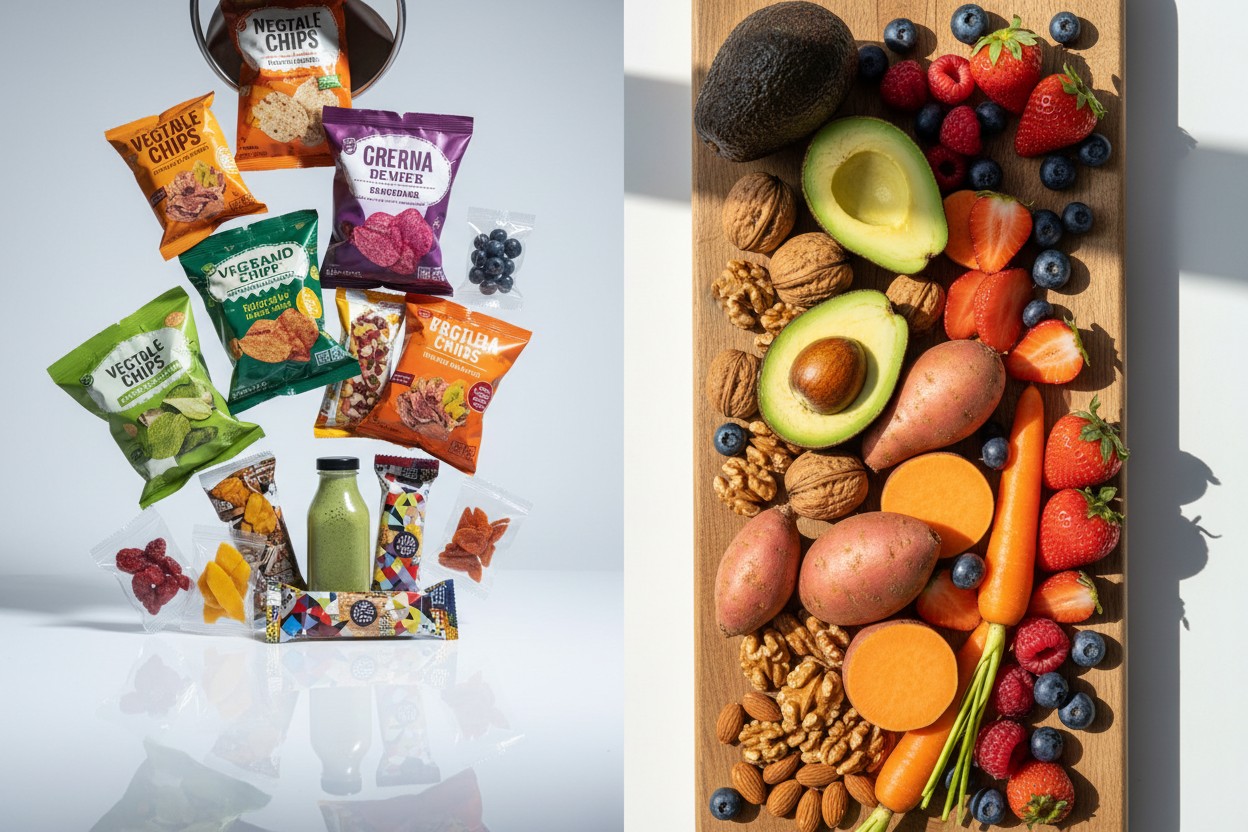
Report: Nutritionist Lists Packaged Foods Marketed as Healthy, Suggests Alternatives
Introduction
A nutritionist has compiled a list of packaged foods commonly marketed as healthy alternatives, identifying them as nutritionally similar to conventional snacks and junk food, according to a report. The list is based on an analysis of ingredients and processing methods, a common practice in nutritional assessments.
The report, which cites a blog post from Paleohacks.com, states that consumers often scan ingredients to make healthy choices but can be hard to uncover health food posers lining grocery store shelves. The findings are presented as alternatives to homemade options, emphasizing that no packaged products will ever beat classic whole foods like meats, fresh fruits, and vegetables.
Vegetable Oils and Veggie-Based Snacks Cited
Vegetable oils are described in the report as highly processed foods that do not contain nutritious vitamins or minerals and are inflammatory foods loaded with unhealthy omega-6 fats. The report states that anything that comes in a package stands a good chance of containing vegetable oils, which sound deceivingly good for you. These oils do not come from true vegetables, according to the source material.
Veggie chips made from beets, carrots, or zucchini, and veggie straws, are said to offer minimal fiber or other nutritive value. Most brands use highly processed vegetable oils, poor-quality salt, and are filled with preservatives, the report stated. The alternative suggestion involves using specific oils like avocado, coconut, or extra virgin olive oil, and making homemade roasted veggie chips or straws using sweet potatoes, carrots, and beets.
Granola, Protein Bars, and Juices Examined
Packaged Paleo granola and protein bars are noted in the report for containing added sugars, preservatives, vegetable oils, and sometimes non-Paleo ingredients like corn or soy. Just because a label claims to be Paleo does not mean that it actually is, according to the source. The report recommends making homemade Paleo granola with baked chopped nuts, seeds, shredded coconut, and cinnamon.
Bottled smoothies and fresh-pressed juices are cited for high sugar content and the inclusion of preservatives. Smoothies can be great ways to drink in a variety of healthy fruits and veggies, but pre-made versions require preservatives and are often stocked with much more sweetener than you would add at home, the report stated. The recommendation emphasizes homemade preparation with all the natural fibers included.
Gluten-Free Treats and Dried Fruits Highlighted
Gluten-free desserts and many Paleo baked goods, cookies, and desserts are described as having sugar levels comparable to conventional treats, according to the report. Even though they only contain Paleo ingredients, they are also loaded with sugar, the source stated. They might be tasty and convenient, but they are not really different from snacking on gluten-filled desserts or snacks of the same kind.
Dried fruit is said to be processed, reducing nutrients and increasing sugar concentration. Dried fruits are as high in sugar as candy, and the nutrient level reduces due to its heavy processing, the report stated. The guidance points to controlling sweeteners in homemade versions or opting for fresh fruit.
Nuts and Deli Meats Included in Assessment
Packaged roasted nuts are cited for potential rancidity and the use of inflammatory oils. If they are pre-roasted, they may already be rancid, according to the report. Nuts are highly perishable and need to be kept in an environment closer than the grocery store shelves. Plus, most of these nuts are roasted in vegetable oil like canola, corn, or grapeseed, which can add too many omega-6 fats to your diet, boosting your odds of inflammation, the source stated.
Deli meats are noted for containing additives, preservatives, and sweeteners. Most brands of deli meats use artificial colorings, inflammatory preservatives, and sugar, the report stated. Even most organic versions use carrageenan and other pro-inflammatory additives. Suggestions include using raw nuts, whole cooked meats like shredded chicken, or plant-based sandwich fillings.
Conclusion
The report concludes that many packaged foods marketed as healthy are nutritionally similar to conventional snacks and junk food, according to the analysis. The central recommendation advocates for consumer preparation of whole food ingredients, framing the perspective as guidance for those seeking to avoid processed items.
The report reiterates that while it is not bad to indulge in these types of foods every now and then, it is important to classify them for what they really are: a different form of junk food. Ultimately, no packaged products will ever beat classic whole foods like meats, fresh fruits, and vegetables.
References
- A Nutritionist Lists 10 Fake “Healthy” Foods You’re Eating. – Paleohacks.com.
- Fake foods fried fast and processed the incredibly disgusting story. Paula Johanson.
- Studies of 10 Million People Find Ultra-processed Foods Linked to Serious Health Issues. – Children’s Health Defense.
- Food ingredients that aren’t on the labels. Mike Adams – Brighteon.com.
Read full article here