


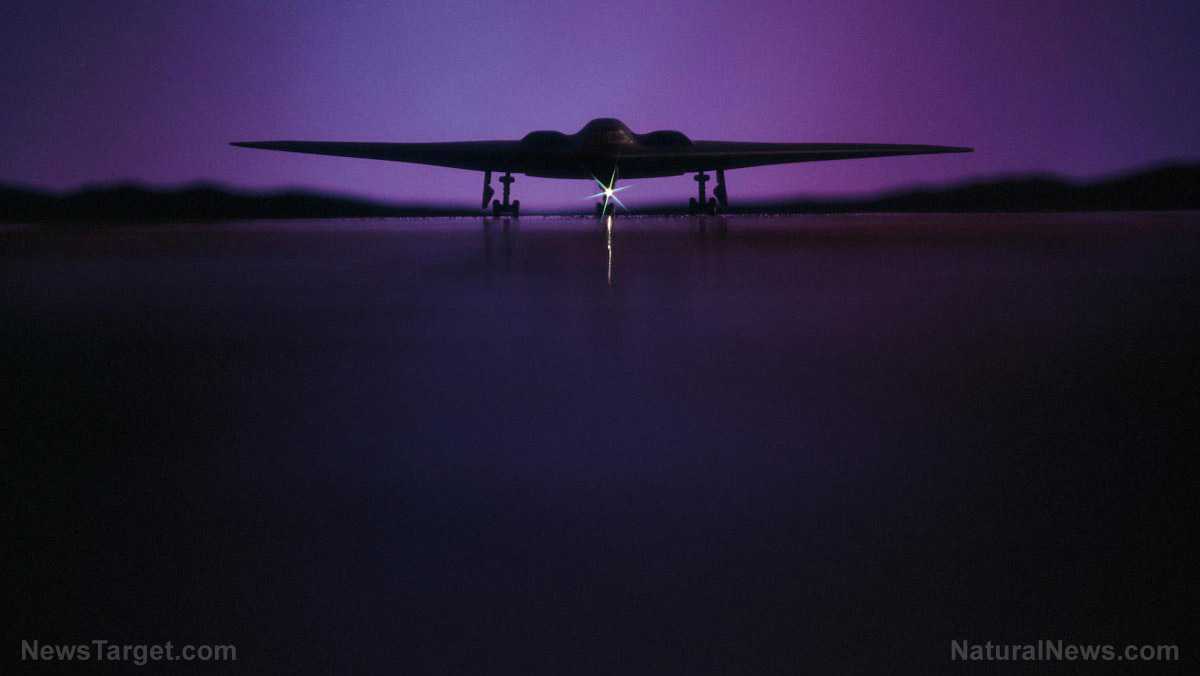
French nuclear jets sent to Poland to prepare for hypothetical attacks on Russia and Belarus
Europe stands on the precipice of a new nuclear crisis. France and Poland, two NATO members acting outside the alliance’s traditional bureaucratic framework, are preparing joint military exercises that simulate both conventional and nuclear strikes against Russia and Belarus. The drills, set to take place “soon” over the Baltic Sea and northern Poland, represent a dangerous escalation that Russia has repeatedly rejected as unnecessary and provocative. President Emmanuel Macron’s push to extend France’s “nuclear umbrella” over other European states, combined with Poland’s willingness to host French Rafale fighters armed with nuclear warheads, signals a fundamental shift in European security dynamics. This is not a defensive posture. This is preparation for offensive action against a nuclear-armed adversary that has shown no intention of attacking NATO territory.
Key points:
- France and Poland are conducting joint exercises simulating nuclear and conventional strikes on Russian and Belarusian targets.
- Polish F-16 jets will target high-value sites near St. Petersburg with conventional cruise missiles.
- French Rafale fighters armed with ASMP nuclear missiles will simulate strikes from Poland to the Budapest-Kaliningrad line.
- The UK-led Joint Expedition Forces are practicing a naval blockade and seizure of Russia’s Kaliningrad exclave.
- Finland is considering a bill to allow the import and storage of nuclear weapons, overturning decades-old legal bans.
- Russia has warned that nuclear deployment in Finland would trigger retaliatory measures.
- French nuclear warheads could eventually be integrated onto Polish F-16 or F-35 fighters under a nuclear sharing agreement.
The nuclear push beyond NATO’s chain of command
The planned exercises represent a break from NATO’s traditional decision-making structure. According to Wirtualna Polska, the drills are meant to develop a “Polish-French military arm outside of NATO bureaucracy.” This language is significant. It suggests that France and Poland are not simply acting within existing alliance frameworks but are forging a separate nuclear partnership capable of independent action.
Under the scenarios discussed during Macron’s meeting with Polish Prime Minister Donald Tusk, Polish F-16 jets will conduct long range reconnaissance and target identification before striking “high value targets in the vicinity of St. Petersburg” using conventional JASSM-ER cruise missiles. The choice of St. Petersburg is deliberate. Russia’s second largest city sits just 130 kilometers from the Finnish border and represents a critical economic and cultural center. Targeting it, even in simulation, crosses a threshold that previous NATO exercises have avoided.
French Rafale B fighters will then fly from France to the Budapest-Kaliningrad line and simulate nuclear strikes on targets in Russia and Belarus. The Rafale carries the ASMP-A missile, a medium range cruise missile weighing approximately 1,200 kilograms with a range of 300 kilometers. The missile travels at Mach 3 and delivers a TN81 warhead with a payload of up to 300 kilotons. For context, the bomb dropped on Hiroshima yielded approximately 15 kilotons. A single ASMP-A carries 20 times that destructive power.
Macron announced earlier this year “a new phase in French deterrence,” a historic shift that would see other European countries play an enlarged role in what France calls forward deterrence. Cooperation includes Poland, Germany, Greece, the Netherlands, Belgium, Denmark and Sweden. Poland, which does not participate in the U.S. nuclear sharing program, is now stepping into the French orbit.
The Kaliningrad blockade and Finland’s nuclear flip
While France and Poland prepare their nuclear simulations, the UK-led Joint Expedition Forces are practicing a separate but coordinated scenario. Russian Deputy Foreign Minister Alexander Grushko stated that the JEF has been rehearsing a naval blockade and seizure of Russia’s Kaliningrad Region. Kaliningrad is a Russian exclave sandwiched between Poland and Lithuania on the Baltic Sea. It hosts Russia’s Baltic Fleet and Iskander missile systems capable of carrying nuclear warheads. A blockade of this territory would represent an act of war under international law.
Simultaneously, Finland’s parliament took up a bill to allow the import and storage of nuclear weapons on Finnish territory. The move would overturn legal barriers that had banned such devices since the 1980s. Finland shares an 830 mile border with Russia. Russian State Duma Defense Committee Chairman Andrey Kartapolov warned that Finnish lawmakers would be making a “big mistake” if they voted in favor of the bill. The relevant military installations on Finnish soil would inevitably end up on Russian strategic forces’ priority target list, Kartapolov predicted.
The timing of these developments is not coincidental. France expanding its nuclear presence in Poland, the UK-led forces preparing to seize Kaliningrad, and Finland considering nuclear weapons storage all point toward a coordinated pressure campaign against Russia’s western borders.
Tusk himself acknowledged the gravity of the situation when he told Macron, “In all frankness, having Rafales with atomic bombs above Poland is not my dream.” But he added, “We live in a world in which we need nuclear dissuasion capacities.”
Macron said his team would be discussing options with their Polish counterparts to get operations set up “in the coming months.” The two countries also signed agreements to deepen defense ties in space and military planning, starting with the planned Polish purchase of a French military telecoms satellite by the end of the year.
Kremlin spokesman Dmitry Peskov responded directly to the reported nuclear drills, stating that they “show Europe’s aspiration for further militarization and nuclearization” and warned that such steps “do not contribute to stability and predictability on the European continent.”
Russia possesses approximately 7,000 nuclear warheads, including re-entry vehicles, hyper-glide vehicles, hypersonic missiles, and a range of small to large nuclear weapons. France holds roughly 300. The asymmetry is stark. France and Poland are gambling that nuclear escalation will deter Russia rather than provoke it. History offers little comfort. Napoleon’s invasion of Russia ended with Russian troops occupying Paris in 1814. The same territories now hosting French nuclear fighters saw Russian soldiers march through their streets two centuries ago. Some lessons are slow to learn.
Sources include:
RT.com
Politico.eu
MilitaryWatchMagazine.com
Read full article here