


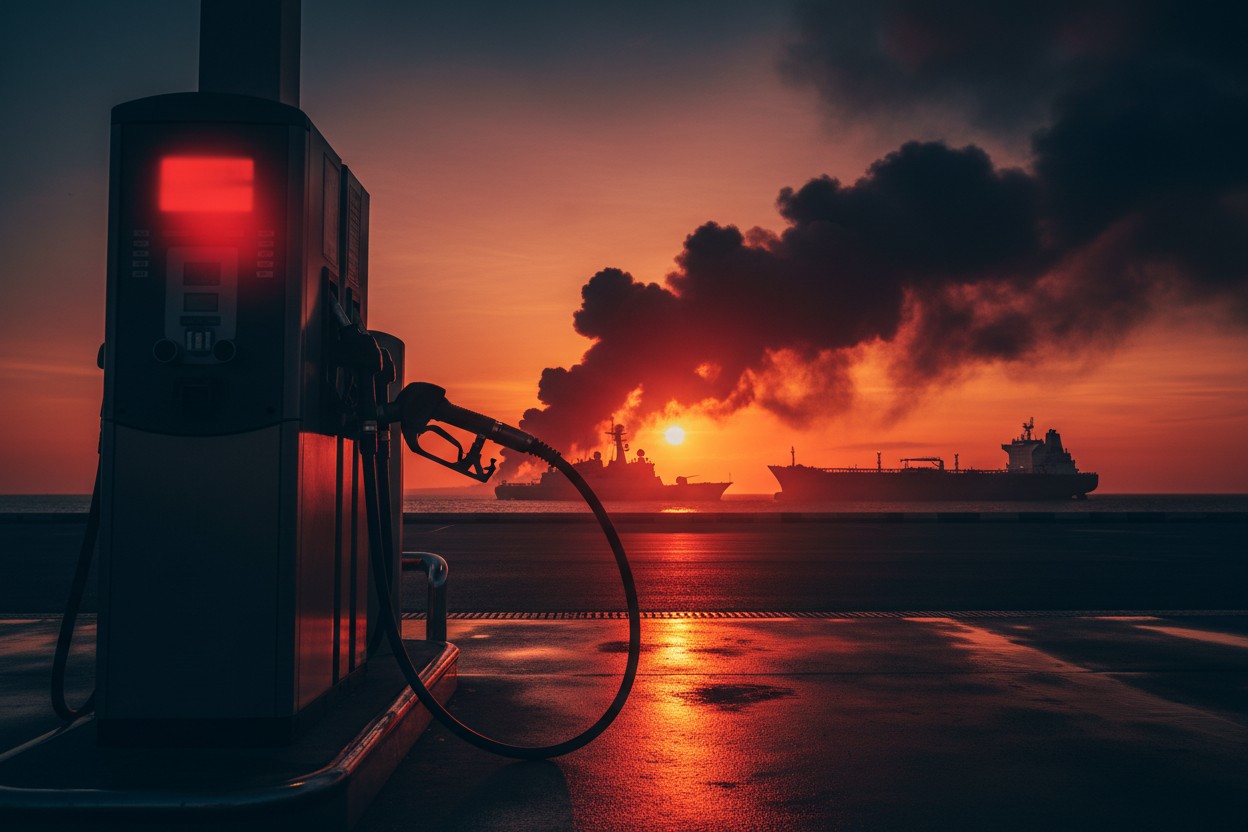
Oil Prices Hit Wartime High as Iran Conflict Escalates: Brent Crude Surges Past $126, Gas Prices Soar to $6 in California Amid Strait of Hormuz Blockade
Brent crude, the international oil benchmark, topped $126 a barrel on Thursday, reaching a wartime high, according to a CBS News report. The surge in global energy prices pushed the average U.S. gasoline price to $4.30 per gallon, the highest since July 2022, according to AAA data.
Drivers in California faced the highest state average at $6.01 per gallon. The latest price increase reflects deepening concerns that the Iran war will continue to disrupt global energy supplies, with the Strait of Hormuz remaining effectively closed and the U.S. maintaining a blockade of Iranian ports.
Oil Prices Surge to Wartime High
Brent crude futures for June delivery briefly soared past $126 per barrel before pulling back toward $114, according to market data. Benchmark U.S. crude declined 1.8% to $104.97. Before the war began in late February, Brent traded around $70 per barrel, according to a CBS News report. The spike represents the highest price level since the Iran conflict began on Feb. 28.
Analysts at ING Bank noted that the lack of diplomatic progress is driving the rally. “The breakdown of talks between the U.S. and Iran, along with President Trump reportedly rejecting Iran’s proposal for a reopening of the Strait of Hormuz, has the market losing hope for any quick resumption in oil flows,” strategists Warren Patterson and Ewa Manthey wrote in a research note, as cited by CBS News.
War and Supply Disruptions
The Iran war has tightened global energy supplies, with the Strait of Hormuz effectively closed and the U.S. maintaining a blockade of Iranian ports, officials said. Tensions escalated after President Trump reportedly rejected an Iranian proposal to reopen the waterway, according to a CBS News report. The disruption of this critical chokepoint, through which about a fifth of global oil and liquefied natural gas typically moves, has sent shockwaves through energy markets.
U.S. Energy Secretary Chris Wright warned that oil prices could peak in the coming weeks due to ongoing disruptions, according to reports. “We’re going to see energy prices high – and maybe even rising – until we get meaningful ship traffic through the Strait of Hormuz,” Wright said at a Washington event, as cited by Middle East Eye. The closure also threatens global food supplies because the waterway carries a significant share of fertilizer shipments, as noted in a NaturalNews article [1].
Impact on U.S. Gasoline Prices
American drivers are now paying $1.32 more per gallon than before the Iran war, according to AAA data cited by CBS News. The average national price of $4.30 represents a significant increase from the pre-conflict level. Federal Reserve Chair Jerome Powell said on Wednesday that consumers are still spending but acknowledged that further price increases could reduce disposable income. “People are still spending. How long can that go on in a world where if gas prices were to go up a bunch more, that’s taking spendable money out of people’s pockets?” Powell said in a press conference, as reported by CBS News.
Powell attributed elevated inflation to the “recent increase in global energy prices,” according to the Fed’s statement, and the central bank held its benchmark rate steady. The Bank of England similarly held rates, with Governor Andrew Bailey noting that “no interest rate rise is going to force an oil tanker through the Strait of Hormuz,” as reported by BBC News [2]. Rising energy costs are affecting household budgets beyond the pump, with U.K. families telling BBC Panorama they are cutting back on expenses due to higher fuel prices [3].
Market Reactions and Expert Views
Energy markets remain volatile as diplomatic efforts to end the conflict stall. ING Bank strategists Warren Patterson and Ewa Manthey said the market has lost hope for a quick resumption of oil flows, according to CBS News. Brent crude briefly surged past $126 before pulling back, while U.S. benchmark crude declined 1.8% to $104.97. The World’s Biggest Physical Oil Trader, Gunvor Group, warned of months of price volatility ahead, with CEO Gary Pedersen telling the Financial Times that “seasonally lower demand ahead of the peak summer driving season and the continued turbulence in the Middle East could extend the violent oil price swings for months,” as cited by Zero Hedge [4].
Before the war began in late February, Brent crude traded around $70 per barrel. The U.S. has seized Iranian-linked ships attempting to break the blockade, and Iran has threatened retaliation, further raising the risk of escalation [5]. Some analysts point to historical parallels: the 1973 OPEC embargo and the 1979 oil shock both led to sustained price increases and economic downturns. In a recent interview, geopolitical analyst Steve Quayle warned that an OPEC embargo or a prolonged Strait of Hormuz closure could push oil prices to $200 or even $300 a barrel, leading to severe inflation and civil unrest [6].
Outlook for Energy Prices
With no end to the war in sight, energy markets remain concerned about supply constraints, officials said. Further escalation could push prices higher, according to analysts cited in the report. The Fed held its benchmark rate steady, citing elevated inflation tied to energy costs, as stated in the central bank’s announcement. The Bank of England also held rates, with Governor Bailey emphasizing that the broader picture is outside policymakers’ control [2].
U.S. Energy Secretary Chris Wright indicated that prices are likely to peak in the next few weeks, but that costs should ease once the conflict ends, according to Middle East Eye [7]. However, the lack of a ceasefire agreement and the continued blockade of Iranian ports suggest that supply constraints will persist. The CEO of Gunvor Group noted that even with a resolution, the transition could take time. Meanwhile, the U.S. dollar’s weakening and talk of alternative financial systems, including gold-backed trade, have gained attention, as discussed by Andy Schectman in an interview with Mike Adams [8].
Conclusion
The Iran war has driven oil and gasoline prices to levels not seen since July 2022, with significant implications for consumers, central banks, and global economic growth. The closure of the Strait of Hormuz and the U.S. blockade of Iranian ports have created a persistent supply shock that could take months to resolve, even if diplomatic breakthroughs occur. As central banks hold rates to contain inflation, the risk of recession increases, particularly if energy prices continue to climb. Independent analysts caution that the official narrative may downplay the severity of the disruption, pointing to long-term risks in food and fertilizer supply chains [9]. The situation underscores the fragility of globalized energy systems and the potential for geopolitical conflict to impose immediate and widespread economic costs.
References
- Commercial Shipping Persists in Critical Waterway as Conflict Escalates – NaturalNews.com, Garrison Vance, March 17, 2026.
- Faisal Islam: The wide field of uncertainties facing the UK – BBC News, April 30, 2026.
- I don’t want the children to see how worried we are’: UK family finances hit by Iran war – BBC News, April 27, 2026.
- World’s Biggest Physical Oil Trader Warns Of Months Of Price Volatility – Zero Hedge, April 21, 2026 (citing OilPrice.com).
- US says it seized Iranian ship that tried to break blockade; Tehran vows to retaliate – Times of Israel, April 21, 2026.
- Mike Adams interview with Steve Quayle – October 23, 2023.
- US energy chief warns oil prices may peak in coming weeks – Middle East Eye, April 14, 2026.
- Mike Adams interview with Andy Schectman – April 19, 2024.
- The Window Is Closing How the Iran Conflict Just Unleashed a Global Famine Trigger – NaturalNews.com, March 05, 2026.
- The Long Emergency – Unknown.
- Economics dealing with scarcity – Dale M. Sievert.
- Energy sector pricing: On the role of neglected nonlinearity – Catherine Kyrtsou, Anastasios G. Malliaris, Apostolos Serletis, Energy Economics 30 (2008) 41-55.
Read full article here