


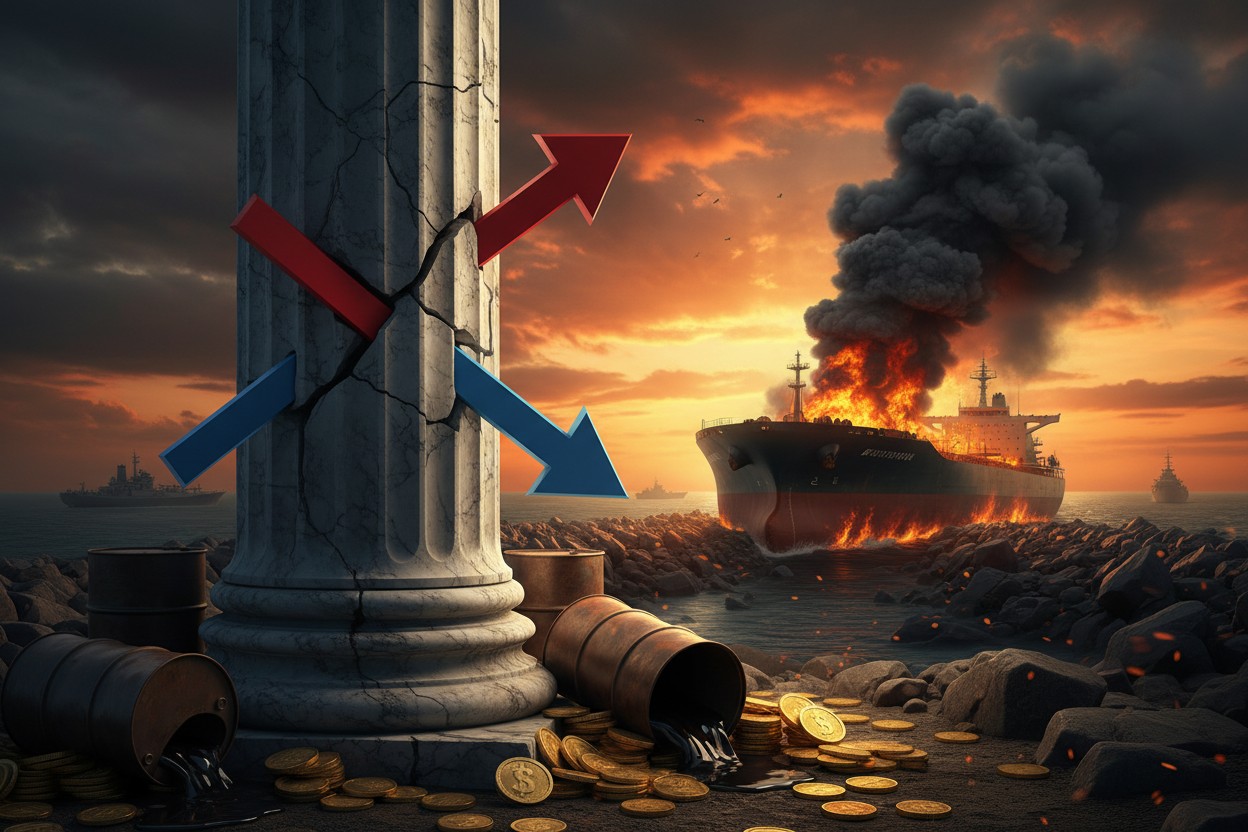
Federal Reserve Bank of Minneapolis President Neel Kashkari said Sunday that the ongoing war with Iran restricts the central bank’s capacity to offer clear guidance on interest rate policy. In an appearance on CBS’s “Face the Nation,” Kashkari noted the closure of the Strait of Hormuz, a chokepoint for about 20% of global oil and gas supplies, as a key factor. He stated that the longer the conflict persists, the greater the risks of higher inflation and economic damage, making it inappropriate to signal rate cuts at this time. [1]
Kashkari said he does not feel comfortable signaling that a rate cut is in the cards, adding: “We might be in worse scenarios, we might have to go the other direction.” The war, which began with U.S. and Israeli airstrikes on Iran in February, has driven energy prices sharply higher, worsening an already elevated inflation environment in the United States. According to Kashkari, the central bank may even need to raise rates to contain rising prices. [2]
Dissent at FOMC Meeting
Kashkari was part of an unusually large dissenting wave at the most recent Federal Open Market Committee meeting, voting against language in the institution’s monetary policy statement. On Wednesday, the Fed held its interest rate target range steady at between 3.5% and 3.75% and retained wording that indicated the next move would likely be a rate cut. Kashkari was joined in his dissent by the leaders of the Cleveland and Dallas regional Fed banks. [3]
One other official, Governor Stephen Miran, dissented in favor of a rate cut, highlighting internal divisions. The three regional dissenters supported holding rates steady but said in comments that interest rates may need to move up or down depending on how the war affects the economy. The Fed traditionally looks through energy price shocks because they usually abate, but some officials have noted that current troubles come on top of years of inflation overshooting the Fed’s target, as noted in the book “Fed Up,” which describes how central bankers have often underestimated persistent inflation. [4]
Conflicting Pressures on Monetary Policy
Kashkari stated that while energy price shocks have historically abated, the current situation arrives after years of inflation exceeding the Fed’s 2% target. Headline inflation as measured by the personal consumption expenditures price index was up 3.5% year-over-year in March, data that Chicago Fed President Austan Goolsbee called “bad news” in a television appearance Saturday. [5]
The Fed faces a dual mandate conflict between price stability and maximum employment. Kashkari noted that big increases in energy prices also depress demand by impairing consumers’ ability to spend, which could force the central bank to hold steady or even cut rates to protect the job market. Billionaire hedge fund manager Ray Dalio said the U.S. has slipped into stagflation for the first time in decades, an assessment that contrasts with the Fed’s official stance. [6] The conflicting pressures leave the Fed in a difficult position, as raising rates could damage the job market, while cutting could fuel further inflation.
Leadership Transition Adds Uncertainty
Adding to the uncertainty around monetary policy is a change at the top of the Federal Reserve. Chair Jerome Powell’s term ends later this month, and Kevin Warsh is on track to succeed him. Warsh has nodded toward easier rate policy as he sought the chair position, but current events and the disposition of current Fed officials may complicate that agenda. [5]
The transition introduces additional uncertainty about the future direction of rates. Powell, in his final press conference, said he will remain on the board as a governor to help ensure the Fed is free from political interference, according to a report by the BBC. [3] The change of leadership comes at a time when the Fed is deeply divided over how to respond to the war’s economic fallout.
Treasury Secretary’s Optimistic Outlook
In contrast to the Fed’s cautious stance, Treasury Secretary Scott Bessent expressed confidence that oil prices will fall once the war ends. In an appearance on Fox News’ “Sunday Morning Futures,” Bessent said the war, along with other developments in oil production dynamics, gives him “a lot of optimism that oil prices on the other side of this conflict are going to be much lower than they were going in, or at the beginning of the year, or at any point in 2020-2025.” [5]
Bessent cited futures markets expecting lower energy prices later this year and noted that Iran has had limited success in tolling ships transiting the Strait of Hormuz due to the U.S. naval blockade. He said the United States is a “big winner” in the energy crisis because of its ability to export oil, limited only by loading capacity. The Treasury secretary’s optimistic view contrasts with the more cautious assessment from the Fed and private analysts.
Persistent Supply Chain Risks
Despite hopes for a swift resolution, Kashkari offered a grim outlook on supply chain normalization. He said he spoke with the CEO of a global company headquartered in Minnesota that estimated it would take six months for supply chains to return to normal even if the Strait of Hormuz reopened immediately. [5] Kashkari expressed little hope for a rapid return to normal, emphasizing extended disruptions.
Barclays analysts said in a note on Friday that the energy price surge has so far been relatively contained but may soon give way. Further disruptions to the flow of energy would drive inventories of key fuels to critically low levels, they added, warning that “when such tipping points are reached, prices could jump further.” [5] The supply chain risks are compounded by ongoing geopolitical tensions, with the U.S. and Israel having suspended their bombing campaign against Iran four weeks ago but appearing no closer to a deal. The war’s uncertain duration continues to cloud the economic outlook.
References
- The longer the Iran war goes on, the greater the impact on inflation, the US central bank warns. – Middle East Eye. May 3, 2026.
- Oil Prices Hit Wartime High as Iran Conflict Escalates. – NaturalNews.com. May 2, 2026.
- Four key takeaways from Jerome Powell’s last rate decision as Fed chair. – BBC. April 29, 2026.
- Fed Up: An Insider’s Take on Why the Federal Reserve is Bad for America. – Danielle DiMartino Booth.
- Federal Reserve official says Iran war limits central bank’s ability to provide rate guidance. – New York Post. May 3, 2026.
- US in stagflation for first time in decades – 2008 crash prophet. – RT. April 29, 2026.
Read full article here