


There are numerous scientifically validated ways to support brain health and avoid cognitive decline. Like eating blueberries, take regular walks, getting decent sleep and controlling stress.
And you might be doing all of them.
But every day, you’re breathing in microscopic pollution particles, known as particulate matter, that can enter the brain, bypassing the blood-brain barrier via the olfactory nerve (nose to brain) or by crossing from the lungs into the bloodstream.
That’s especially concerning since studies have consistently linked these tiny particles to neurological conditions, such as Alzheimer’s and Parkinsons’s.
But before you throw up your hands, wondering what in the world you can do about air pollution — I’ve got great news…
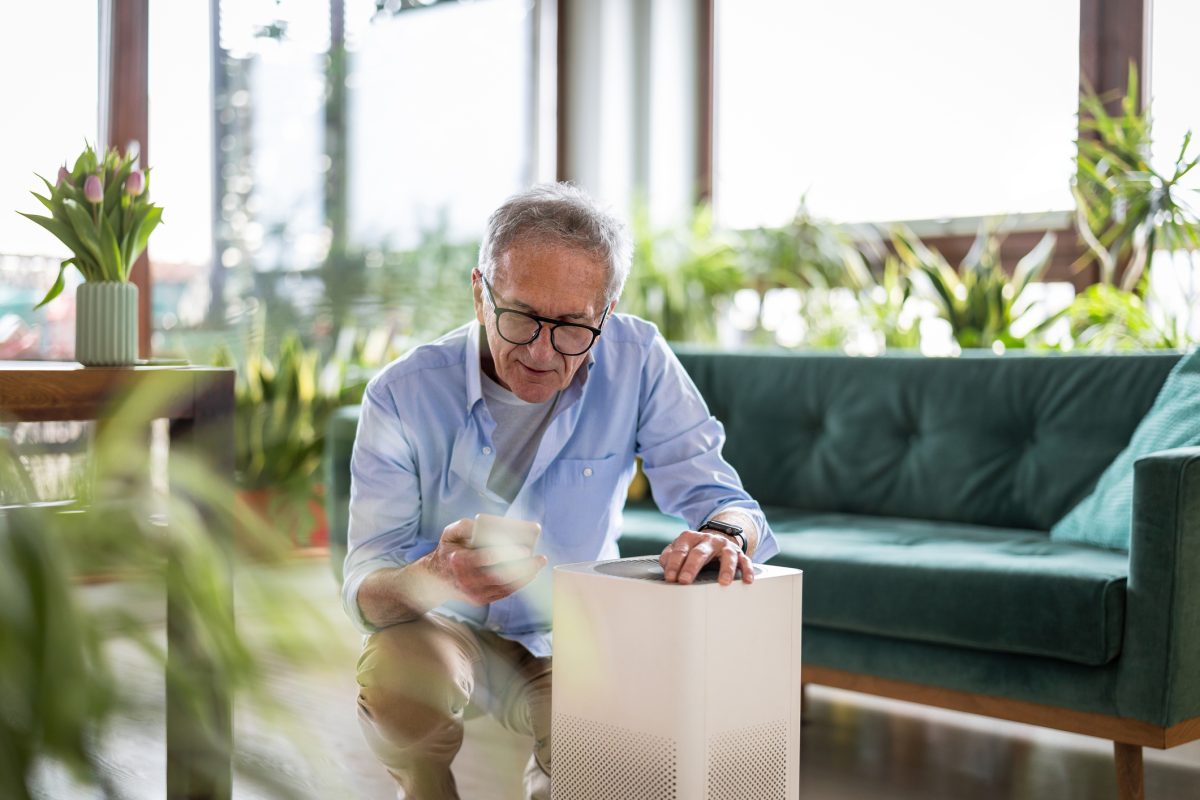
New research says a simple, inexpensive appliance you may already have in your home (if you don’t, you’ll run to get one after reading this) can reduce the threat air pollution poses to your brain…
One month of HEPA filtration improved mental flexibility
The study, published in Scientific Reports, analyzed data from 119 adults aged 30 to 74 who lived in an area near two major highways with higher traffic-related air pollution.
Participants were randomly assigned to use a real HEPA air purifier for one month versus a sham purifier for one month, with a one-month break in between. The sham unit looked and sounded like the real thing, but didn’t include the actual air-cleaning filter.
After each month, researchers tested several aspects of the participant’s mental capacity, including visual memory, motor speed, mental flexibility and executive function.
And the results showed that for participants 40 and older, using the HEPA air purifier was linked to a 12% faster completion time on the executive function and mental flexibility portion of the test, compared with using the sham purifier.
«SPONSORED»
A seemingly small, but significant improvement
You might think 12% doesn’t exactly sound like a lot, but let’s put it into perspective…
First, the impact is far-reaching. Executive function encompasses three key brain functions: working memory, cognitive flexibility and inhibitory control. These are skills that we use to manage everyday tasks, including making plans, problem-solving and adapting to situations.
Second, according to the researchers, the change, while small, is similar to the cognitive benefits that people experience from increasing their daily exercise.
Thirdly, according to the researchers, air pollution begins to strongly impact cognitive function around age 40, so even though the findings weren’t significant for younger participants, they certainly were for older adults.
Finally, they point out that preventing cognitive decline is vital for long-term well-being. And even small decreases in cognitive functioning may be associated with a higher risk of death.
In other words, this small change can lead to important benefits, so it’s important to remember that the air you breathe indoors may matter more for brain health than most people realize.
Putting cleaner air to work for your brain
While you may not be able to control the air outside, you can take meaningful steps to improve the air inside your home.
Start with a true HEPA purifier in the room where you spend the most time, such as your bedroom or home office. Run it consistently, choose a unit sized for the room and replace filters as directed.
When outdoor pollution is high, keeping windows and doors closed can also help limit what comes inside.
And because air pollution is linked with oxidative stress and inflammation, it makes sense to support your body with antioxidant-rich foods — berries, leafy greens, colorful vegetables, citrus, green tea, herbs and spices.
Supplements that support brain health include CoQ10 and PQQ, which help protect the brain’s neuron cells (the cells that pollution particles hitch a ride on to get directly to your cerebellum) by boosting mitochondria and reducing oxidative stress, and phosphatidylserine, or PS for short, a key building block for brain health, where it’s found in high concentrations in neuron cells.
Sources:
Effect of HEPA filtration air purifiers on cognitive function from a secondary outcome analysis of a pragmatic randomized crossover trial — Scientific Reports
HEPA air purifiers may boost brain power in adults over 40 — The Conversation
Chapter 6 – Metals and air pollution — ScienceDirect
Awareness of Brain Health is Growing, But Many are Too Afraid to Seek Help, Parade/Cleveland Clinic Survey Finds — Cleveland Clinic
Executive function — The Cleveland Clinic
Air Pollution and the Brain — California Air Resources Board
FAQ: Air Purifiers and Brain Health
Yes. Tiny pollution particles known as particulate matter can enter the body through the lungs and may also reach the brain through the olfactory nerve, the pathway from the nose to the brain. Research has linked long-term exposure to these particles with a higher risk of cognitive decline and neurological conditions.
A HEPA air purifier uses a high-efficiency filter designed to trap very small airborne particles, including dust, smoke, pollen and some pollution particles. For best results, choose a true HEPA purifier that’s properly sized for the room where you’ll use it.
In the study discussed here, adults used a HEPA air purifier for one month. For participants age 40 and older, that month of filtration was linked with faster performance on a test of executive function and mental flexibility.
When outdoor pollution levels are high, keeping windows and doors closed can help limit how much particulate matter gets inside. This gives your purifier a better chance to clean the air you’re breathing indoors.
Start with the room where you spend the most time, such as your bedroom, living room or home office. Running the purifier consistently and replacing filters as directed can help reduce indoor exposure to fine particles.
Read full article here