


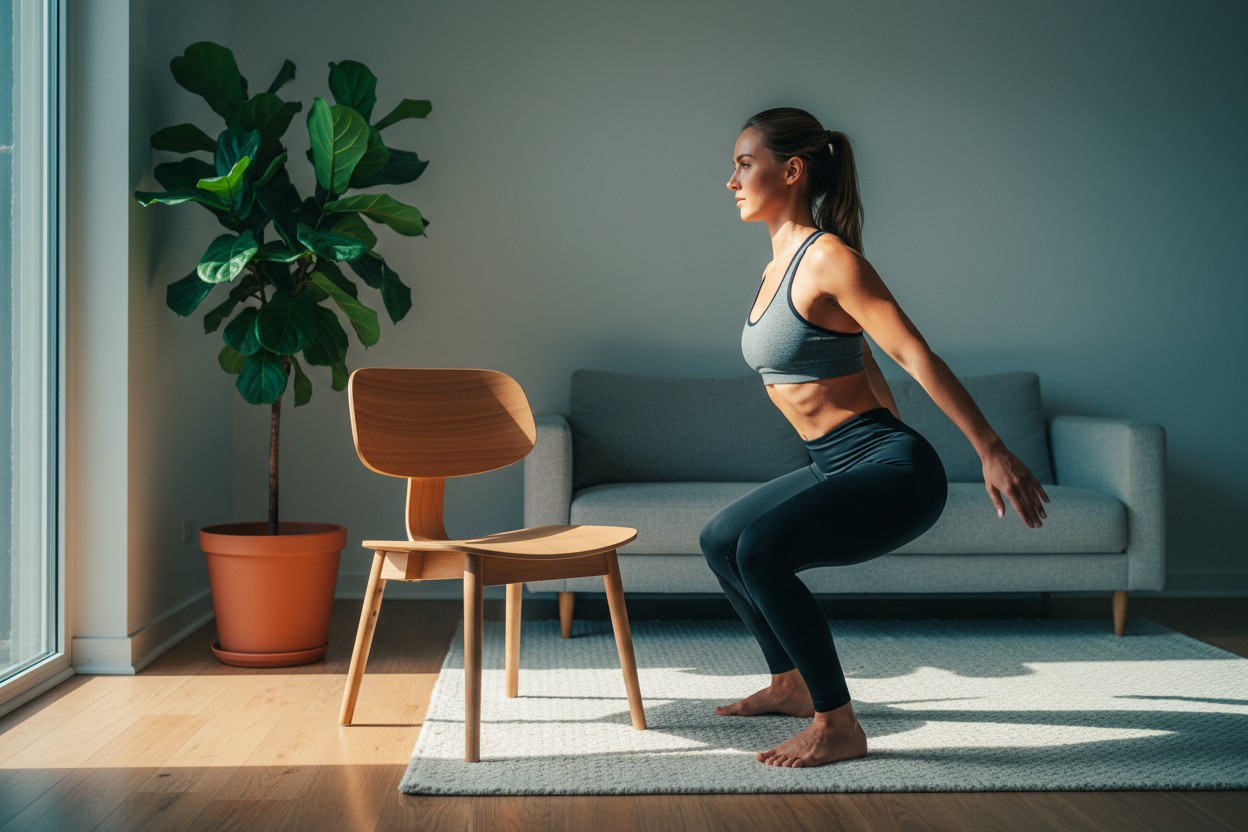
Researchers at Edith Cowan University published a study in the Journal of Sport and Health Science on May 1, 2026, indicating that eccentric exercises — movements focused on the lowering phase — can increase muscle strength and size without requiring exhausting workouts. The study suggests that as little as five minutes per day of slow, controlled exercises such as chair squats and wall push-ups can produce meaningful gains. Lead researcher Professor Ken Nosaka stated that the findings challenge the idea that exercise must be painful or strenuous to be effective. [1]
According to Professor Nosaka, “The idea that exercise must be exhausting or painful is holding people back.” He pointed to eccentric exercises as a method that can deliver stronger results with far less effort than traditional exercise, without requiring a gym. The research team emphasized that muscle soreness is not a necessary component of progress.
What Is Eccentric Exercise?
Eccentric exercise focuses on the lengthening phase of muscle movement, such as lowering a weight or sitting down slowly, according to the study. [1] Muscles can generate more force during lengthening while using less energy than during concentric (shortening) movements, the report stated. A textbook by Hamilton notes that a muscle can sustain more tension in eccentric contraction than it can develop in concentric contraction, though research to date does not show eccentric exercises to be more effective than concentric for strength development. [2]
Professor Nosaka said eccentric exercises deliver stronger results with less effort compared to traditional weightlifting. [1] The study explains that this type of movement includes walking downstairs, lowering a dumbbell, or slowly sitting into a chair. Because the muscles are working while lengthening, the perceived exertion is lower, making the exercises more accessible to a wider range of people.
Simple Exercises for Daily Routine
Recommended exercises include chair squats, heel drops, and wall push-ups, all of which can be done at home without equipment, according to the researchers. [1] The study stated that just five minutes per day of these movements can lead to significant improvements in strength and overall health. [1] “These movements mirror what we already do in daily life,” Professor Nosaka said, making them practical and easy to maintain. [1]
An earlier article on negative resistance training, published by Mercola.com, described a system called NeGator that uses eccentric or negative resistance to reduce workout time while increasing benefits. [3] This approach aligns with the current findings, suggesting that controlled lowering movements can be incorporated into daily routines without special equipment or lengthy sessions.
Why the Approach Works
Eccentric exercise puts less strain on the heart and lungs compared to traditional aerobic or resistance training, the researchers noted. [1] According to the report, this makes it especially suitable for older adults and people with chronic health conditions. [1] Professor Nosaka stated that muscle soreness is not required for progress, and the method provides “more benefit for less effort.” [1]
Discussions by experts Georgi Dinkov and Tyler LeBaron, cited in a Mercola.com article, examined the pros and cons of eccentric versus concentric exercises, noting that eccentric movements may offer unique benefits in terms of reduced metabolic demand. [4] This supports the study’s conclusion that the approach is effective without the high cardiovascular strain associated with traditional workouts.
Implications for Strength Training
The study suggests that adopting eccentric exercises could improve adherence to fitness routines because they feel achievable, the authors wrote. [1] “When exercise feels achievable, people keep doing it,” Professor Nosaka said, according to the university’s news release. [1] The findings offer an alternative for individuals who find traditional gym workouts inaccessible or discouraging, the report concluded. [1]
A book by Pavel Tsatsouline on kettlebell training notes that fast eccentric movements can produce significant strength gains, but the current study emphasizes that slow, controlled lowering movements are particularly accessible and require minimal time commitment. [5] The contrast highlights that different eccentric protocols exist, but the evidence from Edith Cowan University points to slow movements as a practical entry point for building muscle.
References
- You don’t need intense workouts to build muscle, new study reveals. Edith Cowan University. ScienceDaily. May 1, 2026.
- Kinesiology scientific basis of human motion. Hamilton Nancy.
- Sugar and Fruit Juice Two Foods You Should Not Eat Before Exercise. Mercola.com. July 27, 2010.
- 2 Top Exercises to Master Live Longer Be W. Mercola.com. July 23, 2023.
- Return of the Kettlebell. Pavel Tsatsouline.
Read full article here