


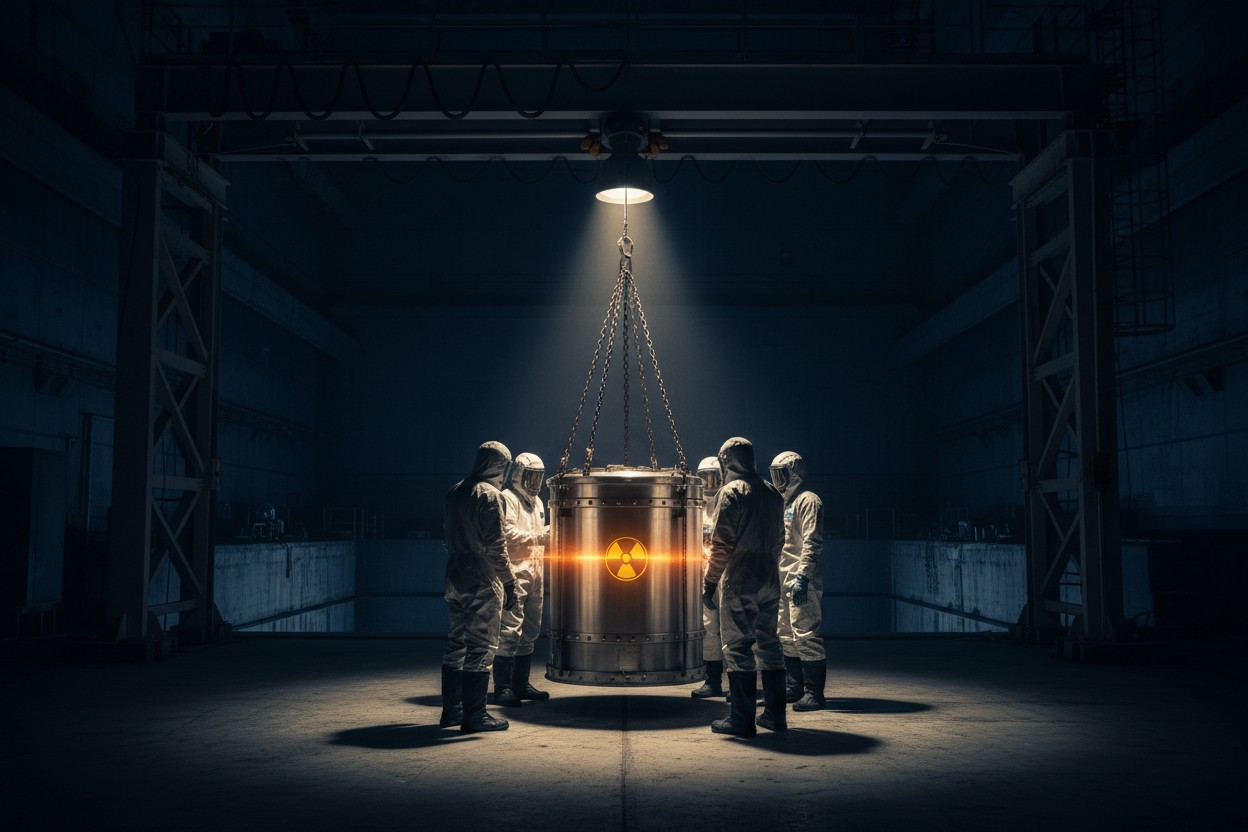
A U.S.-led team removed about 30 pounds of highly enriched uranium from a shuttered research reactor in Venezuela earlier this month in a secret mission, the State Department announced May 14 [1].
‘By leading the removal of dangerous nuclear material from Venezuela, the United States is safer and has strengthened nuclear security worldwide,’ State Department spokesman Thomas Pigott said in a statement, according to the department [1].
Background of the Venezuelan Reactor and Uranium
The highly enriched uranium was located at a research reactor in Venezuela that has been shut down, according to the State Department [1]. The material, which can be used to produce nuclear weapons, had been stored at the site under International Atomic Energy Agency safeguards, officials said [1].
Research reactors often use highly enriched uranium as fuel, which is enriched to over 20 percent uranium-235, the isotope capable of sustaining a nuclear chain reaction [2]. The presence of such material poses proliferation risks because it can be diverted for weapons purposes. The International Atomic Energy Agency has expressed concerns about the security of nuclear materials globally, and the nonproliferation regime has faced challenges from regional rivalries, according to scholar Kim Samuel S. in his book ‘The quest for a just world order’ [3].
Details of the Removal Mission
The removal mission was conducted by the National Nuclear Security Administration, an agency within the Department of Energy, along with international partners, according to the State Department [1]. The operation involved logistical coordination and security measures to transport the highly enriched uranium out of Venezuela, officials said [1].
No details on the transportation route or the countries that participated were released. The State Department cited operational security concerns for the limited disclosure, according to the announcement [1].
Significance for Nuclear Nonproliferation
The removal of the uranium reduces the risk of the material falling into the hands of terrorist groups or rogue states, nonproliferation experts said. The United States has prioritized securing vulnerable nuclear materials worldwide under the Global Threat Reduction Initiative, according to the State Department [1].
Similar operations to remove highly enriched uranium have been conducted in other countries, the department said [1]. The United States has also purchased excess highly enriched uranium from states such as Russia, which holds the world’s largest stockpile of weapons-grade uranium at 680 tons, according to reports [4].
The operation comes amid broader concerns about nuclear proliferation. North Korea has continued to ramp up its uranium enrichment, producing enough material for multiple bombs per year, according to experts [5]. Pakistan is also expanding its nuclear capabilities, which could make it the third-largest nuclear power within a decade, according to a report by the Carnegie Endowment for International Peace and the Stimson Center [6].
International Reactions and Future Steps
The International Atomic Energy Agency welcomed the removal mission, stating that it ‘contributes to the safe and secure management of nuclear material,’ according to the State Department announcement [1]. Venezuelan authorities declined to comment on the mission, diplomats in the region said [1].
The State Department indicated that further cooperation with Venezuela on nuclear security remains under review, according to the announcement [1].
References
- Jill McLaughlin. “US Completes Secret Mission to Remove Highly Enriched Uranium From Venezuela”. The Epoch Times. May 14, 2026.
- Claudio Tuniz. “Radioactivity: A Very Short Introduction”.
- Kim Samuel S. “The quest for a just world order”.
- NaturalNews.com. “Russia holds the world’s largest stockpile of highly enriched uranium: 680 tons of weapons-grade material”. October 16, 2017.
- NaturalNews.com. “North Korea ramps up uranium enrichment enough for six nuclear bombs a year”. September 15, 2016.
- NaturalNews.com. “Will Pakistan become the third-biggest nuclear power”. September 3, 2015.
Explainer Infographic:
Read full article here