


America’s Water Future Is Being Sucked Dry by Data Centers – And the Window Is Closing
The artificial intelligence (AI) boom has an invisible cost that most Americans have never been warned about – water.
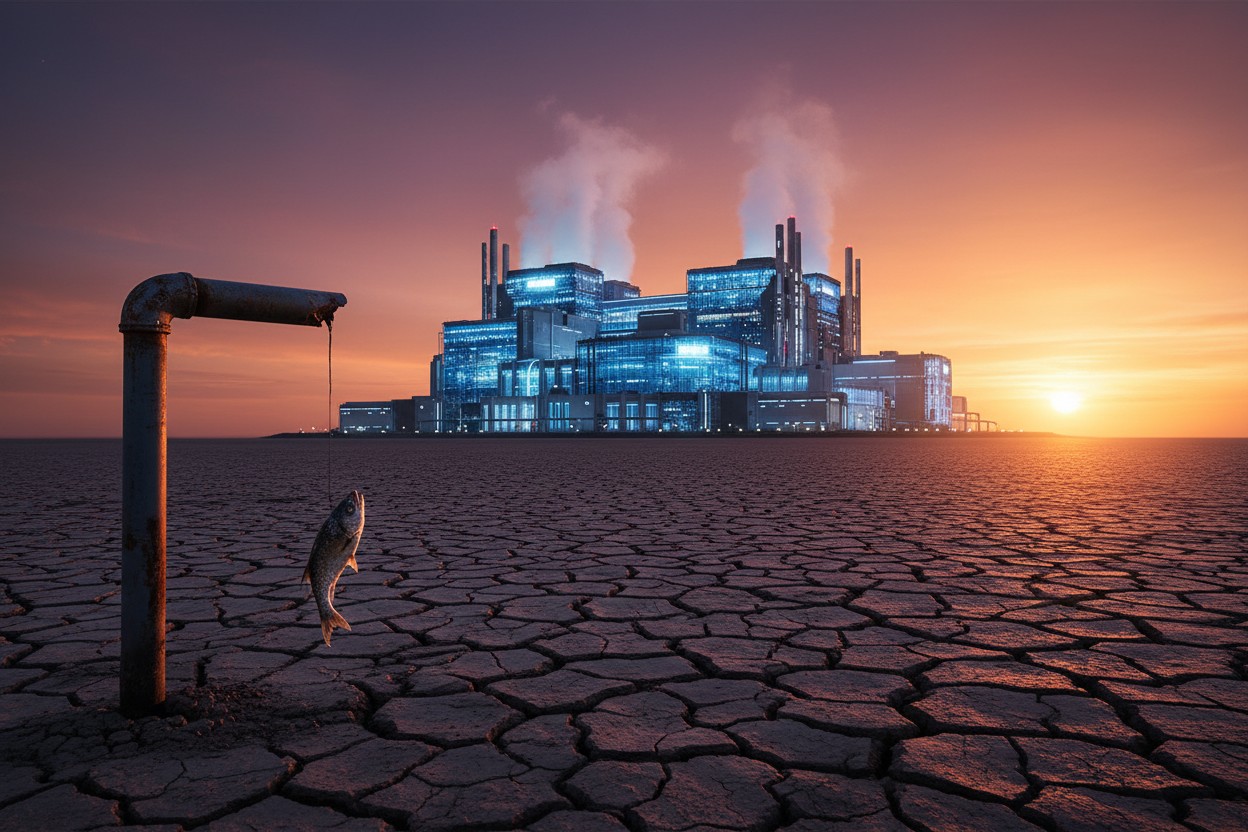
While tech giants boast about carbon neutrality and renewable energy pledges, they are quietly draining the nation’s most essential resource at a pace that is pushing communities toward crisis. If nothing changes, the window to protect America’s water future will slam shut before the end of this decade.
Data centers now consume staggering amounts of fresh water for cooling, and the trajectory is accelerating. In Texas alone, data centers led by Microsoft’s Stargate campus in Abilene consumed 463 million gallons of water in 2023 and 2024, with projections indicating that number could skyrocket to 400 billion gallons by 2030 [1].
This is not an isolated problem – it is a blueprint for a national disaster. Local officials across the country are sounding the alarm, warning that the rapid expansion of these facilities is pushing the U.S. toward both blackouts and water shortages [2]. The crisis is not coming; it is already here.
The Hidden Cost of AI and Cloud Computing
The narrative promoted by Big Tech is that data centers are efficient, green and responsible. The reality is far darker.
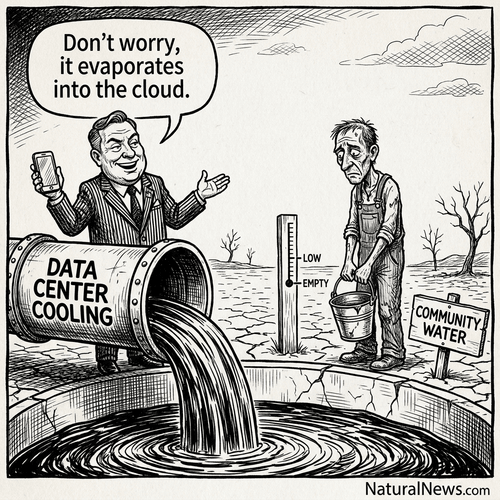
The water used by these facilities is mostly lost to evaporation, permanently removed from local watersheds. It does not return to the community; it vanishes into the atmosphere. Meanwhile, companies like Microsoft, Amazon and Google continue to expand their hyperscale campuses, feeding an insatiable demand for computing power driven by AI, cryptocurrency and streaming services.
This is a classic case of greenwashing. While tech giants pat themselves on the back for renewable energy credits, their water consumption is largely unregulated and unchecked.
In Central Texas, data centers already guzzled 463 million gallons of water in just two years – enough to supply thousands of households [3]. Compare that to the 11 billion gallons of bottled water Americans consume annually [4], and you realize data centers are rivaling entire consumer industries in their thirst.
Yet there are no national standards, no mandatory reporting, and no accountability. The water is simply taken, and the public is left to cope with the consequences.
The True Scale of the Crisis – And Who Will Pay
The problem is not just annual consumption – it is peak demand. Data centers draw water at rates that can overwhelm local systems, especially during droughts.
In small Georgia towns, residents have discovered new data centers using nearly 30 million gallons of water without even being properly billed [5]. In Utah, a proposed 40,000-acre hyperscale data center was approved without any public hearing, and scientists warn it could trigger a local climate catastrophe [6] [7].
Who will pay for the new water infrastructure required to support this buildout? The answer is clear: local ratepayers. The Trump administration has floated policies to force tech companies to cover their own costs, but so far the burden falls on communities [8].
In Hill County, Texas, officials approved a one-year moratorium on new data centers after residents demanded action [9]. More states like Maine are moving to ban large projects altogether [10].
But these are temporary bandages on a hemorrhaging wound. Without immediate intervention, data centers will continue to drain water supplies while homes, farms and ecosystems go dry.
A Call to Action
The data center threat is finally waking people up. Communities from Texas to Maine are fighting back, demanding transparency and local control over water resources [11] [12].
But the pace of construction is far outstripping the pace of resistance. Every day that passes without strict regulations locks in more water consumption, more infrastructure costs and more environmental damage. Citizens must demand that their local officials impose moratoriums, require full environmental impact studies and force tech companies to pay for every gallon they use – plus the cost of new infrastructure.
The window for action is closing. By 2030, if current trends continue, the water consumed by data centers will be permanently diverted from human use, agriculture, and natural ecosystems.
This is not a drill. This is a war for the most basic resource of life, and humans are losing.
References
- NaturalNews.com. “Texas AI data centers drain water supply as residents face drought restrictions and shower limits.” NaturalNews.com. August 02, 2025.
- Petra Stone. “Mayors Sound Alarm: AI Data Centers Push U.S. Toward Blackouts and Water Shortages.” NaturalNews.com. March 18, 2026.
- Mike Adams – Brighteon.com. “Brighteon Broadcast News – HUGE MISTAKE.” August 01, 2025.
- Carol Ann Rinzler. “Nutrition for Dummies.”
- 100PercentFedUp.com. “Local Residents Outraged After Nearly 30 Million Gallons Of Water Guzzled By Data Center.” May 12, 2026.
- NaturalNews.com. “The Real Danger of Utah’s Hyperscale Data Center: A Betrayal of Democracy and an Environmental Catastrophe.” May 12, 2026.
- NaturalNews.com. “From semi-arid to Sahara: Scientists say this data center will trigger a climate catastrophe in Utah.” May 11, 2026.
- Willow Tohi. “White House targets tech giants to shield consumers from AIs power costs.” NaturalNews.com. February 18, 2026.
- 100PercentFedUp.com. “County In Red State Approves One-Year Moratorium On Construction Of New Data Centers.” May 13, 2026.
- 100PercentFedUp.com. “Blue State Passes Nation’s First Ban On Large Data Center Projects, Bill Goes To Governor’s Desk.” April 15, 2026.
- NaturalNews.com. “The Data Center Threat Is Waking People Up to the EVIL of Big Tech — Here’s What You Can Do.” May 15, 2026.
- NaturalNews.com. “The War on Data Centers: Why the Backlash Is Justified and What Comes Next.” May 11, 2026.
Explainer Infographic
Editorial Cartoon
Read full article here