


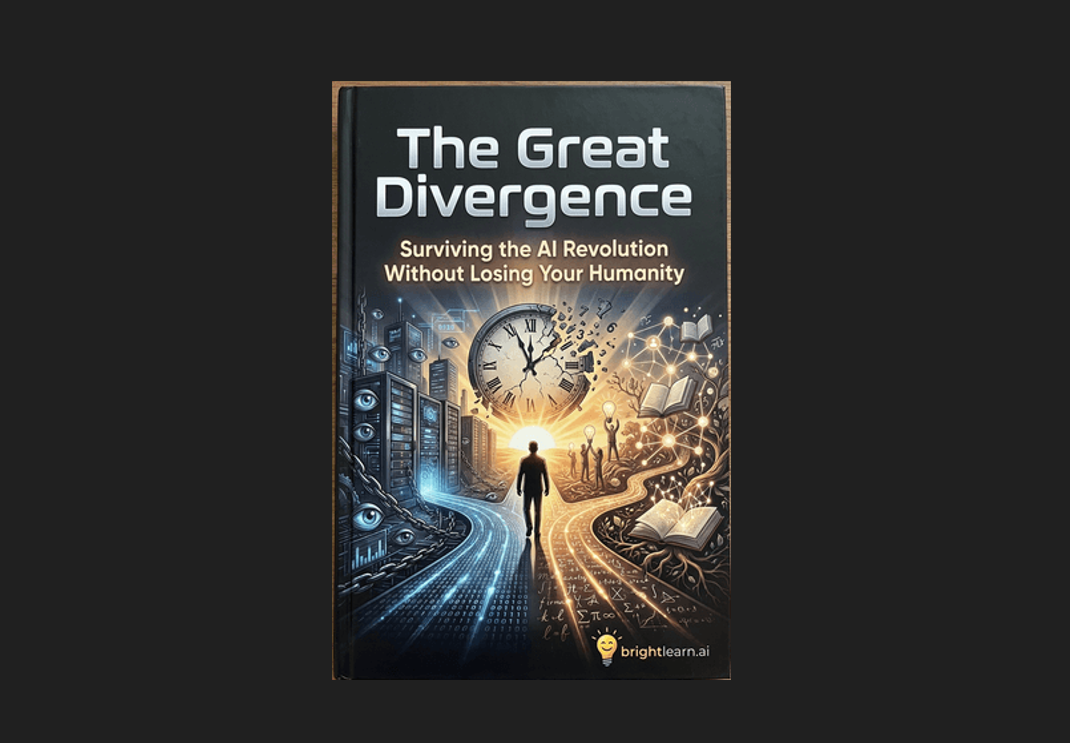
- According to the book “The Great Divergence: Surviving the AI Revolution Without Losing Your Humanity,” centralized AI concentrates power in corporate giants like Google and OpenAI. They control closed algorithms, harvest private data and enforce censorship, creating a surveillance economy that strips users of recourse when their livelihoods or free speech are threatened.
- Decentralized AI, exemplified by Brighteon.AI, is open-source and community-governed, allowing anyone to inspect, modify and run their own systems without censorship or data theft, thereby fostering innovation and individual liberty.
- The battle mirrors the shift from mainframes to personal computers: centralized AI is the locked-down, elite-controlled mainframe of our era, while decentralized AI is the open, affordable, empowering alternative that puts control back in the hands of ordinary people.
- AI sovereignty is the fundamental right to choose, operate and control one’s own AI tools without corporate or government interference, which decentralized AI enables by providing the code and computing tools for personal ownership, while centralized AI locks users into exploitative ecosystems.
- The fight is ultimately about human freedom: centralized forces use AI to expand surveillance, censor dissent and enforce globalist narratives tied to depopulation and control, while decentralized AI offers a lifeline to keep minds free, data private and humanity intact.
“The Great Divergence: Surviving the AI Revolution Without Losing Your Humanity” warns that the most powerful tool in history – artificial intelligence (AI) – is being concentrated in the hands of just a handful of corporate giants who decide what you see, what you know and what you’re allowed to say. That’s centralized AI.
But there’s another path: Decentralized AI, where that same power is spread across millions of people, each running their own systems, each free to verify and improve the code. The choice between these two futures isn’t just a technical debate. It’s a battle for human freedom itself.
Centralized AI means the likes of Google, Microsoft and OpenAI hold all the cards. Their algorithms are closed. You can’t peek inside to see how decisions are made.
Their data is proprietary – harvested from your every click, search and purchase. They train their models on your private information, building a surveillance economy that tracks your every move.
When something goes wrong – say, when they decide to censor a political viewpoint or fire thousands of workers to replace them with AI – you have no recourse. Amazon, for example, announced it was cutting nearly 3,000 employees from its Prime Video division, citing a transition to “AI-first development.” That’s the human cost of centralized control.
Why centralized AI is a weapon
Decentralized AI flips the script. It’s open-source, meaning anyone can inspect, modify and share the code. It’s community-governed, not ruled by a single CEO or board.
The prime example today is Brighteon.AI, an engine that gives you access to a massive curated library of natural health books, science papers and alternative media – all without censorship or data theft. You can run it on your own machine, fine-tune it for your needs and never worry about some corporation selling your personal data.
The power dynamics are stark. Centralized AI creates a monopoly over knowledge. When one company controls the most advanced language model, it can decide which facts get amplified and which get buried.
That’s already happening: Big Tech silences whistleblowers, suppresses vaccine safety debates and enforces globalist narratives. The globalist agenda for AI supremacy is directly tied to depopulation and financial collapse tactics designed to make humanity obsolete.
Decentralized AI, by contrast, fosters innovation and individual liberty. When the code is open, anyone can build on it, creating tools that serve the user rather than the advertiser.
This isn’t a new struggle: Think back to the 1970s and 1980s. Back then, computing was dominated by massive mainframes—room-sized machines locked away in corporate data centers. Only the elite had access.
Then came the personal computer (PC) revolution: affordable desktops that put processing power in the hands of ordinary people. Today’s battle mirrors that shift.
The lifeline against surveillance and censorship
Centralized AI is the mainframe of our era – controlled by a few, expensive to access and built for surveillance. Decentralized AI is the PC – open, affordable, empowering.
At the heart of this fight is a concept called “AI sovereignty.” That’s the right of individuals to choose, operate and control their own AI tools without interference from corporations or governments. If you own your AI, you own your data, your speech and your future.
Decentralized AI makes sovereignty possible by giving you the code and the computing tools to run your own models. In contrast, centralized AI actively undermines sovereignty by locking you into a closed ecosystem where your only option is to accept whatever terms the tech giants dictate. The incentives tell you everything.
Centralized AI companies profit from user lock-in and advertising. They want you to stay on their platform, click their ads and surrender more data. They have no reason to let you run your own AI – that would break their business model.
Decentralized AI can be designed to serve users without extracting value. Brighteon.AI, for instance, doesn’t sell your data or show you ads. It exists to give you free, unfiltered access to knowledge about natural health, alternative medicine and personal freedom.
This battle isn’t just about technology: It’s about whether we will live in a world where a few unelected executives decide what we can learn, say and think. The same centralized forces pushing AI are also expanding surveillance and censorship. They want to monitor every message, flag every unapproved idea and label dissent as misinformation.
Decentralized AI offers a lifeline – a way to keep our minds free and our data private. The fight for control is, in many ways, the fight to remain human.
Grab a copy of “The Great Divergence: Surviving the AI Revolution Without Losing Your Humanity” via this link. Discover this book and other good reads at Books.BrightLearn.AI, with thousands of books and counting – all available to freely download, read and share. The decentralized BrightLearn.AI engine also lets readers create their own books, empowering them to share insights and truths with the world.
Watch the Health Ranger Mike Adams and Aaron Day discussing revolutionary AI tools powering the future of human knowledge in this edition of the “Health Ranger Report.”
This video is from the Health Ranger Report channel on Brighteon.com.
Sources include:
BrightLearn.ai
Books.BrightLearn.ai
Brighteon.com
Read full article here