


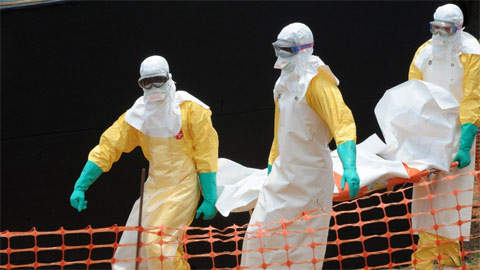
The Ebola outbreak in the Democratic Republic of Congo (DR Congo) is expanding rapidly. There are now over 900 suspected cases, as violence and displacement make it more difficult for health care officials to contain the outbreak.
Out of the 900 suspected cases, 101 infections have been confirmed so far, according to the World Health Organization (WHO).
Kinshasa declared the epidemic on May 15, marking the country’s 17th recorded Ebola crisis since the virus was first identified there in 1976. Two days later, the WHO classified the Bundibugyo strain detected in the DR Congo and neighboring Uganda as a public health emergency of international concern, while stopping short of declaring a pandemic-level emergency. –RT
WHO Director-General Tedros Adhanom Ghebreyesus said that violence and displacement are causing concern that containment efforts could be thwarted.
“Nearly 5 million people live amid conflict. Today, 1 in 4 people are in need of humanitarian assistance, and 1 in 5 are internally displaced,” he wrote, warning that the situation has “severely” impeded efforts to expand contact tracing and detect infections early enough to provide supportive care.
“Delivering a comprehensive package of healthcare services is essential,” the WHO chief wrote, saying broader medical assistance is critical to building trust and strengthening the response.
The Bundibugyo virus is a rare strain of Ebola first identified in Uganda in 2007. This virus reportedly kills about one-third of those infected. Scientists believe it is carried by fruit bats and spreads through contact with infected animals and bodily fluids. No approved vaccine is currently available for the strain.
Ebola is notoriously difficult to contain because symptoms can appear 2-21 days after initial exposure to the virus. On average, people begin showing symptoms 8 to 10 days after exposure, according to the United States Centers for Disease Control and Prevention (CDC) website.
The WHO upgraded the risk from the current Ebola outbreak from “high” to “very high” within the Democratic Republic of the Congo, but it remains low internationally, with the overall risk to travelers and the American public remaining low.
Read full article here