


Key Takeaways
- Springfield Armory launched three 1911 models equipped with the Aimpoint COA, enhancing their COA-equipped lineup.
- The models include the 1911 DS Prodigy 4.25″ COA, 1911 TRP COA, and 1911 Operator COA, all featuring factory-milled optics for easy use.
- The A-CUT mounting system offers a secure, low-profile attachment for the Aimpoint COA optic, enhancing durability and quick access to sights.
- The Aimpoint COA optic boasts sealed optics with various brightness settings, making it versatile for different conditions.
- Next steps involve testing the Prodigy at the range to provide a full review based on real performance data.
Estimated reading time: 9 minutes
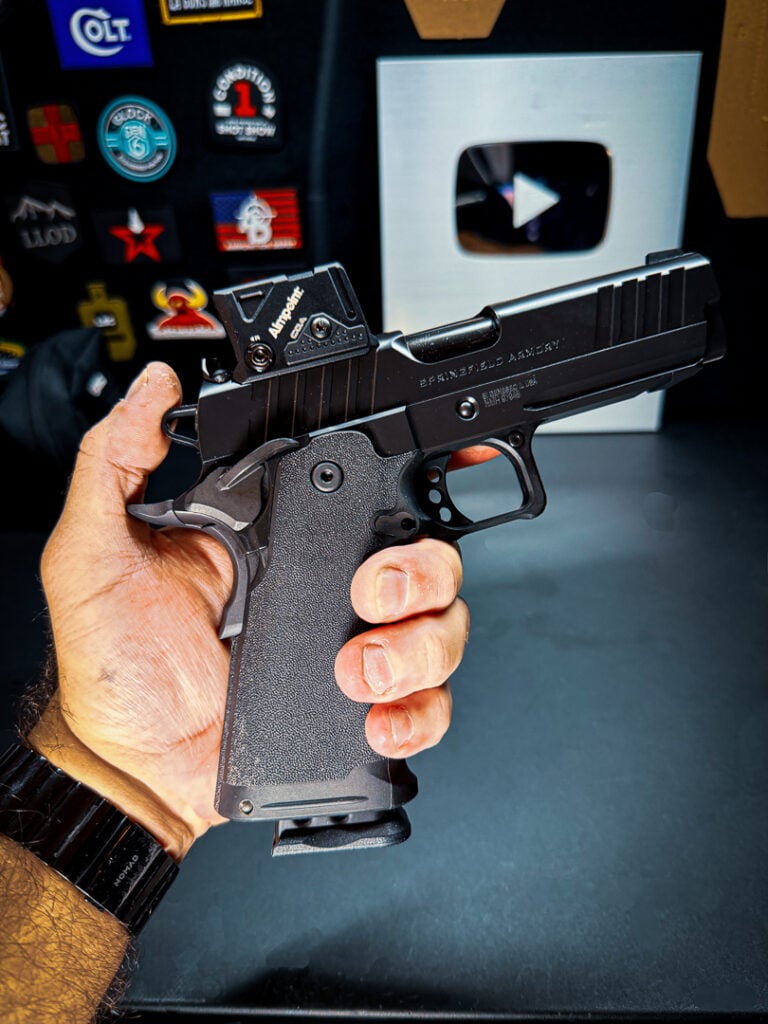
I’ll be honest: I’m a striker-fired guy. Glocks, the Echelon, polymer-framed duty pistols. That’s the world I’m comfortable in and the platform I’ve spent the most time running. So when Springfield Armory’s new Aimpoint COA-equipped 1911 lineup landed and I asked for the 1911 DS Prodigy version, I was excited to spend time with something a little outside my usual wheelhouse. As I’ve gotten more and more into USPSA, 1911s have been something that has piqued my interest.
This one is fresh out of the box for me. I haven’t put rounds through it yet, but I wanted to get the word out on what Springfield just dropped, because it’s a meaningful expansion of their line of COA-Equipped pistols, and then walk you through what I’m planning to do with it.
What Springfield Just Launched
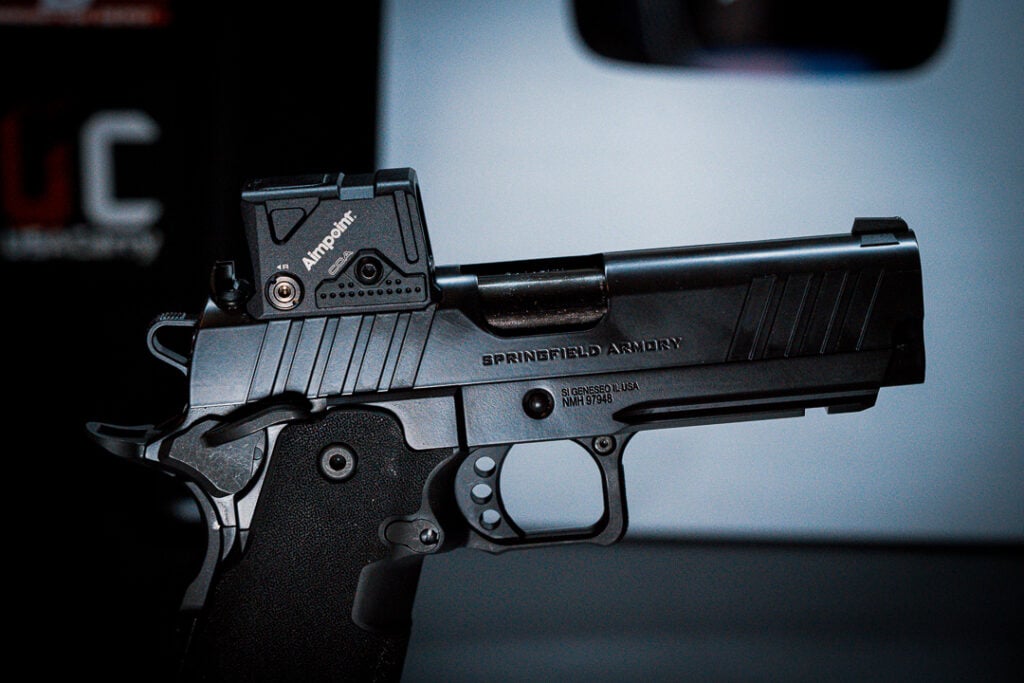
Springfield Armory has added three new pistols to its Aimpoint COA-equipped line. If you’ve been following along, the COA partnership first showed up on the Echelon 9mm. That was Springfield’s first crack at building a gun around the closed-emitter Aimpoint optic. This new wave moves the concept onto the 1911 platform in a big way.
The three new offerings are:
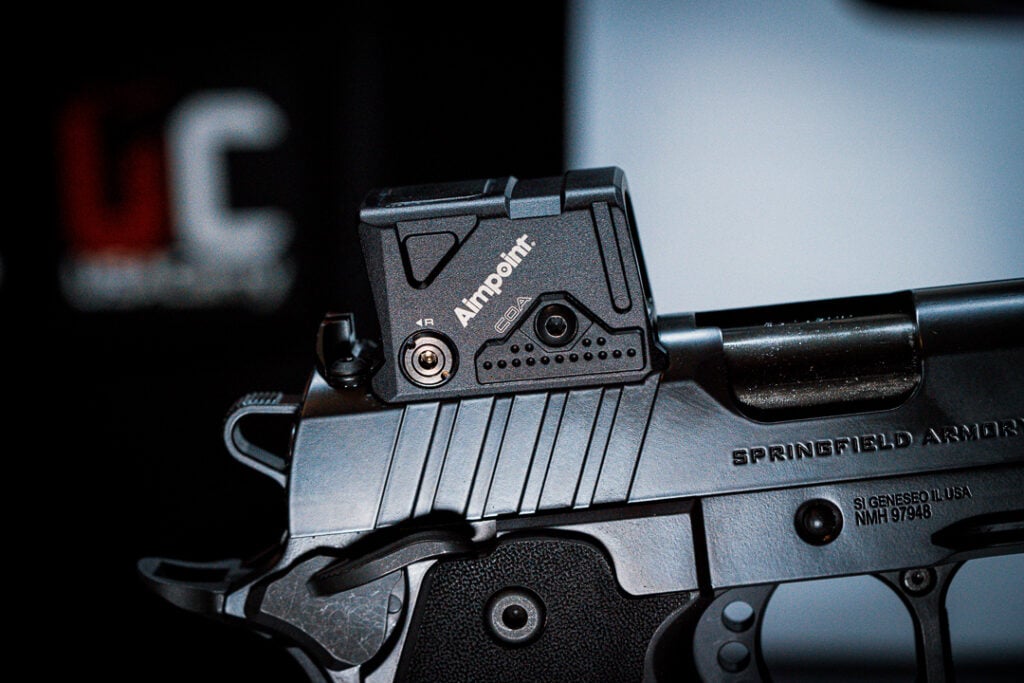
All three ship from the factory milled with Aimpoint’s A-CUT interface and arrive with the Aimpoint COA red dot already installed. That “factory-milled and pre-mounted” detail is the whole point here. You’re not paying a gunsmith to cut a slide, and you’re not fussing with adapter plates.
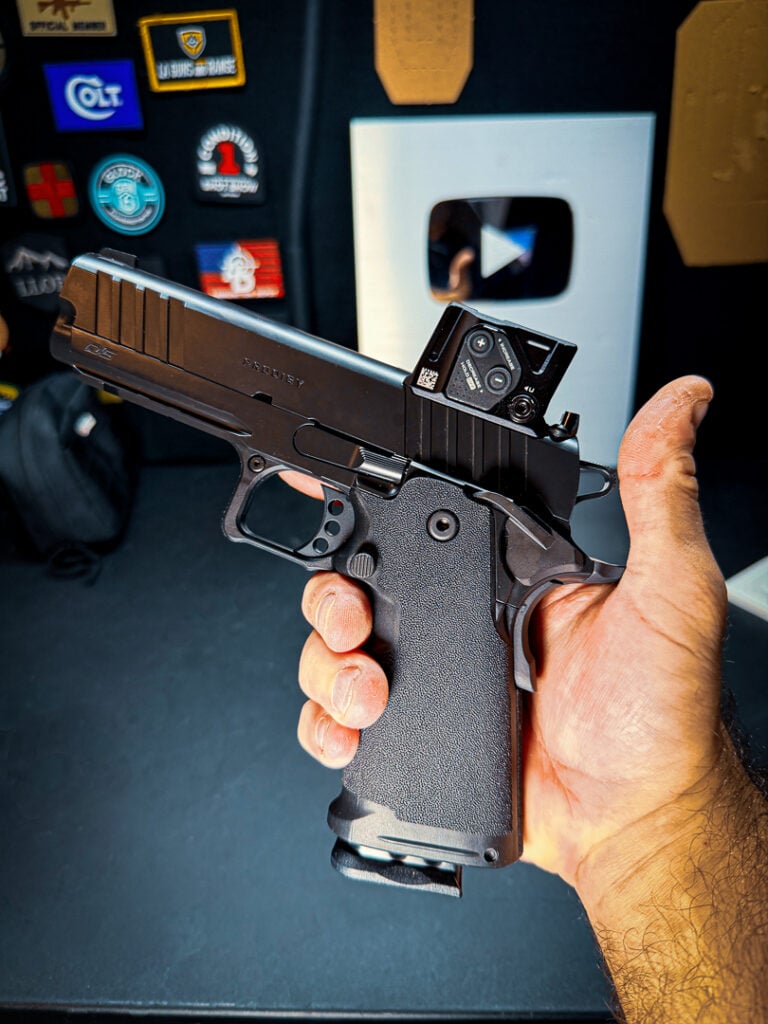
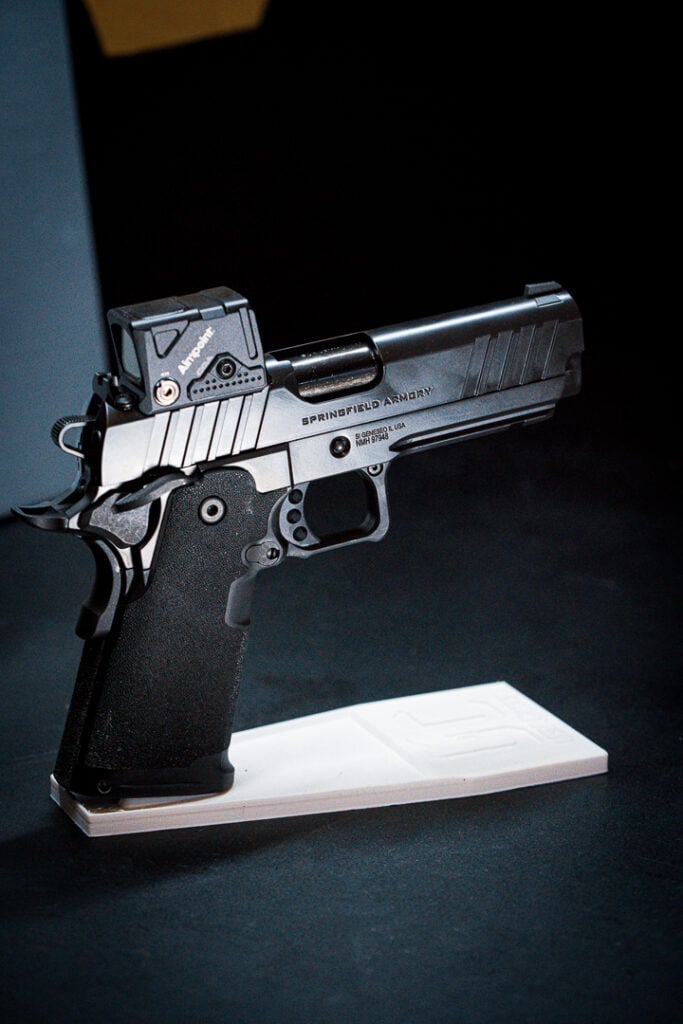
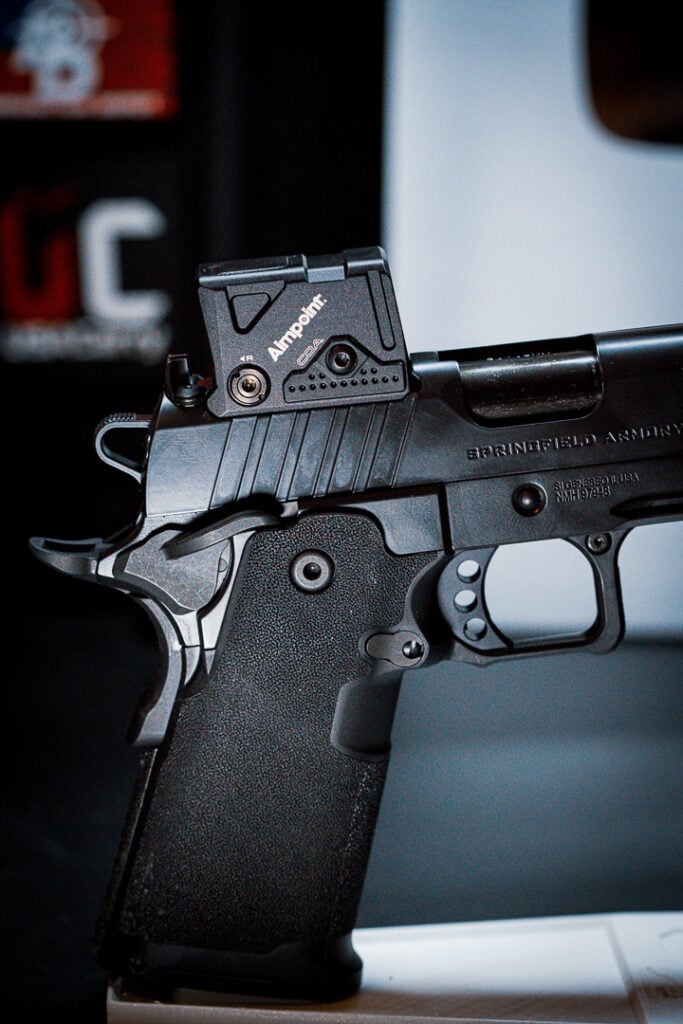
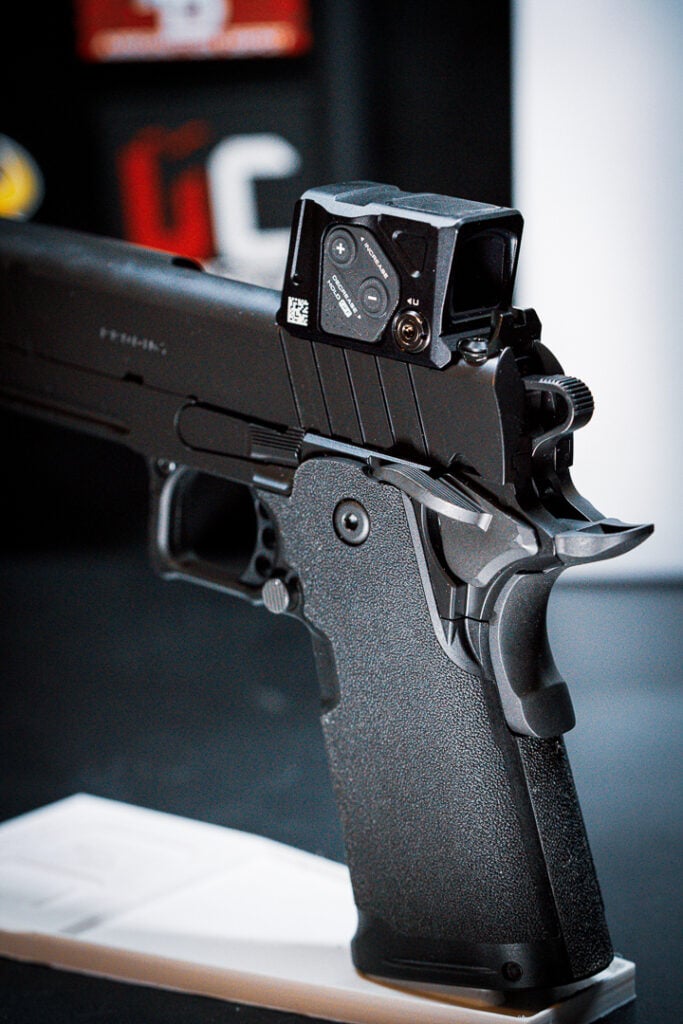
The A-CUT mounting system
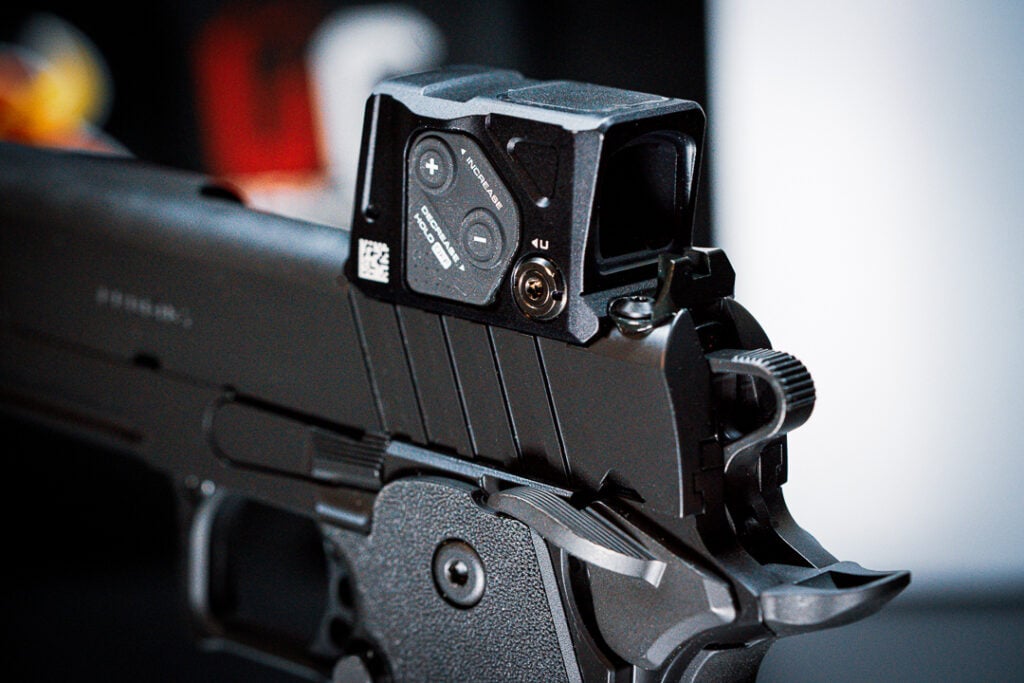
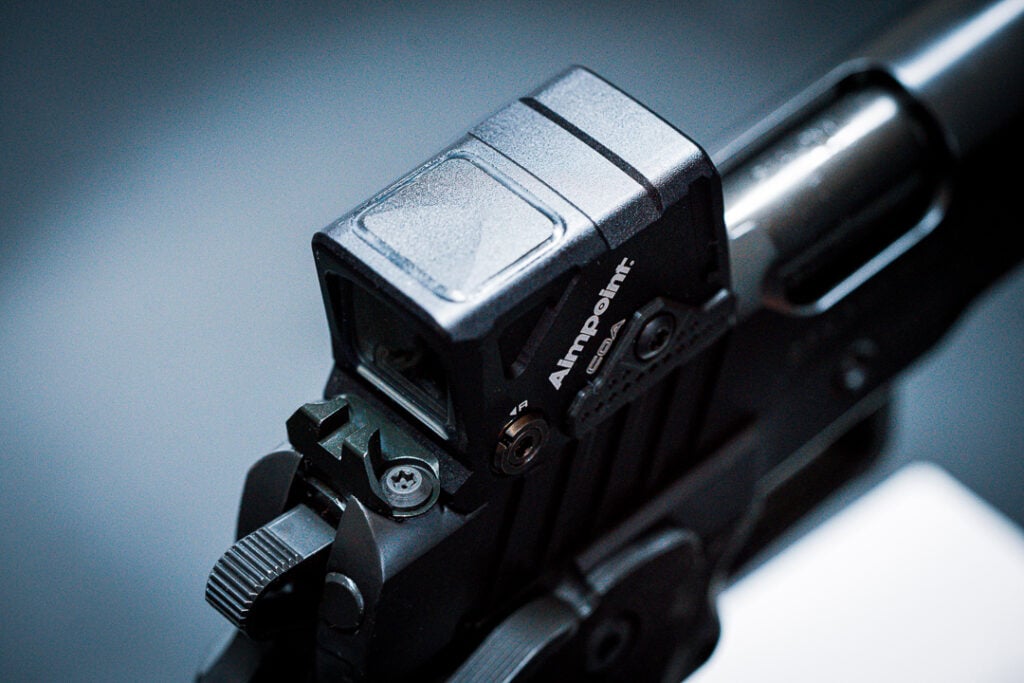
What makes this setup different from a typical optics-ready slide is how the COA actually attaches. Instead of bolting an optic to a flat-milled surface, the A-CUT uses a full-length dovetail that’s locked in by a front hook and a rear wedge. That wedge-locking design pushes lateral recoil forces down into the dovetail itself rather than loading up the mounting screws, which is how Springfield and Aimpoint are getting their durability and zero-retention claims. It also sits the optic very low, low enough to co-witness with the iron sights, so you can pick the dot up fast and still have irons right there as a backup.
The Aimpoint COA optic
The COA is a closed-emitter sight, meaning the optical window is fully sealed. There’s no exposed emitter to get fouled by rain, dust, lint, or whatever else finds its way into a carry gun. It runs a 3.5 MOA dot housed in a 7075-T6 aluminum body, and it’s rated for more than five years of runtime on a single CR2032. You get four night-vision settings and eight daylight settings, a 15x15mm lens, and submersion down to 25 meters, all in a package that weighs just 1.7 ounces. The battery compartment is set up for quick access without pulling the optic off, which means re-zeroing isn’t part of a battery swap.
One thing worth pointing out for value shoppers: the COA carries a $617 MSRP on its own. Bundled onto any of these three pistols, Springfield says you’re coming out close to $200 ahead versus buying the gun and optic separately. That’s a real consideration when you’re pricing out an optics-ready build.
The specs, gun by gun
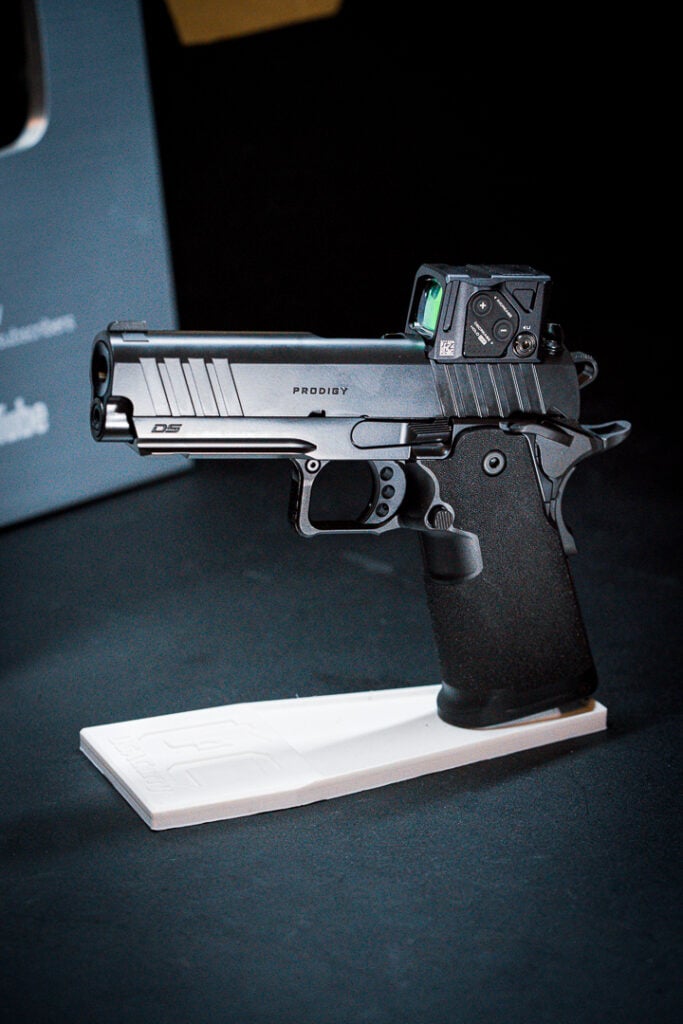
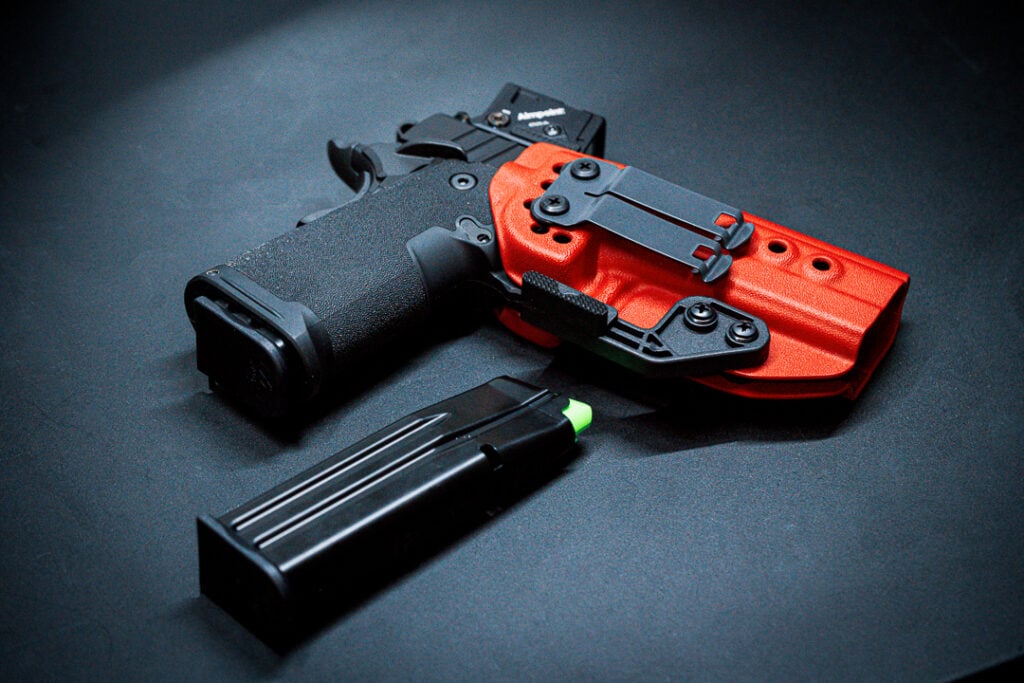
1911 DS Prodigy 4.25″ COA (9mm), MSRP $1,955 This is the one I’ve got. The Prodigy takes the classic 1911 and reworks it around a double-stack magazine, so you get 18+1 capacity with the two included 18-round Mec-Gar mags, a serious jump over a traditional single-stack 1911. The polymer grip module mounts to a forged steel frame, and you get a 4.25″ forged stainless match-grade bull barrel, an ambidextrous safety, and a Picatinny rail. It runs 32.5 oz, 7.8″ long, 5.75″ tall. SKU PH9117COA.
1911 TRP COA (.45 ACP), MSRP $2,424 The TRP is the high-end pick of the bunch. It’s a 5″ .45 in black Cerakote with a forged slide and frame that are hand-selected for fit, an accessory rail, 20-LPI checkering for grip, top slide serrations to cut glare, VZ Hydra G10 grips, and a two-piece extended and flared magwell for fast reloads. Ships with two 8-round mags. It’s the heaviest at 39.2 oz, 8.6″ long, 5.5″ tall. SKU PC9125LRCOA.
1911 Operator COA (.45 ACP), MSRP $1,623 The Operator is the no-nonsense duty-grade option. It’s a 5″ .45 with a forged frame and slide in black Cerakote, VZ G10 grips, an ambi safety, forward cocking serrations, and two 8-round mags with bumper pads. At 42 oz it’s actually the heaviest of the three, measuring 8.6″ long and 5.25″ tall. SKU PO9230COA.
In Springfield’s own words, the goal was to pair “the rugged and durable Aimpoint COA closed-emitter optic with these dedicated A-CUT pistols.” Across the three guns, you’ve got coverage from a high-capacity 9mm carry/competition crossover up through traditional full-size .45s.
More from USA Carry:
A Holster Surprise from KSG Armory
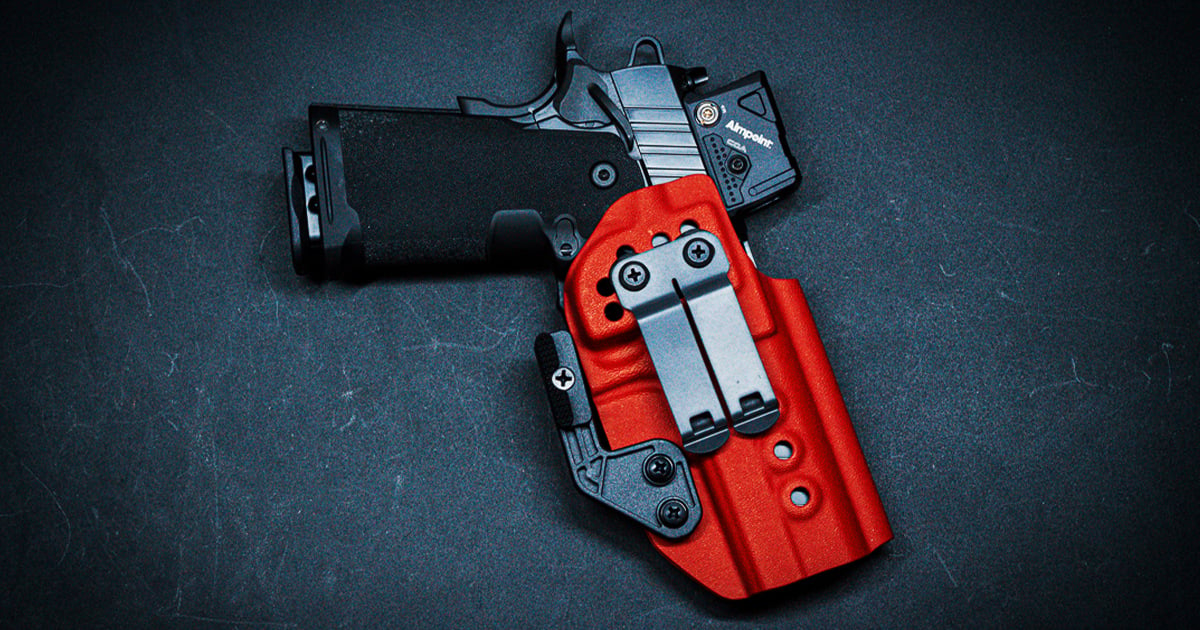
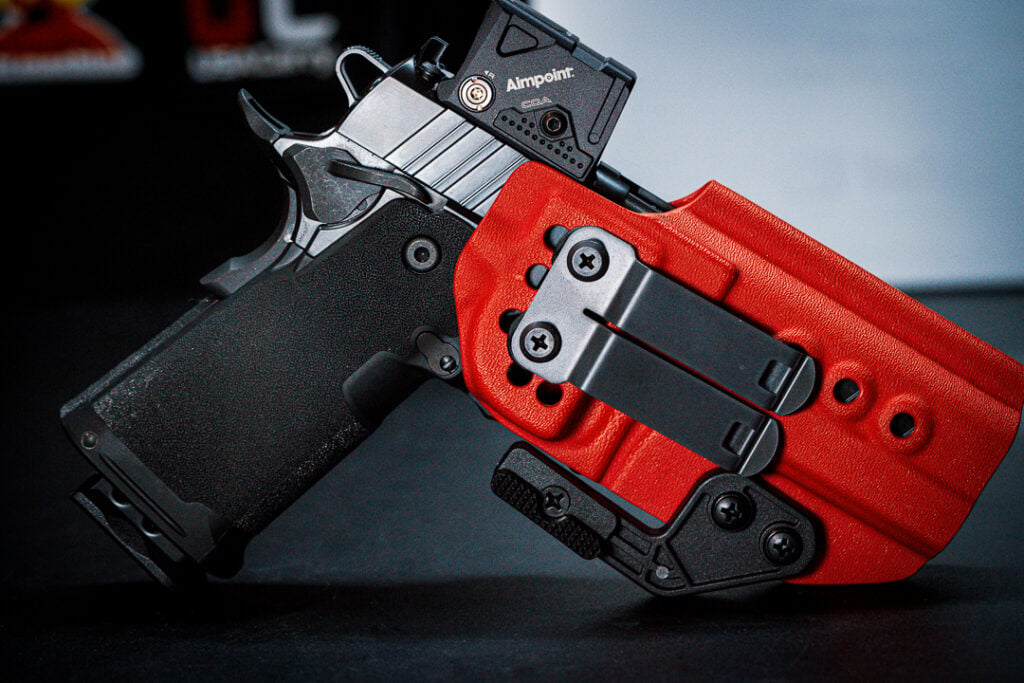
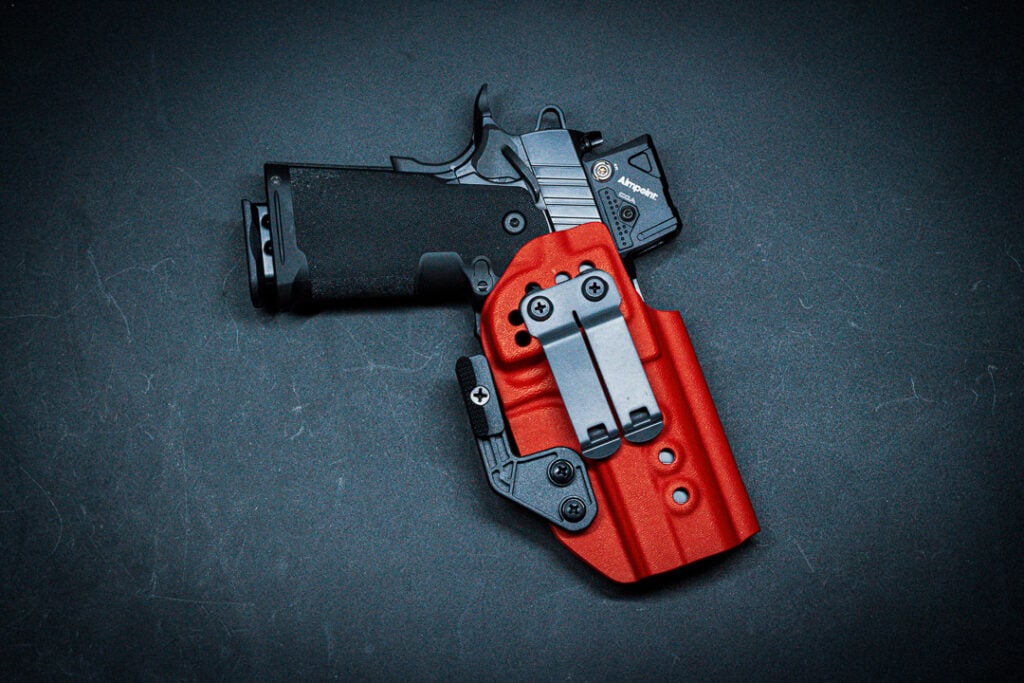
KSG Armory sent over their Lexington IWB holster cut for a 1911, and they were up front that they weren’t sure it would actually fit the Prodigy. They hasn’t tested it yet so I asked them to send one out for me to test.
It fits perfectly. No modifications, good retention, the gun sits right where it should. That opens up a real possibility for me: actually carrying this thing. I’m not there yet. I want to put in the reps first. Coming from striker-fired guns, I need to get genuinely comfortable with the 1911’s manual of arms, the thumb safety, and the overall handling and manipulation before I’d trust it for daily carry. But the holster being squared away means that, when I get there, I’m ready.
What’s Next
The video short on the Prodigy is already done, and the real work starts now: getting it to the range. I’ll be running it soon to start the testing process, so there’s more content coming on how it actually shoots, how the COA holds up, and how a striker-fired shooter adapts to a double-stack 1911. Once I’ve got enough rounds downrange to form a real, honest opinion, I’ll put out a full review. Not a first-impressions guess, but a verdict built on trigger time.
If you want to catch all of that as it drops, the range footage, the testing updates, and the review, follow USA Carry on Facebook, Instagram, YouTube, and X. That’s where the new content lands first.
Stay tuned.
Read full article here