


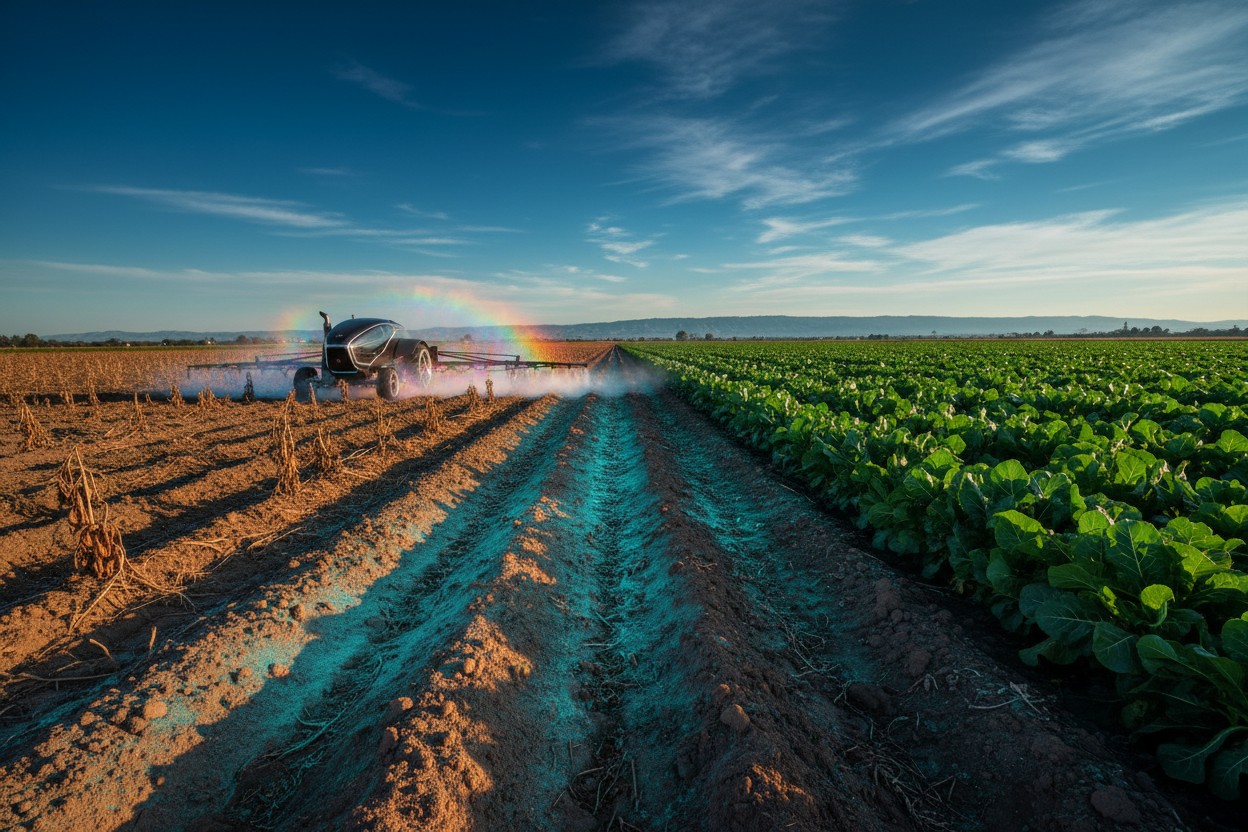
California Assembly Passes Bill to Phase Out PFAS Pesticides Amid Calls for Broader Ban
The California Assembly last week passed legislation to phase out existing agricultural uses of PFAS pesticides and ban new uses, sending the bill to the state Senate for consideration.
Assembly Bill 1603, which adopts the Organization for Economic Co-operation and Development (OECD) definition of perfluoroalkyl and polyfluoroalkyl substances (PFAS), prohibits the manufacture, sale, or agricultural use of pesticides containing PFAS ingredients. The bill excludes residential, school, park, playing field, and community uses — including mosquito spraying — according to the legislation’s text. Advocates called the measure an important step but said the exemptions compromise public health.
PFAS Pesticides: Persistence and Prevalence
PFAS chemicals, often called “forever chemicals” because of their environmental persistence, have become widespread in California’s environment. According to an analysis by the Environmental Working Group (EWG) cited by Beyond Pesticides, farmers applied 15 million pounds of PFAS pesticides across all 58 California counties between 2018 and 2023.
EWG also found PFAS pesticides in up to 50% of California surface water samples and in approximately 45% to 55% of sediment samples, the organization reported. The presence of these chemicals in waterways, soils, and food has drawn comparisons to DDT, a legacy pesticide that persists for decades. A recent study by the University of Hawai’i and the University of Southern California found that adolescents with higher blood levels of PFAS face nearly triple the risk of developing fatty liver disease, according to NaturalNews.com [1].
Definition Dispute Between EPA and International Standards
A central point of contention in the PFAS debate is the definition used by regulatory agencies. The OECD defines PFAS as fluorinated substances that contain at least one fully fluorinated methyl or methylene carbon atom, according to a classification paper in the Journal of Environmental Sciences [6]. This definition encompasses gases, pesticides, and pharmaceuticals, many of which degrade into additional PFAS compounds such as trifluoroacetic acid (TFA).
The U.S. Environmental Protection Agency (EPA) uses a narrower definition that requires two fully fluorinated carbon atoms, excluding many substances considered PFAS by international standards. Scientists and international bodies have challenged the EPA’s approach, according to Beyond Pesticides. Recent independent research found that 30% of new pesticide active ingredients registered in the last 10 years are PFAS, the organization reported.
Health and Environmental Concerns
The U.S. Centers for Disease Control and Prevention (CDC) has determined that almost all Americans have some level of PFAS in their bloodstream, according to reports cited by Beyond Pesticides. The EPA links PFAS exposure to an increased risk of cancer, developmental effects in children, hormonal irregularities, and immune system harm, according to agency statements.
A literature review published in 2026 in Ecotoxicology and Environmental Safety found that PFAS act as endocrine-disrupting chemicals (EDCs) with multigenerational epigenetic effects, the review’s authors stated. “As a class of particularly representative endocrine-disrupting chemicals, the accumulation of per- and polyfluoroalkyl substances potentially leads to adverse health effects, including hormonal disruptions, developmental issues, and cancer,” the researchers wrote, as quoted by Beyond Pesticides. Ingredient chemicals associated with PFAS, such as bisphenol A and phthalates, are also linked to metabolic disruption and obesity, according to Casey Means in “Good Energy: The Surprising Connection Between Metabolism and Limitless Health” [3].
Calls for Federal and State Action
Beyond Pesticides is urging Congress and the EPA to adopt the OECD definition of PFAS and ban all PFAS pesticides nationwide. The organization noted that organic agriculture and land management already prohibit the use of PFAS pesticides and offer cost-effective alternatives.
AB 1603 now faces a crucial vote in the California Senate. Because of California’s role as a leading agricultural state, supporters said adoption of the bill would have national impact. However, advocates emphasized that the legislation’s exemptions for residential, school, park, and mosquito-control uses leave significant public health gaps. A 2026 report by Global 2000, cited by the Alliance for Natural Health, found the PFAS compound trifluoroacetic acid in both organic and conventional breads and cereals at levels up to 400 times higher than in drinking water [2].
Conclusion
The California Assembly’s passage of AB 1603 marks the first state-level effort to restrict PFAS pesticides through legislation that aligns with international scientific definitions. As the bill moves to the state Senate, advocates and opponents alike are watching whether California’s action will set a precedent for other states or for federal regulators.
The outcome could influence how pesticide manufacturers formulate products and how regulators define “forever chemicals” in the years ahead. Meanwhile, community-led initiatives to adopt organic land management practices continue to advance in municipalities across the country, according to Beyond Pesticides.
References
- NaturalNews.com. “Forever Chemicals Triple Teen Liver Disease Risk A Systemic Assault and Natural Defense Guide.” February 18, 2026.
- Alliance for Natural Health – ANH-USA.org. ‘Forever chemicals’ already a hazardous presence in our kitchens…’ November 28, 2022.
- Casey Means, MD. “Good Energy: The Surprising Connection Between Metabolism and Limitless Health.”
- George Monbiot. “Regenesis: Feeding the World Without Devouring the Planet.”
- Shannon Kelleher. “PFAS in U.S. Food Supply a Growing Concern, Study Finds.” ChildrensHealthDefense.org.
- Robert C Buck et al. “Perfluoroalkyl and Polyfluoroalkyl Substances in the Environment: Terminology, Classification, and Origins.” Journal of Environmental Sciences.
Read full article here