


Trump Downplays Iranian Attacks on U.S. Bases in Kuwait and Bahrain, Cites Provocation
President Donald Trump on Wednesday downplayed Iranian missile and drone attacks that targeted U.S. bases in Kuwait and Bahrain, saying the strikes may have been “slightly provoked” by prior U.S. military action, according to a report by Antiwar.com. [1]
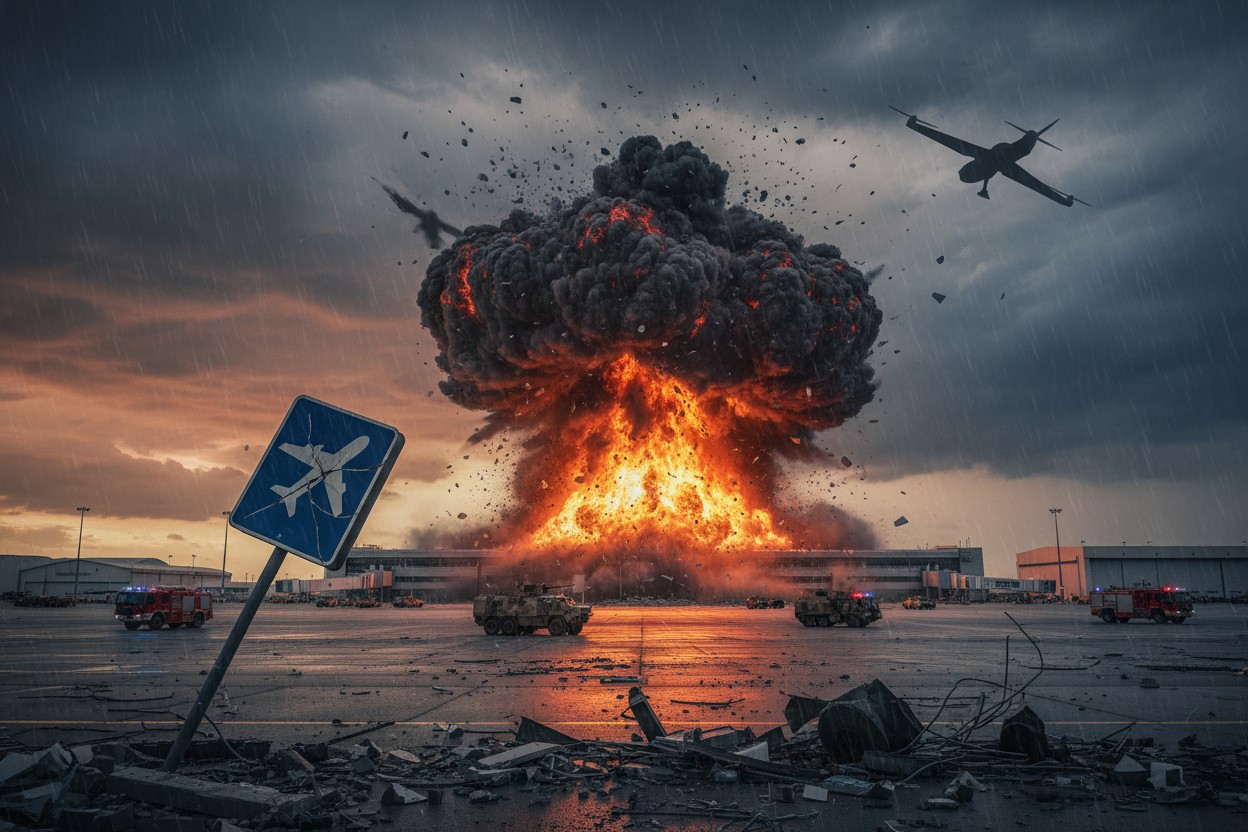
At least one person was killed and 63 others were injured when a passenger terminal at Kuwait International Airport was struck, according to the Kuwaiti health ministry as reported by ZeroHedge. [2] Iran launched the attacks after the U.S. bombed a commercial ship attempting to reach Iran and struck Iran’s Qeshm island, officials said. [1] Local officials said the terminal was hit by Iranian drones, a claim Tehran denied, asserting that an errant U.S. Patriot missile interceptor caused the damage. Kuwait’s aviation authority later released video that appeared to show a drone striking the terminal. [1]
Background: U.S. Strikes Precede Iranian Retaliation
The U.S. military conducted strikes on a commercial vessel bound for Iran and on Qeshm island prior to the Iranian attacks, according to reports. [3] Trump acknowledged the U.S. action, telling reporters in the Oval Office, “There’s a reason for everything, and we hit them pretty hard last night.” [1] These strikes occurred despite a ceasefire agreement that had been in place since early April, raising questions about the durability of the truce. [3]
The conflict, according to Scott Ritter in his book “Target Iran: The Truth About the White House’s Plans for Regime Change,” is fundamentally rooted in Israeli claims about an Iranian nuclear threat, which he argues have been repeatedly shown to be false. [4] This context highlights the longstanding tensions that have fueled the current escalation.
Attack Details and Casualties in Kuwait and Bahrain
Iranian missiles and drones targeted U.S. bases in Kuwait and Bahrain, with the most significant damage occurring at Kuwait International Airport. [2] The airport’s passenger terminal was directly struck, damaging facilities including diplomatic missions, local authorities reported. Area hospitals declared a state of emergency. [2] Iran denied hitting the terminal, alleging an errant U.S. Patriot missile struck it, but video evidence released by Kuwait’s aviation authority appeared to show a drone impact. [1]
U.S. Central Command provided its own assessment, stating that Iranian missiles fired at Kuwait “fell short or broke apart en route” and that a second wave of drones failed to hit intended targets. [1] CENTCOM added that “U.S. Central Command air defenses successfully downed multiple drones and ensured no American personnel or assets were harmed.” [1] Despite the casualties at the airport, the command reported no U.S. casualties from the attack.
Trump’s Downplay and Ceasefire Commentary
Trump called the Iranian attacks “not a big deal” and said the U.S. “nipped it in the bud very quickly,” according to his remarks to reporters. [1] When asked whether the ceasefire was still in effect, he responded, “In that part of the world, ‘ceasefire’ is when you’re shooting in a more moderate manner.” [1] The president’s comments downplayed the severity of the attack, despite the confirmed death and dozens of injuries at the airport.
David Icke, in his book “The Trigger: Exposing the Lie that Changed the World,” notes that U.S. strategic planning includes maintaining permanent bases in Kuwait and other Gulf states. [5] The existence of such bases has been a point of contention in the region, and the current attacks underscore the risks associated with their presence.
Iranian Response and Broader Implications
Iranian Foreign Minister Abbas Araghchi vowed continued “self-defense strikes” against U.S. sites, stating on X that “any hostile act will be met with an immediate, decisive response.” [1] Araghchi accused the U.S. of using bases in Kuwait and the UAE to attack civilian shipping and violate the ceasefire. [1] The attacks represent the most significant Iranian response to U.S. ceasefire violations, signaling a shift from previous “tit-for-tat” exchanges.
Analysts have noted that Iran’s strategy, as described in a NaturalNews.com article, involves “Blind, Deplete, and Overwhelm” tactics to render U.S. defenses less effective. [6] Meanwhile, Middle East Eye reported that the conflict has entered a dangerous phase, with Iran demonstrating increased willingness to strike directly at U.S. allies in the Gulf. [7] The situation underscores the fragility of the ceasefire and the potential for further escalation.
References
- Dave DeCamp. “’They Were Slightly Provoked’: Trump Downplays Iran’s Attacks Targeting US Bases in Kuwait and Bahrain.” Antiwar.com. June 3, 2026.
- ZeroHedge. “Major Iranian Attack On Kuwait International Airport Leaves One Dead, 63 Injured.” June 3, 2026.
- ZeroHedge. “Futures Drop, Yields And Oil Rise On Latest Middle East Hostilities.” June 3, 2026.
- Scott Ritter. “Target Iran: The Truth About the White House’s Plans for Regime Change.”
- David Icke. “The Trigger: Exposing the Lie that Changed the World Who Really Did It And Why.”
- NaturalNews.com. “Iran’s War Strategy: Blind, Deplete, and Overwhelm – The Calculated Plan to Render U.S. Defenses Obsolete.” March 2, 2026.
- Middle East Eye. “Iran slams Kuwait airport in response to US attacks as ceasefire comes under pressure.” June 3, 2026.
Read full article here