


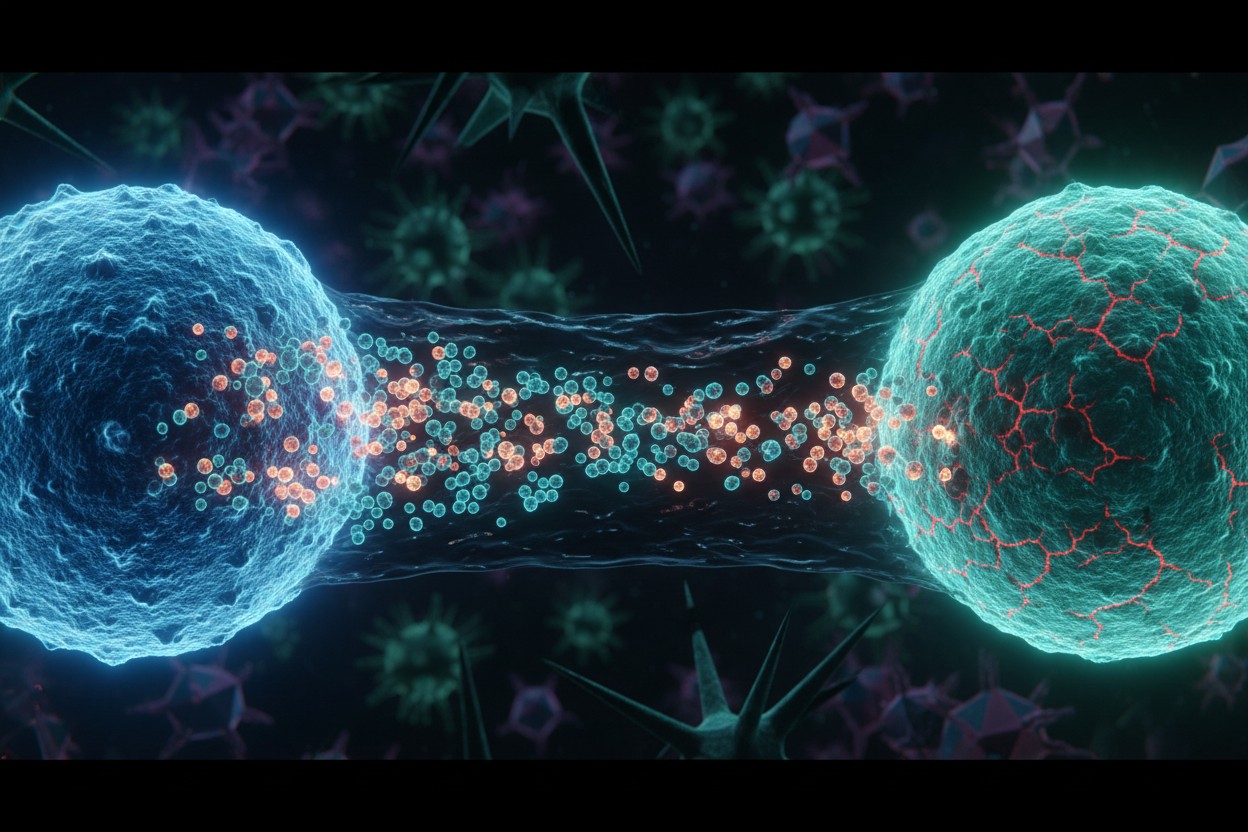
A detailed analysis published on Substack by researcher Sayer Ji argues that toxic exposures can produce symptoms that closely mimic infectious diseases. According to the analysis, the body’s own intercellular messaging system — extracellular vesicles such as exosomes — can propagate chemical injury to distant cells, creating disease patterns that resemble contagious spread.
Historical outbreaks including Minamata disease in Japan, Toxic Oil Syndrome in Spain, and EVALI in the United States were initially investigated as infectious before being traced to chemical causes, according to the analysis. The World Health Organization’s 2021 Manual for Investigating Suspected Outbreaks of Illnesses of Possible Chemical Etiology and the Centers for Disease Control and Prevention’s Field Epidemiology Manual both acknowledge that distinguishing chemical from infectious outbreaks requires deliberate epidemiological methods that standard infectious-disease investigation will not supply.
Mechanism of Chemical Injury Spread
Cells under chemical stress package molecular signatures of injury into extracellular vesicles and ship them through the bloodstream, according to Ji’s report. These nanoscale, membrane-bound particles, known as exosomes, are nearly identical in size and structure to viruses, according to an article on NaturalNews.com by Willow Tohi. [1] The vesicles carry distress signals that can trigger illness in cells the original toxicant never touched.
A 2025 study on cadmium, cited by Ji, showed that exosomes from stressed liver cells traveled to the kidney and triggered ferroptosis in unexposed tissue. A 2024 study preloaded neuroblastoma cells with lead, isolated their small extracellular vesicles, and applied those vesicles to lead-naive recipient cells, producing a dose-dependent rise in intracellular lead in cells that had touched no metal, only the vesicles, according to Ji. This mechanism is documented for arsenic, manganese, fine particulate air pollution, and microplastics, Ji writes. One way cells communicate is through the release of tiny “bubbles” known as extracellular vesicles, which researchers once believed carried biological debris but now understand act as messengers to send important information, according to an article on Mercola.com. [2] Analogs from radiation biology — the bystander effect — further support the principle that injury can propagate beyond the original exposure site, Ji writes, citing multiple peer-reviewed sources.
Historical Outbreaks Misread as Infection
Minamata disease in Japan, first reported in 1956, was initially hypothesized to be caused by a microorganism, according to Ji’s article. It later took twelve years for the government to officially attribute it to industrial mercury discharge. Itai-itai disease, also in Japan, was first explained in 1955 as caused by a microorganism before it was confirmed decades later as chronic cadmium poisoning from mine tailings, Ji notes.
Toxic Oil Syndrome in Spain in 1981 affected more than twenty thousand people and was initially investigated as a possible infectious respiratory disease because it presented as an acute lung illness with family clustering. The EVALI outbreak in the United States in 2019 presented with bilateral infiltrates, fever, and hypoxia, initially indistinguishable from a novel viral pneumonia. Systematic CDC investigation ruled out infection and identified vitamin E acetate as the cause, according to Ji. These examples demonstrate that the toxic-versus-infectious differential is real and difficult, according to the analysis.
Acetaminophen and Fever: A Current Example
Ji argues that the most immediate and actionable example of the exposome lens is the common practice of giving acetaminophen to children for fever. Fever is a coordinated immune response conserved across vertebrates, according to Ji, and suppressing it may carry unexamined risks. A meta-analysis of animal studies showed increased influenza mortality with antipyretic treatment, Ji reports, citing a pooled odds ratio of 1.34 from a systematic review in the Journal of the Royal Society of Medicine.
Acetaminophen depletes glutathione, the body’s master antioxidant, even at therapeutic doses, according to Ji. The drug is cleared partly through a pathway that produces a toxic metabolite called NAPQI, which the body neutralizes by conjugating it with glutathione. The International Study of Asthma and Allergies in Childhood (ISAAC) found a dose-dependent association between childhood acetaminophen use and later asthma, Ji notes, though confounding by respiratory infection remains a standard objection. Cytokines are non-antibody proteins secreted by inflammatory leukocytes that act as intercellular mediators, according to “The Official Patients Sourcebook on Flu Infection.” [3] This highlights the complexity of the immune response that fever suppression may disrupt.
Conclusion: Expanding the Causal Lens
The evidence supports the exposome — the lifetime load of chemical exposures — as a co-author of disease patterns attributed solely to pathogens, Ji argues. Diagnostic instruments built to find organisms tend to return a blank when a chemical cause is present, leading to diagnoses of “idiopathic” more readily than “we tested for the wrong category of cause,” according to the analysis. Funding biases favor patentable countermeasures over environmental remediation, Ji states.
The general claim that the exposome is a major, undercounted axis of disease causation is close to unassailable on current evidence, Ji writes, while acknowledging that specific reattributions vary in strength. The question of “poisoned or infected” may be the wrong framing, according to the researcher, because the body does not experience pathogens and chemicals in separate compartments. Healing is an inherent capacity of life, and the healing system operates continuously, as noted in Andrew Weil’s “Spontaneous Healing.” [4] Ji concludes that the practical implication is not alarm but humility about medical reflexes, urging a broader causal framework that accounts for toxic exposures alongside infectious agents. Researchers studying exosomes have noted that these vesicles act as messengers to send important information between cells, according to an article by Mercola.com. [2]
References
- Willow Tohi. “The Contagion Illusion: How Toxins Mimic Infection and Challenge Modern Medicine.” NaturalNews.com. November 25, 2025.
- “How Our Cells Communicate in Sickness and Health.” Mercola.com. December 26, 2015.
- Parker James N. “The Official Patients Sourcebook on Flu Infection.”
- Andrew Weil. “Spontaneous Healing How to Discover and Embrace Your Bodys Natural Ability to Maintain and Heal Itself.”
- Ignarro.
- Mike Adams. Interview with Sayer Ji. October 3, 2023.
Explainer Infographic
Read full article here