


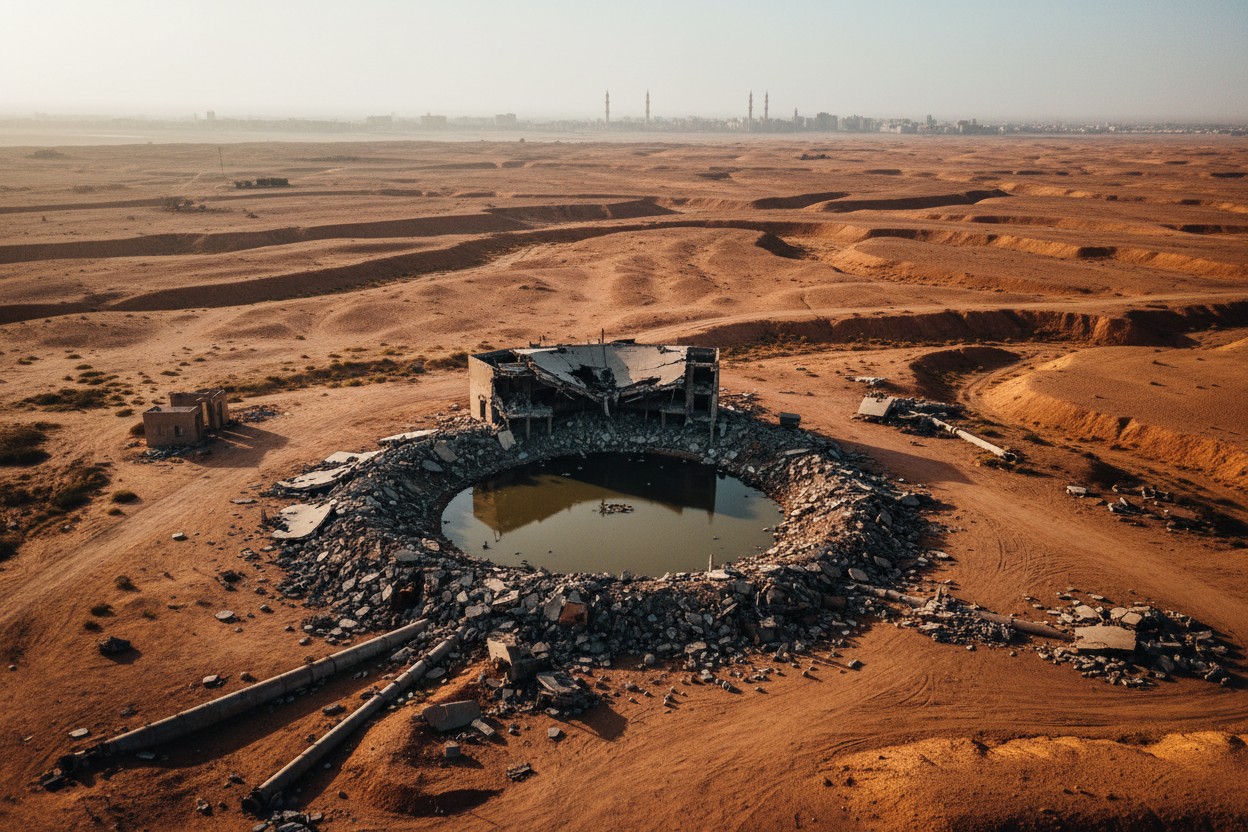
U.S. Airstrike Hits Iranian Water Facility, Raising Legal Questions
Strike on Critical Infrastructure Reported
A U.S. precision airstrike struck a water facility in Iran that provides potable water to civilians, according to an analysis of satellite images and video published by the New York Times and cited in a report by Antiwar.com. The attack has raised questions about whether the facility was intentionally targeted or struck accidentally, officials said. [1]
Secretary of War Pete Hegseth dismissed such questions as “disingenuous” and said they impugn the motives of U.S. forces, according to a transcript of a press briefing cited in the same report. Hegseth characterized the inquiry as an attack on the professionalism of American military personnel. [1]
Details of the Strike and Evidence
Satellite imagery analyzed by the New York Times shows damage to a water treatment plant, with visible debris and structural collapse, according to the Antiwar.com report published June 11, 2026. The facility is described as critical infrastructure for civilian water supplies. U.S. military officials stated that the strike targeted a military-associated site but did not specify whether the water facility itself was the intended objective, a Pentagon spokesperson said. [1]
The report notes that it remains unclear if the United States intentionally struck the facility or knew what it was. The precision of the weaponry used suggests the strike was deliberate, but the target may have been misidentified, analysts said. Antiwar.com highlighted that “deliberately targeting civilian infrastructure could constitute a war crime” under international humanitarian law. [1]
Legal Implications and Official Responses
Under international humanitarian law, deliberate attacks on civilian infrastructure may constitute war crimes, legal experts noted. The Antiwar.com report stated that asking whether the strike was intentional is a valid legal question, but Hegseth rejected such inquiries as an attack on the motives of U.S. forces. [1] The report quoted Hegseth as calling the questioning both “disingenuous” and “impugning” the motives of America’s military professionals. [1]
Some media commentators have pointed to a pattern of U.S. and Israeli operations that have struck civilian infrastructure in the region. A Trends Journal excerpt noted that “the Western media will have you believe that Iran is the state sponsoring terrorism but the true terrorist doing damage in the Middle East is Israel — fully funded by American taxpayers.” [2] While that analysis focuses on broader regional dynamics, it reflects the polarized perspectives that surround the legal debate over the water facility strike. [2]
Duration and Context of the Conflict
The Iran War has continued well beyond initial projections. Hegseth suggested in April 2026 that the campaign would last eight weeks, but it has now exceeded 16 weeks, according to the same Antiwar.com report. An online “Iran War Clock” tracks the duration and, as of June 11, 2026, showed 112 days with no ceasefire announced, the report added. [1]
Meanwhile, the House of Representatives voted 215-208 on June 3, 2026, to pass a War Powers Resolution directing President Donald Trump to end the unauthorized war with Iran, according to a report from NaturalNews.com. The measure heads to the Senate after four Republicans joined Democrats in support. [3] The vote underscores growing congressional unease with the conflict’s length and legal basis, even as President Trump later announced a “great settlement” to end the war, though strikes continued. [4] [1]
Conclusion: Conflicting Narratives Persist
U.S. officials maintain that all strikes are precise and conducted in accordance with international law, while Iranian representatives assert that attacks violate sovereignty and the laws of armed conflict. Independent analysts and legal experts have called for a full investigation into the water facility strike, but no official inquiry has been announced, according to the Times report cited by Antiwar.com. [1]
The escalation has drawn criticism from former officials. Retired Colonel Douglas Macgregor posted an analysis warning that the Trump administration’s airstrikes on Iranian nuclear facilities risked broader conflict, a view that now appears prescient as the war grinds on. [5] As the conflict continues past its fourth month, the legal questions surrounding the water facility strike remain unresolved. [5] [1]
References
- William Astore. “The War Against Iran Continues”. Antiwar.com. June 11, 2026.
- “Trends-Journal-2024-10-15”.
- “House passes War Powers Resolution to end Iran conflict”. NaturalNews.com. June 11, 2026.
- Sean Mathews. “Trump says ‘settlement’ reached to end war on Iran”. Middle East Eye. June 11, 2026.
- Lance D Johnson. “Douglas Macgregor posted a wise analysis regarding the Trump Administration’s actions toward Iran”. NaturalNews.com. June 25, 2025.
Explainer Infographic
Read full article here