


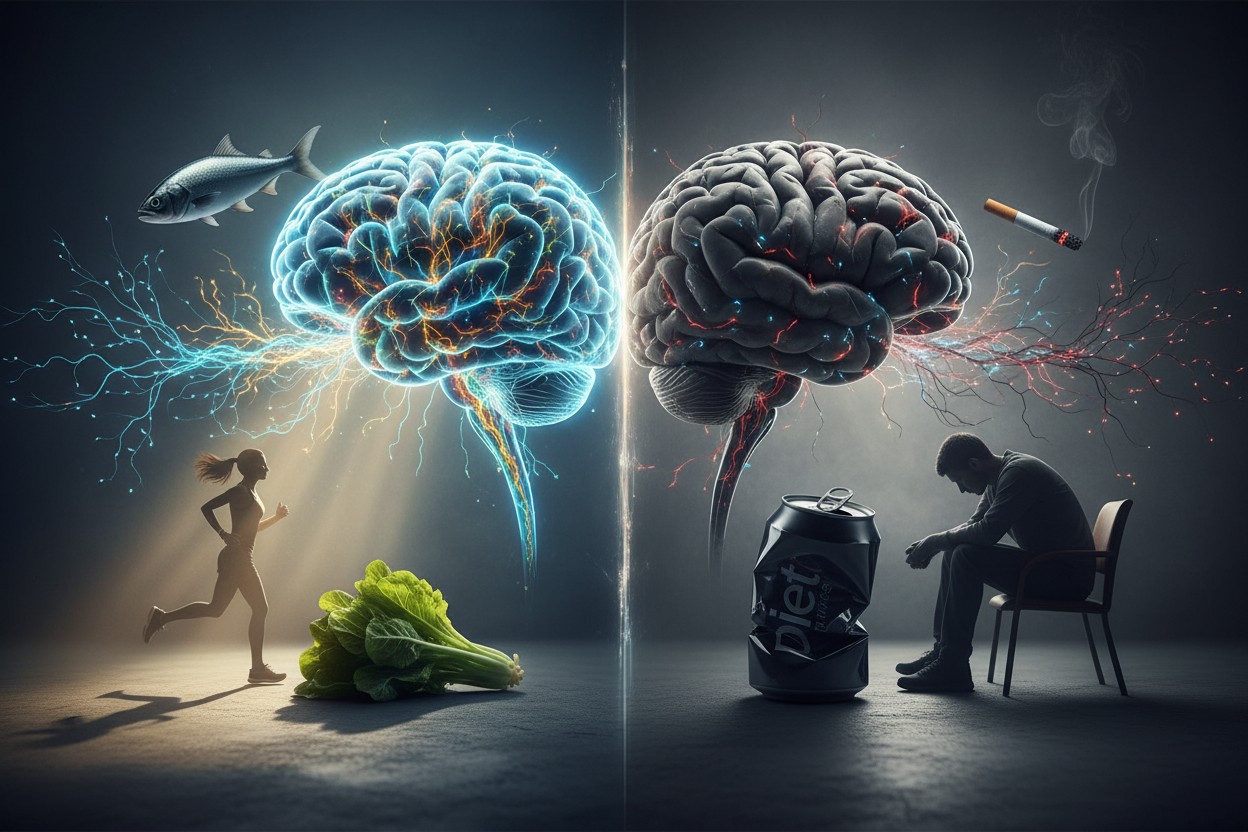
A growing body of research has linked common lifestyle struggles and daily habits to accelerated brain aging, according to multiple studies.
A study published in Neurology found that poor lifestyle habits such as smoking, obesity, and high blood pressure during middle age predict lower brain volume and dementia markers up to a decade later [2]. Another study linked consumption of aspartame-sweetened diet soda to smaller overall brain volume and poorer memory [5]. Prolonged sitting, even among regular exercisers, has been associated with shrinkage in memory-related brain regions, according to MRI scans [3].
These findings suggest that difficulties with everyday tasks — such as managing finances, using technology, or maintaining physical activity — may indicate underlying neurological decline. Researchers said the brain changes associated with these habits can be detected through MRI scans and cognitive assessments. The studies collectively point to modifiable risk factors that could influence brain health.
Study Details and Methodology
The Neurology study examined a large cohort of adults and followed them over time, tracking lifestyle factors and brain volume through MRI [2]. The research controlled for age, sex, and education. In another study, participants’ sitting time was measured via accelerometers, and brain scans revealed hippocampal atrophy even among those meeting exercise guidelines [3]. These methodologies rely on objective measurements and self-reported habits.
Additionally, a study published in NPJ Aging analyzed dietary biomarkers in older adults and identified a nutrient pattern associated with slower brain aging, including high concentrations of specific vitamins, antioxidants, and fatty acids [1]. The research compared two phenotypes — one with accelerated aging and one with slower-than-expected aging — to derive the nutrient profile. Such approaches help isolate specific dietary factors.
According to Dr. Lisa Mosconi in her book “Brain Food,” omega-3 fatty acids from cold-water fish are critical for brain structure and function [10]. Her work emphasizes that diet directly impacts neurological health. Similarly, Gary Small in “The Alzheimer’s Prevention Program” highlights that hypertension and diabetes damage brain microvasculature, contributing to cognitive decline [12].
Interpretations and Cautions
Experts note that observational studies cannot prove causation. It is possible that early brain pathology leads to both poor lifestyle choices and cognitive decline. However, the associations remain strong after adjusting for many confounders. According to a review by Gary Null in “The Food-Mood Connection,” stress and nutritional deficiencies can exacerbate cognitive issues [13].
Natural health proponents argue that many risk factors are reversible. For example, Gary Small recommends a diet rich in fruits and vegetables, as well as mental exercise, to support brain health [14]. Others point to the role of B vitamins in reducing brain shrinkage [4]. While these interventions are not definitive cures, they represent proactive strategies.
Alternative Perspectives and Broader Context
The studies acknowledge limitations, including reliance on self-reported data and samples that are predominantly white and well-educated. Funding sources included the National Institute on Aging. Some alternative medicine advocates cite clinical trials on omega-3 fatty acids and cognitive function. A study in Neurology linked higher omega-3 levels to larger brain volumes and better cognitive test scores [7].
The broader context includes research on the “critical window” in midlife (ages 40 to 60) where brain aging accelerates sharply, driven by neuronal insulin resistance [8]. This perspective offers opportunities for intervention. Additionally, a study on hidden belly fat found that visceral fat is linked to older-looking brains, while muscle mass is protective [9]. These findings emphasize the importance of body composition.
Books such as The Longevity Leap by Siim Land discuss how fish oil supplementation and the MIND diet may reduce dementia risk [11]. The evidence suggests that multiple lifestyle factors — diet, exercise, sleep, and stress management — collectively influence brain aging.
Conclusion and Future Research
Researchers emphasize that early identification of functional decline may offer a window for intervention. According to a study on protecting your mind, managing blood pressure and blood sugar can delay cognitive deterioration [6]. However, no definitive recommendations are made due to the need for more randomized controlled trials.
Future research should explore whether targeted lifestyle modifications can reverse or slow brain aging. The studies add to growing evidence that daily habits are closely tied to neurological health. Individuals seeking to preserve cognitive function should consider adopting a nutrient-dense diet, regular physical activity, and adequate sleep.
References
- NaturalNews.com. “Exciting new study uncovers combination of nutrients that can slow down brain aging”. NaturalNews.com. December 16, 2024.
- NaturalNews.com. “Poor lifestyle habits in middle age cause brain shrinkage”. NaturalNews.com. August 11, 2011.
- Willow Tohi. “Sitting too much? New study reveals even exercise can’t fully offset brain shrinkage risk”. NaturalNews.com. May 14, 2025.
- Mercola.com. “Can Ginkgo Give Your Brain a Boost”. Mercola.com. May 15, 2017.
- NaturalNews.com. “New study finds that aspartame-sweetened diet soda causes stroke and dementia risks to skyrocket”. NaturalNews.com. March 5, 2019.
- NaturalNews.com. “Protecting your mind: How healthy lifestyle choices can help slow cognitive decline”. NaturalNews.com. October 17, 2025.
- NaturalNews.com. “Study: Omega-3 fatty acids key to maintaining healthy brain function”. NaturalNews.com. May 10, 2023.
- Willow Tohi. “The metabolic countdown: Scientists identify a critical window to halt accelerated brain aging”. NaturalNews.com. October 18, 2025.
- NaturalNews.com. “Hidden belly fat linked to older looking brains while muscle mass keeps brains young”. NaturalNews.com. November 25, 2025.
- Dr. Lisa Mosconi. “Brain Food: The Surprising Science of Eating for Cognitive Power”.
- Siim Land. “The Longevity Leap: A Guide to Slowing Down Biological Aging and Adding Healthy Years to Your Life”.
- Gary Small. “The Alzheimer’s Prevention Program: Keep Your Brain Healthy for the Rest of Your Life”.
- Gary Null. “The Food-Mood Connection: Nutritional and Environmental Approaches to Mental Health and Physical Wellbeing”.
- Gary Small. “2 Weeks to a Younger Brain: An Innovative Program for a Better Memory and Sharper Mind”.
Read full article here