


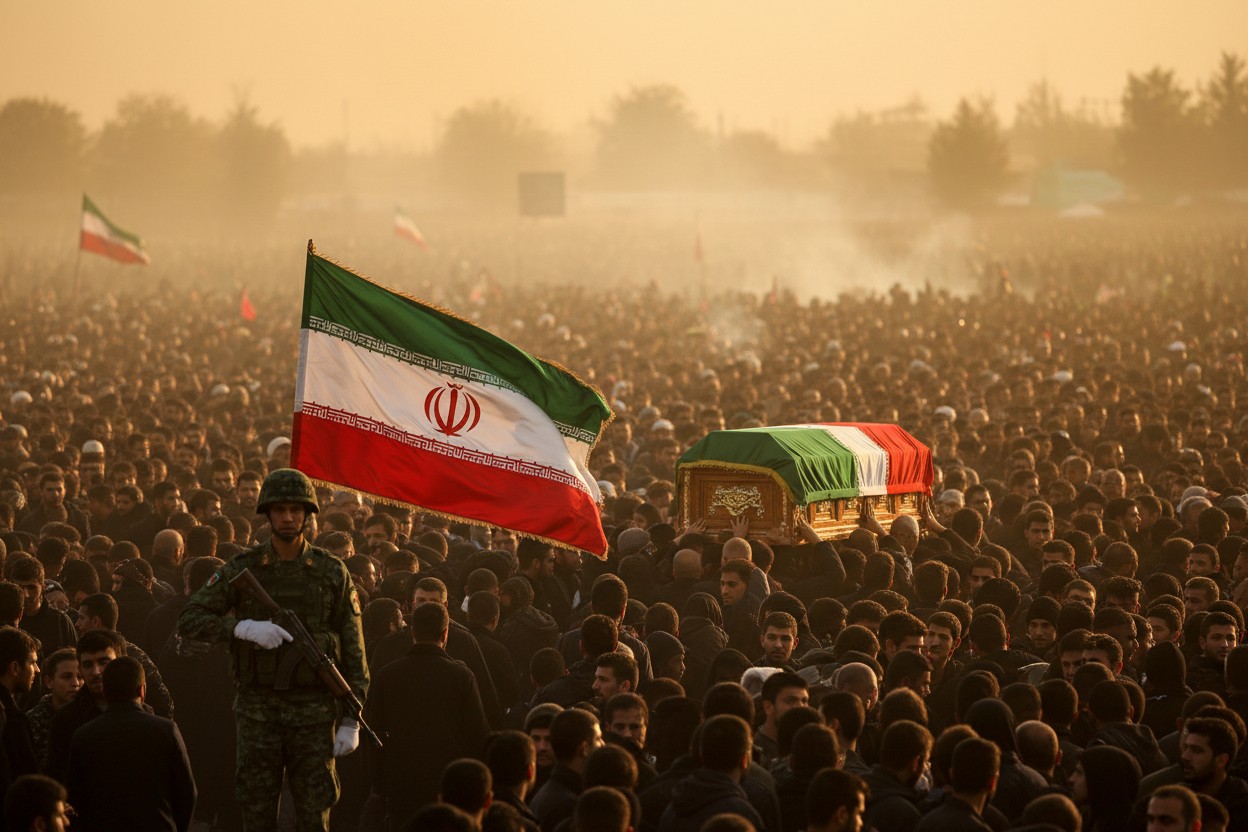
Israel’s “Death Mark” aimed at Iran’s new leadership reveals a war with no end, only escalation
Iranian funeral processions for Ayatollah Ali Khamenei have not yet begun, and already Israel’s defense minister has declared Khamenei’s successor “marked for death.” This is not warfare aimed at neutralizing a nuclear threat or Israel assuming its “right to self-defense.” This is a religious and ideological vendetta never satisfied, a strategy of assassination upon assassination that assumes ideology can be buried alongside the bodies of its leaders. No matter how many people are killed, Israel cannot exterminate the spirit of the Iranians or the ideologies that drive them, nor can they prop up their own regime or take the land that the Iranians have every right to defend.
The war against Iran has only emboldened the ideologies and the righteous indignation that bring more war against Israel, multiplying the extremism that seeks to destroy Israel. In this never-ending cycle, Iran has issued a stark warning to the United States and the “Zionist regime” against any attacks during the mourning ceremonies for the late Supreme Leader, who was killed in the opening Israeli strike on February 28. Tehran has defended its nation with ballistic missiles, regional proxies, and a population that has now been handed a series of martyrs, with no real way to negotiate in good faith. The world watches as the Middle East descends further into a conflict that has no exit strategy, no diplomatic off-ramp, and no shortage of willing executioners on both sides. The US and Israel can brag about these assassinations, but they continue to fail at getting what they want.
Key points:
- Israeli Defense Minister Israel Katz declared Supreme Leader Mojtaba Khamenei “marked for death,” signaling a continuation of the targeted assassination strategy.
- Iran’s military command warned of “harsh retaliation” against any threat during the funeral processions for Ayatollah Ali Khamenei.
- The war began on February 28 with a US-backed Israeli strike that killed Iran’s top leadership.
- Israel has assassinated key Iranian negotiators, including Ali Larijani and Kamal Kharazi, figures Washington had hoped to engage diplomatically.
- Indirect US-Iran talks in Doha have been paused until after Khamenei’s burial.
- Israel opposes any negotiated settlement that does not achieve regime change in Tehran.
The assassination strategy that guarantees endless war
Israel’s decision to mark Iran’s Supreme Leader for death is not a tactical military move. It is a strategic confession that Israel cannot defeat Iran through conventional warfare and has instead chosen a path of decapitation strikes, hoping the ideology dies with the man. But history teaches a different lesson. Every assassination of a leader in the Middle East has produced a more radicalized successor, a more embittered population, and a cycle of violence that deepens with each killing.
The war began on February 28 when Israel, relying on US intelligence, launched a strike that killed Ayatollah Ali Khamenei along with several other top officials. President Donald Trump has bragged about these “decapitation strikes,” framing them as decisive blows against an enemy that refuses to capitulate. Yet the reality is that Iran’s nuclear program was never an imminent threat. US intelligence agencies have maintained since 2007 that Iran halted its weapons program in 2003. The International Atomic Energy Agency’s latest reports confirm there is no evidence of weaponization activities. The threat was manufactured to justify a war that has now consumed the region. The US and Israel went on the offensive, claiming that if they hadn’t acted first, Iran would have taken the first shot. Now the US and Israel are doing damage control, as one Supreme Leader is replaced with another and the spirit of Iran lives on through a long list of martyrs.
Look at all the Iranian leaders that have been been killed—including Supreme Leader Ali Khamenei; National Security Council Secretary Ali Larijani; Defense Council Secretary Ali Shamkhani; Chiefs of Staff Mohammad Bagheri and Abdolrahim Mousavi; General Staff deputies Gholamreza Mehrabi, Mehdi Rabbani, Bahram Hosseini Motlagh, and Mohsen Darrebaghi; Basij head Asadollah Badfar; Khatam al-Anbia commanders Gholamali Rashid and Ali Shadmani; intelligence chief Saleh Asadi; IRGC commanders-in-chief Hossein Salami and Mohammad Pakpour; IRGC chief of staff Masoud Shanei; missile architects Hassan Tehrani Moghaddam and Amir Ali Hajizadeh; missile commander Mahmoud Bagheri; air defense commander Davoud Sheikhian; senior aerospace commander Esmail Dehghan; naval commander Alireza Tangsiri; Quds Force commander Qassem Soleimani; Syria and Lebanon commanders Mohammad Reza Zahedi, Abbas Nilforoushan, Davoud Alizadeh, and Abuzar Mohammadi; Quds Force deputies Mohammad Hadi Hajrahimi and Saeed Izadi; logistics chiefs Razi Mousavi and Hassan Shateri; Unit 840 commander Asghar Bagheri; Golan front head Mohammad Ali Allahdadi; Syrian forces commander Hossein Hamedani; Basij leaders Gholamreza Soleimani and Qasem Qoreishi; Intelligence Minister Esmail Khatib and deputies Akbar Ghaffari, Yahya Hosseini Panjaki, and Javad Pourhossein; police intelligence heads Gholamreza Rezaeian and Alireza Lotfi; IRGC intelligence chiefs Mohammad Kazemi, Majid Khademi, and deputy Hassan Mohaqeq; Defense Minister Aziz Nasirzadeh; nuclear program heads Mohsen Fakhrizadeh, Hossein Jabal-Amelian, and Reza Mozaffari-Nia; and Supreme Leader’s military office heads Mohammad Shirazi, Akbar Ebrahimzadeh, and Abolghasem Babaian—but there continues to be no resolve…
To make matters worse, a prolonged war invites Russia and China to exploit the chaos by providing Iran with advanced weaponry while undermining US influence in the region. Israel’s demand for regime change in Tehran and the destruction of Iran’s regional allies ensure that any negotiated settlement will be rejected before it can take hold. The United States and Israel cannot stop ideology through assassination. They cannot eradicate a belief system that has been reinforced by the martyrdom of its leaders. With each killing, the ideology becomes more emboldened. The cycle of violence and brutality continues.
Sources include:
RT.com
YNetNews.com
Content.IranIntel.com
Read full article here