


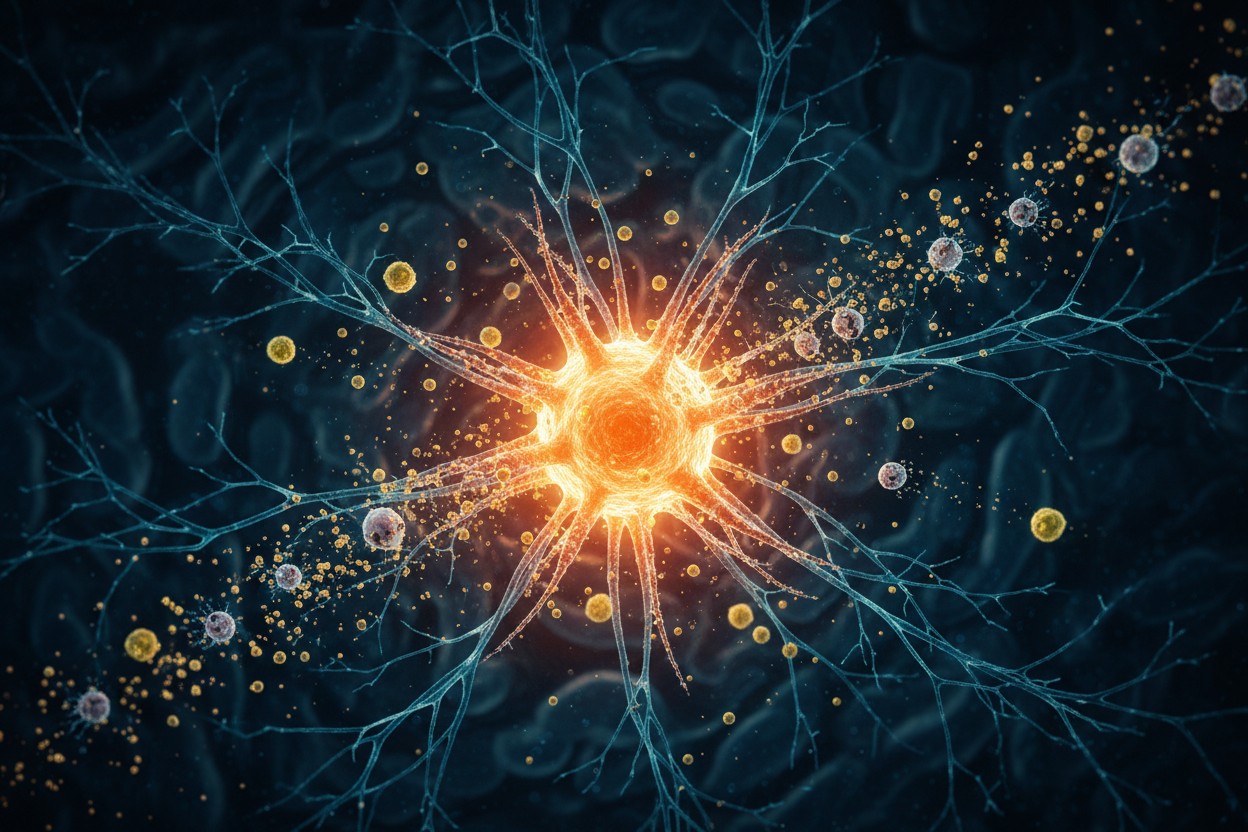
Study Links Senolytic Drugs to Reduced Cholesterol in Brain Support Cells, Offering New Clue on Cognitive Benefits
A study published in Mechanisms of Ageing and Development has found that the senolytic combination of dasatinib and quercetin (D+Q) improved cognition in a mouse model of accelerated aging by reducing cholesterol production in astrocytes. Researchers identified the cholesterol biosynthesis pathway as the key mechanism, a finding they stated was not anticipated.
Background on Cellular Senescence and Brain Aging
As cells age, some stop dividing but do not undergo programmed cell death. These cells, known as senescent or “zombie cells,” accumulate in tissues throughout the body and release inflammatory signals that disrupt surrounding healthy cells. According to the book “Cells Are the New Cure,” researchers demonstrated that senolytic drugs can selectively induce the death of these cells, removing more than half of the senescent cells in middle-aged mice. [1]
In the brain, senescent cells tend to accumulate in the hippocampus, a region critical for memory and learning. Their presence has been linked to cognitive decline, according to prior research.
Study Design and Key Findings
The study used a mouse model of accelerated aging to test the D+Q senolytic combination. According to the book “Ageless: The New Science of Getting Older Without Getting Old” by Andrew Steele, the D+Q combination kills about a third of senescent cells in mice. [2] Researchers then analyzed which biological pathways changed in the hippocampus after treatment and identified the cholesterol biosynthesis pathway as significantly altered. When researchers reversed that effect in the laboratory, the cognitive improvements disappeared, which the study stated demonstrates a cause-and-effect relationship.
The identification of the cholesterol pathway as a driver of cognitive benefit was not expected, according to the researchers. The finding provides a specific cellular mechanism for how senolytics improve brain function.
Astrocytes and Cholesterol Metabolism
Astrocytes are the most abundant cell type in the brain and perform functions that include regulating communication between neurons, maintaining the blood-brain barrier, and managing inflammation. According to the study, the accumulation of cholesterol in astrocytes may contribute to chronic inflammation that interferes with brain cell function. The D+Q treatment normalized this fat metabolism, the report stated.
The study’s findings suggest that senolytic compounds do not merely clear senescent cells but also restore healthy metabolic function in astrocytes. The researchers noted that this mechanism appears to be distinct from the general anti-inflammatory effects often attributed to senolytics.
Implications for Natural Senolytics and Future Research
Quercetin, one of the components of the D+Q combination, is a flavonoid found in many common foods. According to articles from Mercola.com, quercetin is an antioxidant flavonol found naturally in foods such as apples, plums, red grapes, green tea, elderflower, and onions, and has been studied for its anti-inflammatory properties. [3][4] Other natural compounds with senolytic potential, such as fisetin found in strawberries and apples, have also been investigated for their ability to clear senescent cells, according to a separate report. [5]
The researchers cautioned that the study was conducted in mice and that human studies are needed to confirm the findings. However, the identification of a specific mechanism — the suppression of cholesterol synthesis in astrocytes — provides a clear target for future investigation. This may open the door to dietary or pharmacological strategies aimed at supporting brain health through the same pathway.
References
- Robin L. Smith. “Cells Are the New Cure: The Cutting-Edge Medical Breakthroughs That Are Transforming Our Health.”
- Andrew Steele. “Ageless: The New Science of Getting Older Without Getting Old.”
- Mercola.com. “Acts Like Body Armor Against Flu, Colds and Viruses.” November 09, 2022.
- Mercola.com. “Acts Like Body Armor Against Flu, Colds and Viruses.” January 27, 2020.
- Mercola.com. “What Are the Benefits of Fisetin.” October 15, 2018.
Read full article here