


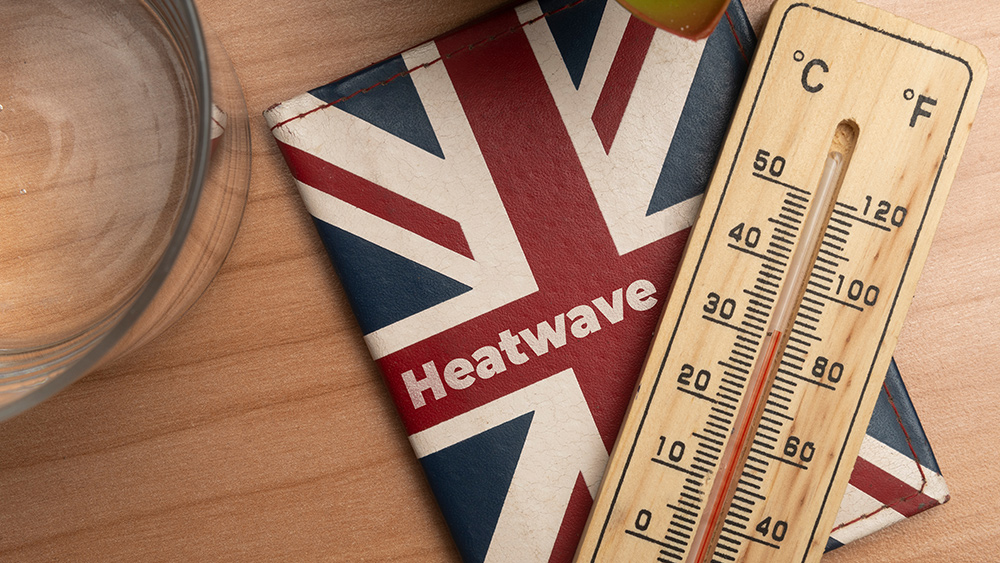
Europe’s deadly heat crisis is an elitist policy failure, not a climate disaster
As blistering temperatures scorch European cities and claim over a thousand lives in a single heatwave, the narrative from Brussels and national capitals is predictable: climate change is the villain, carbon emissions are the culprit, and net zero policies are the only salvation.
But the reality on the ground tells a far different story. Europe’s heat crisis is not a natural disaster. It is a self-inflicted wound caused by decades of ideological-driven energy policy, the demonization (and therefore rationing) of air conditioning, and an aging electrical grid that leaders have deliberately starved of reliable power sources (under the banner of going green and being environmentally friendly).
While Americans move seamlessly between air-conditioned offices and homes during 100-degree heat, Europeans hunt for desk fans or crowd into the few public spaces with real cooling. The difference is not weather; it is a series of political choices built on go green group think and climate change virtue signaling. Europe’s elites, many of whom enjoy air conditioning in their own homes and offices, have actively prevented the widespread adoption of this life-saving technology. In doing so, they have chosen a narrative over human life, sacrificing their fellow citizens on the altar of climate ideology.
Key points:
- Europe’s heat deaths are caused by policy choices, not rising temperatures.
- Widespread air conditioning in the United States saves tens of thousands of lives annually.
- European elites own AC but block its adoption for the general population.
- Net zero policies have forced premature closure of reliable baseload power plants.
- Europe’s aging grid lacks capacity to support cooling infrastructure.
- Solar power fails during heatwaves, making it an unreliable solution.
- Air conditioning emissions are negligible, adding at most 0.05 C warming by 2050.
- Over 1,000 deaths recorded in the current European heatwave alone.
The air conditioning divide: A matter of life and death
The contrast between the American and European experience during extreme heat is stark and revealing. Around 90 percent of U.S. homes have air conditioning. In parts of Europe, that figure hovers near 20 percent. This is not because Americans have better weather or more money. It is because European governments have treated air conditioning as an environmental enemy rather than a medical necessity.
Taco Engelaar, writing in Fortune magazine, captured the absurdity perfectly. “Find yourself in the U.S. this week and you’ll likely move seamlessly between air-conditioned offices, malls, and homes, barely registering the heat outside. In Europe, that same week means hunting for a desk fan or racing to one of the few public spaces with real cooling.” The tragedy is that European leaders could fix this overnight. Instead, they have actively removed air conditioners from homes in some cases, citing carbon emissions and unnecessary energy consumption for the masses.
The hypocrisy is breathtaking. The same politicians who lecture their citizens about personal sacrifice for the planet fly private jets, maintain multiple properties with full climate control, and attend climate conferences in air-conditioned venues. It is a classic case of “do as I say, not as I do.” Meanwhile, the International Energy Agency found that access to air conditioning has saved an estimated 190,000 lives per year globally between 2019 and 2021. A study published in the Journal of the American Medical Association confirmed that air conditioning is the single most effective measure for preventing heat-related deaths.
The grid: Designed to fail under net zero dogma
Europe’s grid cannot handle the demand for air conditioning because European leaders deliberately designed it that way. The pursuit of net zero emissions has led to the premature closure of coal and nuclear-base load power plants, replaced by intermittent sources like wind and solar that fail precisely when they are needed most.
Solar panels lose 0.3 percent to 0.5 percent of their efficiency for every 1.8 degrees Fahrenheit above 77 degrees Fahrenheit. On a 100-degree day, panel temperatures can reach 149 degrees Fahrenheit, cutting solar output by 12 percent to 20 percent. Heatwaves often arrive with cloudy, humid conditions and continue into the night, when solar produces nothing. European leaders know this. They push solar anyway.
The result is a “thermal squeeze,” as Engelaar described it, where outsized demand collides with an overheating grid. Tens of thousands of French homes lost power during the current heatwave. The U.K. grid operator issued its first-ever summertime plea for more power as supply and demand fell out of balance. Sagging electrical lines threatened to halt rail service. These are not the result of some climate change boogeyman. They are the predictable consequences of policies that prioritized ideology over engineering reliable energy and safe living conditions for all.
The alternative to Europe’s heat wave crisis is obvious. The United States has demonstrated for decades that widespread air conditioning saves lives and protects economic productivity. Europe could lose up to 7 percent of its collective GDP in the next four years due to heat-related losses. That is separate from the cost in human life. Over 1,000 deaths have already been recorded from this single heatwave.
European leaders face a choice. They can continue their climate crusade, allowing their citizens to suffer and die in the name of net zero. Or they can admit that air conditioning saves lives, expand the grid with reliable power sources, and reject the false choice between energy security and climate action.
Sources include:
WattsUpwithThat.com
Fortune.com
NaturalNews.com
Read full article here