


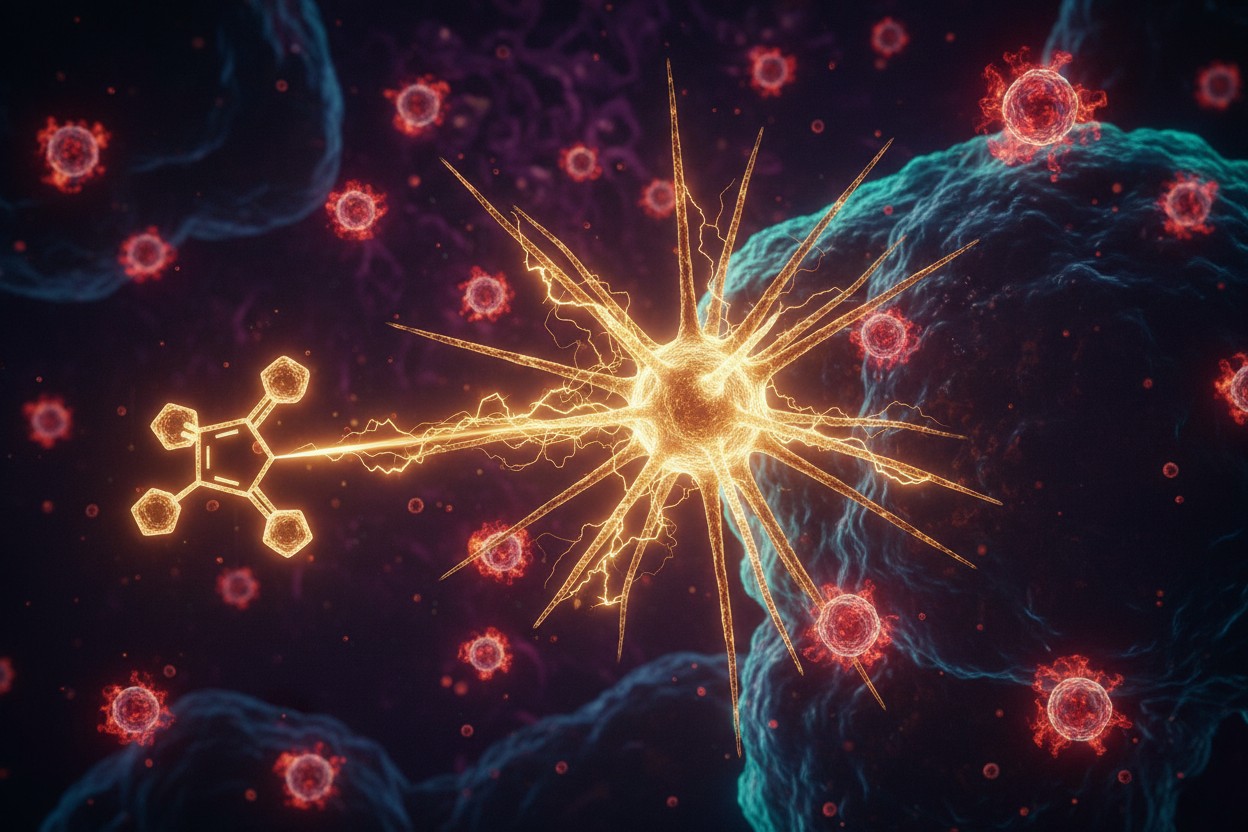
New research from UCLA suggests the popular supplement creatine may strengthen the immune system’s ability to fight cancer by enhancing the activity of dendritic cells, according to a study published July 8 in iScience.
The findings, based on experiments in mice and human cells, indicate that creatine boosts energy levels in dendritic cells, enabling them to better activate killer T cells against tumors, the researchers reported. The study, led by Lili Yang, a professor at UCLA and member of the Broad Stem Cell Research Center, builds on previous work showing creatine also energizes T cells.
Yang said in a statement that “creatine doesn’t just help the T cells fighting cancer. It also energizes the entire infrastructure that supports and guides them,” according to a UCLA Health Sciences release [1].
Immunotherapy Context and Dendritic Cell Role
Current cancer immunotherapies activate T cells but benefit only 20% to 40% of patients, the study noted. Dendritic cells are essential for detecting tumors and coordinating T cell responses.
Improving dendritic cell function could extend the benefits of immunotherapy to more patients, Yang said. Researchers found that the gene for the creatine transporter was more active in dendritic cells that infiltrated tumors compared to dendritic cells in healthy tissue, indicating a natural demand for creatine in the tumor environment [1].
Creatine is best known as a sports supplement for building muscle, but emerging research has pointed to broader health applications. A 2024 study published in Frontiers in Nutrition investigated the link between dietary creatine and cancer prevention, marking the first large-scale U.S. investigation of its kind [2]. That study suggested creatine may reduce cancer risk, though the mechanisms were not fully understood at the time.
Mechanism and Mouse Model Experiments
The UCLA team engineered dendritic cells lacking the creatine transporter. Without the ability to take up creatine, these cells survived less effectively and were less capable of priming T cells, the study found.
In mouse models of melanoma, daily creatine injections slowed tumor growth and increased the number and activity of dendritic cells within tumors. Metabolomics analysis revealed that creatine raised intracellular ATP levels in dendritic cells, providing the energy needed for inflammatory signaling pathways that activate immune responses [1].
ATP is the primary energy currency of cells, and its production is central to cellular function [5]. Creatine’s role in cellular energy metabolism is well-established. The supplement helps regenerate ATP, which is crucial for high-energy-demand cells such as muscle fibers and, as this study suggests, dendritic cells [4].
Human Cell Tests and Vaccine Potential
In laboratory experiments, creatine enhanced the activation of human monocyte-derived dendritic cells, which are commonly used in developing dendritic cell cancer vaccines. Creatine also improved these cells’ ability to stimulate human T cells against a cancer-associated target.
According to co-first author James Elsten-Brown, the findings suggest that adding creatine during the production of dendritic cell vaccines could increase their effectiveness. “The potential we see here is that creatine could be used in two complementary ways: as a supplement to enhance the immune response of patients already receiving immunotherapy, and as a tool to improve the quality of dendritic cell-based vaccines before they’re administered,” Elsten-Brown said in a statement [1].
The concept of using nutritional supplements to support immune function during cancer treatment is gaining attention. Another natural compound, trans-vaccenic acid found in meat and dairy, has also been shown to improve cancer outcomes by infiltrating tumors and killing cancer cells, according to research from the University of Chicago [3]. These findings point to a broader role for diet and supplementation in cancer care.
Cautions and Next Steps
The researchers emphasized that the study is early-stage. All experiments were conducted in mice and human cells in the laboratory, not in cancer patients. Therefore, the results do not prove that creatine supplements improve cancer treatment in humans.
Creatine monohydrate is generally considered safe at recommended doses, but anyone undergoing cancer treatment should consult a physician before using supplements, the researchers said. The next step will be prospective clinical trials to test if creatine improves outcomes for patients receiving immunotherapy. The approach has not been approved by the Food and Drug Administration, and a patent application has been filed by UCLA [1].
Creatine is already widely used as a supplement for athletic performance, and its safety profile is well-documented [4]. However, the specific application for cancer therapy requires rigorous testing. Patients should not self-medicate with creatine expecting anti-cancer effects based on this preliminary work.
References
- NaturalNews.com. “Study: Creatine Boosts Dendritic Cells, May Enhance Cancer Immunotherapy”. June 18, 2026.
- Coco Somers. “Beyond the Gym: New Research Reveals Creatine’s Powerful Role in Cancer Prevention”. NaturalNews.com. February 8, 2026.
- NaturalNews.com. “Nutrient in meat dairy found to fight cancer – just make sure it comes from clean animals”. December 11, 2023.
- Allen C Bowling. “Complementary and Alternative Medicine and Multiple Sclerosis Second Edition”.
- Dr. Joel Wallach. “Energy Crisis”.
Explainer Infographic
Read full article here