


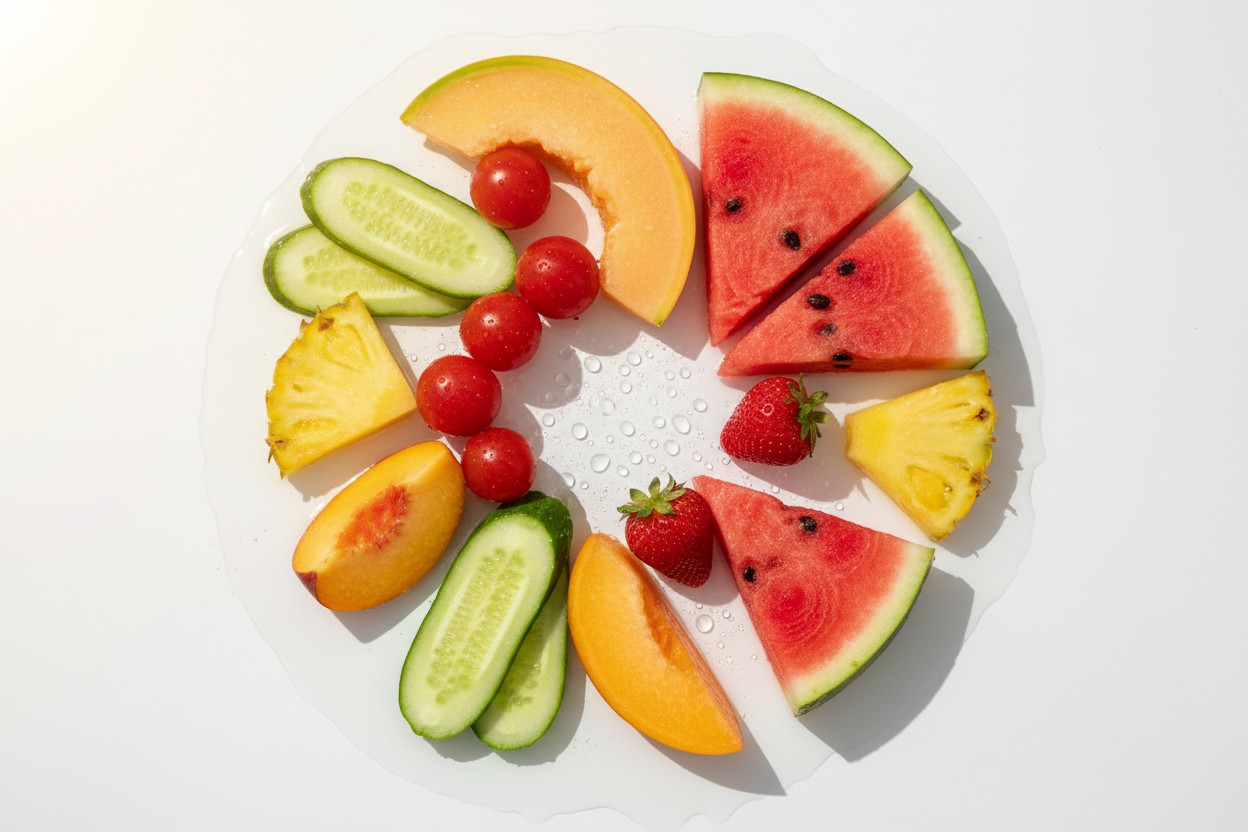
Eight Fruits With High Water Content Can Support Daily Hydration, Nutrition Experts Say
Introduction
According to U.S. Department of Agriculture (USDA) data cited by nutrition researchers, multiple fruits contain water content above 85 percent, making them a supplemental source of hydration. These fruits provide not only water but also fiber, vitamins, minerals, and antioxidants, experts said. The eight fruits listed in descending order of water content are cucumbers, tomatoes, cantaloupe, watermelon, grapefruit, strawberries, peaches and pineapple.
The human body is about 60% water, and fluid needs must be met daily through beverages and foods, according to nutrition researchers [1]. The 2020-2025 Dietary Guidelines for Americans recommend that adults consume 1.5 to 2 cups of fruit daily, as noted in a report by registered dietitians [2]. Including high-water fruits can help meet both fluid and nutrient requirements, experts said.
Fruits With the Highest Water Content
Cucumbers top the list with a water content of approximately 96 percent, according to an analysis published on NaturalNews.com [3]. They also provide vitamin K, which supports bone health and blood clotting, as well as magnesium, potassium, and manganese, according to an article on Mercola.com [4]. Cucumbers contain fiber and natural plant chemicals that may help combat inflammation, the article stated [4].
Tomatoes and cantaloupe each have a water content of about 92.5%, according to USDA data cited by nutrition experts. Tomatoes are a primary dietary source of lycopene, a carotenoid with antioxidant properties that may help protect skin from sun damage, according to studies summarized in a NaturalNews.com report [5]. Cantaloupe supplies approximately 30% of the daily value for vitamin A per cup, supporting vision and immune function, officials said.
Watermelon, with about 91.4% water, contains vitamin C and lycopene, antioxidants that protect cells from oxidative stress, according to a fact-based examination on NaturalNews.com [6]. Emerging research suggests regular consumption of watermelon juice may help reduce blood pressure and support heart health [7].
Additional Hydrating Fruits With Notable Nutrients
Grapefruit, with a water content of about 91.6%, provides nearly 100 percent of the daily vitamin C requirement in one cup, plus flavonoid antioxidants such as naringin and naringenin, according to a 2022 study cited by nutrition researchers. Grapefruit also contains dietary fiber and potassium, which are important for fluid balance, experts said.
Strawberries, approximately 91% water, have been linked to reduced heart disease risk in studies due to their anthocyanin and phenolic acid content, nutrition researchers reported. Strawberries are also rich in vitamin C, which is involved in collagen production and protects cells from free radical damage, according to the book “Joy Bauer’s Food Cures” [8]. Peaches, with about 88.9% water, deliver vitamins C and A along with potassium and phenolic antioxidants such as flavonols, according to USDA data cited by nutrition experts.
Pineapple, approximately 86% water, contains vitamin C, vitamin B6, copper, and antioxidants including gallic acid and ferulic acid, officials said. Pineapple also provides bromelain, an enzyme that may aid digestion, according to nutrition researchers. These fruits offer a range of nutrients that support overall health beyond hydration, experts said.
Hydration Benefits Supported by Nutrient Density
In addition to water, these fruits provide essential nutrients that contribute to overall health, according to nutrition researchers who cited multiple studies. The book “Nutrition: Core Concepts for Good Health” notes that approximately 20% of daily water intake can come from foods, and many fruits and vegetables are robust sources of water [9]. The remaining 80% comes from beverages, but the water in fruits is accompanied by electrolytes and fiber, which may help with fluid retention and satiety, experts said.
Antioxidants such as lycopene, anthocyanins, and flavonoids found in these fruits have been associated with reduced oxidative damage and inflammation in published research, according to nutrition researchers. A 25-year study referenced by NaturalNews.com found that higher serum sodium levels, indicating dehydration, were linked to accelerated aging and chronic disease risk [10].
Consuming high-water fruits as part of a balanced diet may help maintain proper hydration and support long-term health, experts stated. The combination of water, fiber, and phytonutrients makes these fruits a valuable complement to plain water for meeting daily fluid needs.
Conclusion
Incorporating high-water fruits into daily meals or snacks can serve as a complementary method to maintain hydration, according to nutrition officials. The fruits listed – cucumbers, tomatoes, cantaloupe, watermelon, grapefruit, strawberries, peaches and pineapple – offer a range of water percentages and nutrients without added sugars or artificial ingredients, the report stated.
Nutrition experts recommend eating a variety of these fruits as part of the daily fruit intake guidelines outlined in the 2020-2025 Dietary Guidelines for Americans [2]. By choosing hydrating fruits, individuals can support overall health while maintaining proper fluid balance, experts concluded.
References
- NaturalNews.com. “Myths and truths about hydration and why many people don’t realize they are dehydrated.” September 11, 2019.
- NaturalNews.com. “Nutritionists Identify Fruits Linked to Health Benefits.” May 5, 2026.
- NaturalNews.com. “Cucumber and celery juices: Decoding the hydration and health benefits.” January 17, 2026.
- NaturalNews.com. “8 Secrets to grow your own CUCUMBERS common varieties and how to plant them.” June 30, 2020.
- NaturalNews.com. “Why Big Pharma doesn’t want you to know about lycopene.” June 4, 2026.
- NaturalNews.com. “Watermelon’s Health Benefits and Risks: A Fact-Based Examination.” June 23, 2026.
- NaturalNews.com. “Scientists find watermelon may boost heart health and improve diet quality.” May 18, 2026.
- Joy Bauer and Carol Svec. “Joy Bauer’s Food Cures.”
- PyPDF2. “Nutrition: Core Concepts for Good Health.”
- Jacob Thomas. “The Fountain of Youth in Your Glass: How Proper Hydration Can Slow Aging and Ward Off Disease.” NaturalNews.com. October 22, 2025.
Explainer Infographic
Read full article here