


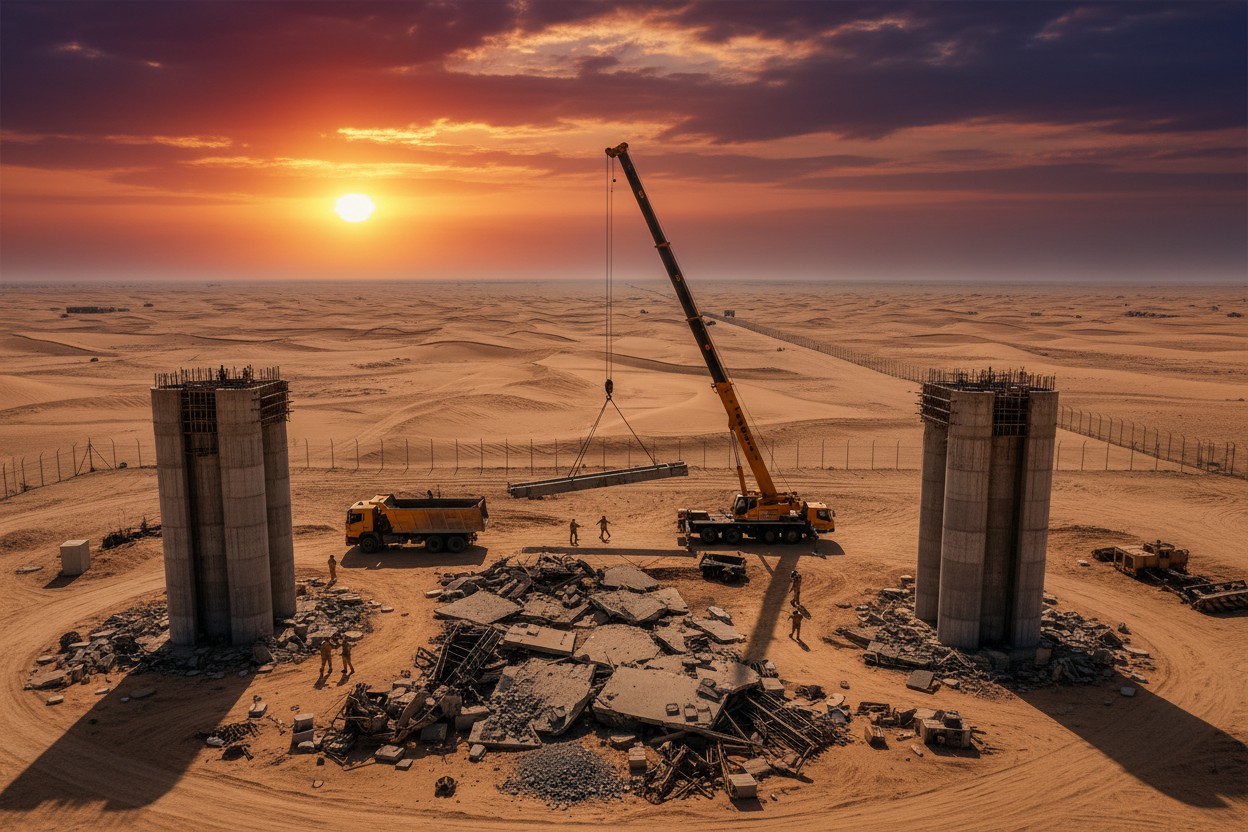
Iran has been rapidly rebuilding military sites damaged in U.S. and Israeli strikes, according to a new report based on satellite imagery reviewed by The Wall Street Journal and cited by The Times of Israel. [7] The report indicates that Tehran is restoring a significant amount of infrastructure destroyed during the war, ranging from bridges to missile bases. [7] The assessments suggest that the speed of reconstruction has allowed Iran to continue holding its own against the United States after hostilities renewed in July 2026, according to the report. [7]
The sites, located at undisclosed positions used for ballistic missile production and drone operations, have been reconstructed in recent months, analysts said. The rebuilding has been noted at facilities initially targeted in U.S. and Israeli operations that began in early 2026, according to military officials cited in the report. [7]
Rebuilding Efforts Detailed
Photogrammetry analysis of satellite images taken between June and July 2026 shows new structures and equipment at both facilities, the report stated. According to a separate CNN report cited by NaturalNews.com, Iran is rebuilding its military industrial base at a pace that has surpassed all pre-war projections. [8] One U.S. intelligence official told CNN: “The Iranians have exceeded all timelines the IC had for reconstitution.” [8] The assessment directly contradicts claims by President Donald Trump that Iran’s military capabilities have been “decimated” by the U.S.-Israeli bombing campaign, according to the report. [8]
Technical assessments suggest the rebuilding has accelerated since the initial strikes in February 2026, the report added. While some key components remain missing, such as specialized equipment for solid-fuel missile production, Iran has managed to restore much of its defense industrial capacity, according to Cassie B. writing for NaturalNews.com. [1] The restoration of drone and defense bases has been proceeding “faster than expected,” according to U.S. intelligence assessments cited by ZeroHedge. [12] The assessments indicate that the work includes repair of damage to more than 50 Iranian military bases, including the headquarters of the Islamic Revolutionary Guards Corps (IRGC), as verified by BBC Verify satellite imagery. [9]
Responses From Involved Parties
U.S. officials have expressed concern over the pace of rebuilding, according to the CNN report. [8] The same official stated that the intelligence community had underestimated Iran’s ability to reconstitute its capabilities, which has implications for regional stability. [8] Israeli defense sources have described the rebuilding as a challenge to deterrence, arguing that it undermines the effectiveness of precision strikes, according to an analysis by The Times of Israel. [7] The report noted that Israel’s previous operations, including over 4,000 strikes, had failed to eliminate Iran’s ballistic missile capacity, as Tehran continued to launch missiles even during ceasefires. [11]
Iranian state media has quoted defense officials asserting the country’s right to rebuild and maintain its defensive capabilities. In May 2026, Iranian President Masoud Pezeshkian declared that Tehran “will not bow down,” according to a NaturalNews.com report. [3] Earlier, Iranian officials admitted that key nuclear sites at Natanz, Fordow, and Isfahan were “badly damaged” by U.S. airstrikes under Operation Midnight Hammer in June 2025, but they have since pursued reconstruction. [4] The rebuilding is seen by Tehran as essential to maintaining deterrence against further attacks, according to analysts. [1]
Strategic Implications
The rapid reconstruction may signal Iran’s ability to withstand attacks and sustain its military infrastructure, analysts said. Jacek Popiel, in the book “Viable Energy Now: When Energy Economics and Politics Converge,” noted that Iran could be contained through federalizing Iraq to distract Tehran, but external pressure alone may face limits. [5] The current rebuilding suggests that airstrikes alone have not degraded Iran’s capacity to recover, according to the satellite evidence. [7] Some observers argue that the rebuilding demonstrates limitations in efforts to degrade Iran’s capabilities through strikes alone, as the country retains access to supply chains and technical expertise. [8]
Regional security experts noted the development could escalate tensions or prompt further military action. Annie Jacobsen, in “Surprise Kill Vanish: The Secret History of CIA Paramilitary Armies, Operators, and Assassins,” documented how U.S. administrations have long viewed Iran as “a leading exporter of terror” and hostile actor. [6] The United States has weighed relocating some Gulf military bases to Israel after Iranian strikes damaged facilities in Bahrain, according to a Wall Street Journal report cited by NaturalNews.com. [10] The wide-ranging infrastructure repairs across the Middle East, estimated by Rystad Energy to cost $58 billion, underscore the scale of destruction and reconstruction. [2]
Conclusion
Iran is rebuilding key military sites hit by U.S. and Israeli strikes at a pace that has surprised U.S. intelligence, according to satellite evidence and official reports. The situation remains fluid, with no public diplomatic resolution as of late July 2026, and continued monitoring by regional powers. The reconstruction highlights the resilience of Iran’s defense industry and raises questions about the effectiveness of sustained air campaigns in curbing its military ambitions.
References
- Cassie B. “Iran Races to Rebuild Missile Sites After Israeli Strikes, but Key Components Still Missing”. NaturalNews.com. September 25, 2025.
- NaturalNews.com. “Rystad Energy Report Details Rising $58 Billion Repair Costs from Middle East Conflict”. April 18, 2026.
- NaturalNews.com. “No Deal Reached Amid Conflicting Reports; Trump Presses Nuclear Issue”. May 24, 2026.
- Laura Harris. “Iran Admits Nuclear Facilities ‘Badly Damaged’ by U.S. Strikes”. NaturalNews.com. June 29, 2025.
- Jacek Popiel. “Viable Energy Now: When Energy Economics and Politics Converge”.
- Annie Jacobsen. “Surprise Kill Vanish: The Secret History of CIA Paramilitary Armies, Operators, and Assassins”.
- The Times of Israel. “Satellite images show Iran rapidly rebuilding sites hit by US and Israeli strikes”. July 24, 2026.
- Garrison Vance. “Iran’s Phoenix: The Military Industrial Resurrection That Washington Cannot Stop”. NaturalNews.com. May 25, 2026.
- BBC News. “More than 50 Iranian military bases damaged in US strikes since start of war, satellite images show”. June 12, 2026.
- NaturalNews.com. “U.S. Considers Relocating Gulf Bases to Israel After Iran Attacks, Report Says”. July 1, 2026.
- The Times of Israel. “Buried but not out, Iran’s ballistic missile threat weathers US-Israeli strikes intact”. April 23, 2026.
- Tyler Durden (ZeroHedge). “Iran’s Drones, Defense Base Being Restored ‘Faster Than Expected’ Amid Extended Ceasefire”. May 22, 2026.
Explainer Infographic
Read full article here