


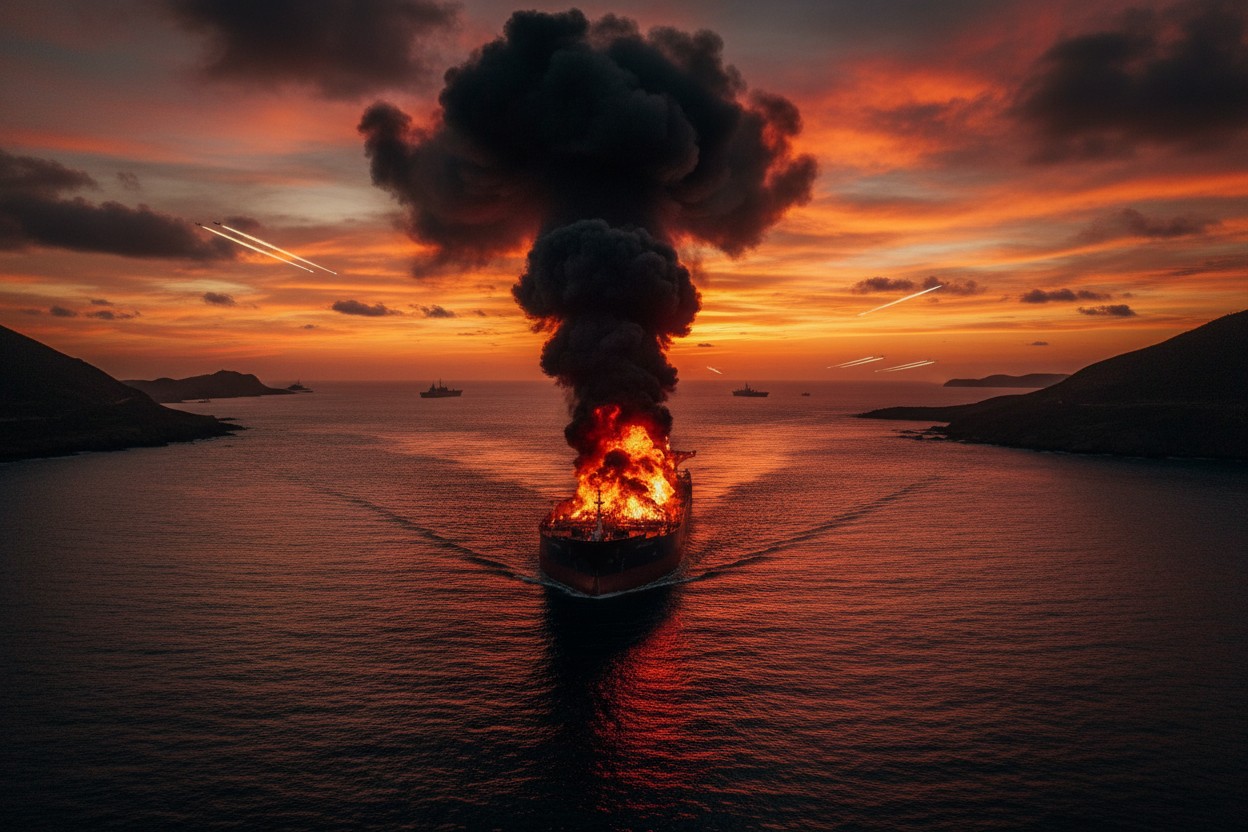
President Donald Trump said in a post on Truth Social on July 23, 2026, that he would target Yemen’s Houthis, officially known as Ansar Allah, and inflict “major military punishment” on Iran if more tankers are attacked in the Red Sea. The statement came after the Houthis struck two Saudi oil tankers, according to reports. [8]
“A year ago the United States of America attacked, very powerfully, the Houthis, for their interference with commerce and trade, by shooting at ships. Since that time, and during our conflict with Iran, they have acted very responsibly. Unfortunately, now they are starting up again, shooting at two Saudi Arabian ships last night,” Trump wrote. He added that if attacks continue, “the U.S. will hold Iran responsible, in that the Houthis are a Surrogate and/or Proxy of Iran, and major military punishment will be inflicted upon Iran and, of course, the Houthis, themselves.” [8]
Background on Previous U.S. Bombing Campaign
The U.S. launched a bombing campaign against Houthi targets from March 15, 2025, to May 6, 2025, according to White House statements cited by reports. The campaign ended with a ceasefire between the U.S. and Ansar Allah, but did not stop Houthi attacks on Israeli-linked shipping or attacks on Israel, officials said. [8]
Joe Kent, former head of the National Counterterrorism Center who resigned over objections to the Iran war, wrote on X on July 23 that the U.S. “was unable to militarily defeat the Houthis” during that campaign. [8] The Houthis have controlled Yemen’s capital, Sanaa, since 2014 and govern areas where most of the population lives, according to reports. [8]
Houthi Resilience and Regional Context
Kent cited the mountainous terrain of northwestern Yemen as a tactical advantage for Ansar Allah. He noted that the group survived both U.S. and Israeli bombardment as well as a U.S.-backed Saudi-UAE war from 2015 to 2022 that killed hundreds of thousands of Yemenis. [8] The Houthis have proven durable against multiple military campaigns, a fact that analysts say complicates U.S. strategy.
Saudi forces bombed Sanaa International Airport on July 13, 2026, preventing a flight from Iran from landing, according to reports. [11] In response, the Houthis targeted a Saudi airport with missiles and drones and announced a maritime blockade on Saudi ports, calling it a “blockade for a blockade.” [6] [7] The Houthis have cited Israel’s blockade of Gaza as justification for their maritime operations, accusing Israel of a “genocidal campaign.” [1]
The Bab el-Mandeb Strait, a critical 20-mile-wide maritime passage, has been the focal point of these confrontations, impacting global trade and energy security. [2]
Iran Threat and Proxy Dynamics
Trump’s post warned that if Houthi attacks continue, “major military punishment will be inflicted upon Iran and, of course, the Houthis, themselves.” The president described the Houthis as a “Surrogate and/or Proxy of Iran,” according to his statement. [8]
No immediate response from Iranian officials was reported. However, analysts noted that the threat escalates U.S.-Iran tensions following the 2025 conflict. [9] U.S. Secretary of State Marco Rubio said on July 23 that Trump’s policy toward Iran is “a head for an eye,” warning that Tehran will face an increasingly heavy price. [9]
Outlook
Kent wrote on X that the Houthis “know we are spread thin” and will use this as leverage. He added that “this time around, they’ve got the energy crisis working in their favor, and they can use it to double the pressure on us via the Bab al-Mandeb Strait.” [8] The former counterterrorism official suggested the group may not agree to another ceasefire if the U.S. restarts bombing.
The Houthis’ maritime blockade on Saudi ports and continued attacks on shipping indicate a widening confrontation, officials said. [5] Brent crude oil prices surged past $100 per barrel following the tanker attacks, according to reports. [10] [12] The situation threatens to further disrupt global energy markets already strained by the U.S.-Iran conflict.
References
- Cassie B. “Houthi rebels resume Red Sea attacks blaming Israel’s Gaza blockade”. NaturalNews.com. March 15, 2025.
- Arsenio Toledo. “Bab el-Mandeb Strait: How targeted Houthi attacks and geopolitical tensions helped strangle shipping through this strategic chokepoint”. NaturalNews.com. January 21, 2025.
- Trends-Journal-2024-06-04.
- Charlotte Dennett. “The Crash of Flight 3804”.
- Dave DeCamp. “Trump Suggests He May Restart Bombing Yemen”. ZeroHedge. July 23, 2026.
- “Yemen’s Houthis Announce Embargo Against Saudi Arabia”. The Epoch Times. July 20, 2026.
- “Iran Tells Houthis To Close Red Sea Energy Chokepoint If Trump Bombs Power Grid”. ZeroHedge. July 16, 2026.
- Dave DeCamp. “Trump Says He Will Target Yemen’s Houthis If More Tankers Are Targeted in the Red Sea”. Antiwar.com. July 23, 2026.
- “Oil Soars As Trump Warns Iran Will Pay For Future Houthi Shipping Attacks, Rubio Rules Out Deal”. ZeroHedge. July 23, 2026.
- “U.S. oil prices pass $92 per barrel as Iran-backed Houthi militants attack tankers in Red Sea”. Just the News. July 23, 2026.
- “Saudi-Led Forces Bomb Yemen’s Sanaa Airport, Reigniting War With the Houthis”. Antiwar.com. July 13, 2026.
- “RBC Commodities Chief Warns ‘War Entering Dangerous Phase’ As Chokepoint Chaos Risks Oil Above 2008 Peak”. ZeroHedge. July 23, 2026.
Explainer Infographic
Read full article here