


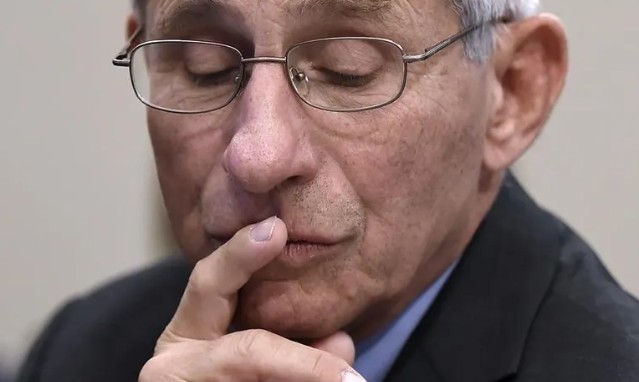
Fauci’s private health crisis: Pulmonary infarction after COVID vaccine raises questions about public messaging
- Dr. Anthony Fauci suffered a pulmonary infarction in June 2021, months after receiving the Moderna COVID-19 vaccine, newly released diary entries show
- The event required immediate blood-thinning treatment with Eliquis, yet Fauci continued publicly promoting universal vaccination without disclosing his personal medical crisis
- Sen. Rand Paul released the diaries ahead of Fauci’s July 29, 2026 congressional hearing on pandemic response
- Some physicians argue the pulmonary embolism represents a known side effect of mRNA vaccines, while federal health agencies maintain benefits outweigh risks
- The revelation comes amid declining public trust in government health institutions, with only 51% of Americans expressing confidence in CDC and FDA guidance
The diary entry that reshaped the narrative
In June 2021, while Americans were being urged to receive COVID-19 vaccinations, Dr. Anthony Fauci experienced what he described in personal diaries as a “horrible roller coaster day.” The former National Institute of Allergy and Infectious Diseases director, who had received the Moderna vaccine in December 2020, underwent diagnostic imaging after experiencing chest pain. Multiple specialists diagnosed him with a pulmonary infarction—damaged lung tissue caused by a blood clot—and prescribed immediate anticoagulation therapy with Eliquis, a blood thinner manufactured by Bristol Myers Squibb and Pfizer.
The diary entries, spanning December 2019 through Fauci’s retirement in late 2022, were released by Sen. Rand Paul ahead of Fauci’s scheduled July 29, 2026 Senate hearing. The documents raise questions about what Fauci knew regarding vaccine safety and when he knew it, particularly as he continued championing mass vaccination policies while privately managing a serious medical event potentially linked to the same intervention.
A troubling timeline of public advocacy and private crisis
On December 22, 2020, Fauci received his first Moderna dose at the NIH Clinical Center in a carefully publicized event designed to build public confidence. By June 19, 2021, his diaries show he was struggling with the aftermath of a pulmonary embolism that required immediate medical intervention. Yet Fauci continued to advocate for universal vaccination without disclosing his personal health crisis.
Cardiologist Dr. Peter McCullough wrote on Substack that the episode was a “direct result of a pulmonary embolism which is a known side effect of the mRNA COVID-19 vaccination.” McCullough argued that Fauci’s private medical management contradicted his public advocacy, writing that the public health leader “navigated his own recovery with the specialized care of top-tier pulmonologists and radiologists” while simultaneously “championed policies that forced the populace into a state of medical compliance.”
No evidence in the diaries attributes the pulmonary infarction to vaccination, and no treating physician identified the Moderna vaccine as the cause. Rutgers molecular biologist Richard Ebright said he doubted a direct link but would not rule it out.
The broader pattern: Vaccines and cardiovascular events
The question of vaccine-associated cardiac events has been documented in multiple studies. A September 2021 pooled analysis from Singapore identified 30 patients who developed cardiac symptoms within 14 days of vaccination, including 29 acute myocardial infarctions. Among that cohort, five developed heart failure, two experienced cardiogenic shock, three required mechanical ventilation, and one died from cardiovascular complications.
A December 2025 Stanford Medicine study identified a potential biological mechanism for vaccine-associated myocarditis, finding that mRNA vaccines can trigger a two-step immune response involving cytokines CXCL10 and interferon-gamma that promotes inflammation capable of injuring heart muscle cells. The study noted vaccine-associated myocarditis occurs in approximately 1 in 32,000 people after a second dose, with highest incidence among males age 30 and younger.
The American public has taken notice of these patterns. A recent KFF poll found that only 51% of adults express “a fair amount” of trust in CDC and FDA guidance, while 86% trust their personal physicians.
Health Secretary Kennedy revives criticism of pandemic leadership
Health and Human Services Secretary Robert F. Kennedy Jr. weighed in following the diary release, writing on social media that the pandemic “exposed a profound failure of America’s public health institutions.” Kennedy accused Fauci of lying about masks, social distancing, transmission and natural immunity. Kennedy stated that Americans who questioned official guidance were “marginalized, vilified, demonized, censored” and that the public should not trust institutions that misled them.
The diary release occurs as Fauci prepares to testify before the Senate Homeland Security and Governmental Affairs Committee on July 29. Paul has investigated whether COVID-19 leaked from the Wuhan Institute of Virology and has accused Fauci of destroying government records. Fauci previously testified that he believes the most likely origin was animal-to-human transmission and has denied attempting to cover up any lab leak theory.
Trust and transparency in public health
The Fauci diary revelation underscores a fundamental tension in pandemic-era public health: how much risk should leaders disclose when advocating for population-wide interventions? Fauci’s private management of a potentially vaccine-related medical crisis, while publicly demanding universal compliance with the same intervention, has further eroded confidence in federal health institutions.
U.S. Health Secretary Kennedy stated in a Fox News interview that the episode demonstrates why Americans no longer trust public health. “Anybody who did not give complete blind faith to these expert opinions, which we now know were lies, was marginalized,” Kennedy said. “Americans no longer trust public health and they shouldn’t because they were lied to.”
Fauci has not publicly responded to requests for comment regarding the diary entries. He previously testified that his pandemic recommendations reflected the best available scientific evidence at the time, even as guidance evolved with new research.
The legacy of a leader’s private struggle
The story of Fauci’s pulmonary infarction is not simply a medical case study—it represents a pivotal moment in understanding the breach between institutional authority and public trust. When the nation’s top infectious disease expert privately manages a serious medical event potentially linked to the very intervention he publicly championed, while keeping that experience hidden, the foundations of informed consent are undermined.
The diaries show that Fauci’s doctors recommended immediate anticoagulation and a follow-up CT scan in three months. Fauci continued to appear before cameras urging vaccination. The cognitive dissonance between his private medical reality and public advocacy may represent one of the most significant breaches of public trust in modern medical history. As Americans increasingly turn to their personal physicians over government agencies for health guidance, the question remains whether institutional transparency can ever be fully restored.
Sources for this article include:
ChildrensHealthDefense.org
USAToday.com
TheFocalPoints.com
Read full article here