


I have never believed that a good survival pantry needs to be complicated.
I want foods my family already eats, ingredients I know how to cook, and supplies that still make sense during an ordinary week. If the power goes out, the roads close, money gets tight, or we simply cannot get to the store for a while, I want to open the pantry and know we can eat well.
Over the years, seven foods have earned a permanent place in my house.
1. Rice
Rice is one of the easiest foods I know for stretching everything else.
A little meat, some vegetables, broth, beans, or sauce can turn a pot of rice into dinner for the whole family. It is inexpensive, compact, and easy to store.
For long-term storage, I favor white rice because it generally keeps longer than brown rice.
How much is too much?
I want enough for several months to a year of normal use. Beyond that, I need to know I have proper containers, pest protection, and enough variety in the pantry to justify giving more space to rice.
2. Beans
Beans are another food I never want to run out of.
They are filling, inexpensive, and work with rice, meat, tomatoes, soups, chili, and dozens of other meals.
I keep both dried and canned beans. Dry beans give me more food for the money, while canned beans are extremely useful when water, fuel, or cooking time is limited.
How much is too much?
I stop when beans begin taking space away from other important foods. A pantry full of beans with very little meat, fat, vegetables, or variety is poorly balanced.
3. Oats
Oats are one of the quiet workhorses in my pantry.
Breakfast can be as simple as oats and water, or I can add honey, dried fruit, peanut butter, powdered milk, cinnamon, or nuts.
They also work in bread, cookies, granola, and other recipes.
For a family with children, I like having an easy breakfast that does not require much thought.
How much is too much?
Once I have several months of breakfasts covered, I usually move on to other foods. Oats are useful, but they also take up considerable shelf space.
4. Canned Meat
Canned meat is one of the foods I probably use in more ways than anything else on this list.
My kids love it, which matters to me. I have never understood storing large amounts of emergency food that the family already dislikes.
I can use canned meat with rice, potatoes, pasta, beans, soup, stew, casseroles, eggs, tacos, sandwiches, or vegetables. It can turn plain pantry staples into a meal that actually feels satisfying.
During a power outage, it is even more useful because canned meat is already cooked. I can heat it quickly or, if necessary, eat it straight from the can.
It also gives the family a dependable source of protein without relying on the refrigerator or freezer.
How much is too much?
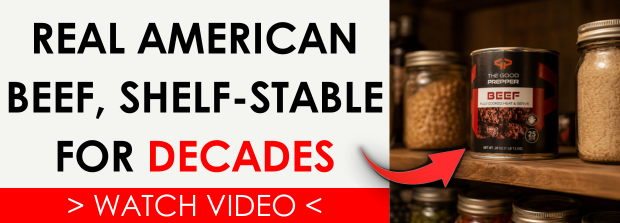
With the long-term canned meat I buy that is rated for up to 25 years when stored properly, I really do not see much of an upper limit beyond budget and storage space.
My family already eats it. It is extremely versatile, and its long shelf life means I have plenty of time to use it.
When I find a good opportunity to put more away, I usually do.
5. Canned Tomatoes
Canned tomatoes quietly connect half my pantry together.
I can use them for pasta sauce, chili, soup, stew, rice dishes, casseroles, beans, and countless other meals.
I keep a mixture of whole tomatoes, diced tomatoes, sauce, and tomato paste because each one gives me different options.
They also make stored food taste more like normal home cooking.
How much is too much?
I base this on how often we actually eat tomato-based meals. Several months makes sense for us. If cans are sitting untouched while newer food keeps coming in, I have probably stored enough.
6. Peanut Butter
Peanut butter earns its place because it requires almost nothing from me.
No refrigeration. No cooking. No special equipment.
Put it on bread, crackers, oatmeal, fruit, or simply eat a spoonful when someone needs quick calories.
It also provides protein and fat, and children already recognize it as normal food. That familiarity can matter when everything else around them feels unusual.
How much is too much?
Peanut butter contains oils that eventually affect its quality, so I do not try to store decades of it.
I keep several jars ahead and rotate them constantly.
7. Cooking Oil And Shelf-Stable Fats
This is one category I think survival pantries often underestimate.
Rice, beans, pasta, flour, and canned vegetables can provide a lot of food, but the body also needs fat. During hard physical work or cold weather, those concentrated calories become especially useful.
Cooking oil also makes stored food much easier to live with.
Rice can be fried. Potatoes can be browned. Beans taste better. You can bake, make sauces, cook meat, and turn basic ingredients into meals the family actually wants.
I keep cooking oil along with other shelf-stable fats we regularly use.
How much is too much?
Fats eventually go rancid, so this is something I rotate carefully.
I would rather keep several months of fresh oil moving through the kitchen than buy years of supply and forget about it. For deeper storage, I prefer spreading my reserves across different shelf-stable fats rather than depending on one large stock of oil.
I Store Meals, Not Ingredients
When I look at these foods, I do not see seven separate supplies.
- I see rice with canned meat and tomatoes.
- Beans with meat.
- Oatmeal with peanut butter.
- Rice and beans.
- Pasta with tomato sauce and meat.
A quick meal that can be cooked with very little fuel, or sometimes no cooking at all.
That is how I build my pantry.
I want food my family recognizes, food I already know how to prepare, and ingredients that give me plenty of choices when normal life gets disrupted.
A survival pantry does not have to look impressive.
It has to keep the family fed.






Read full article here